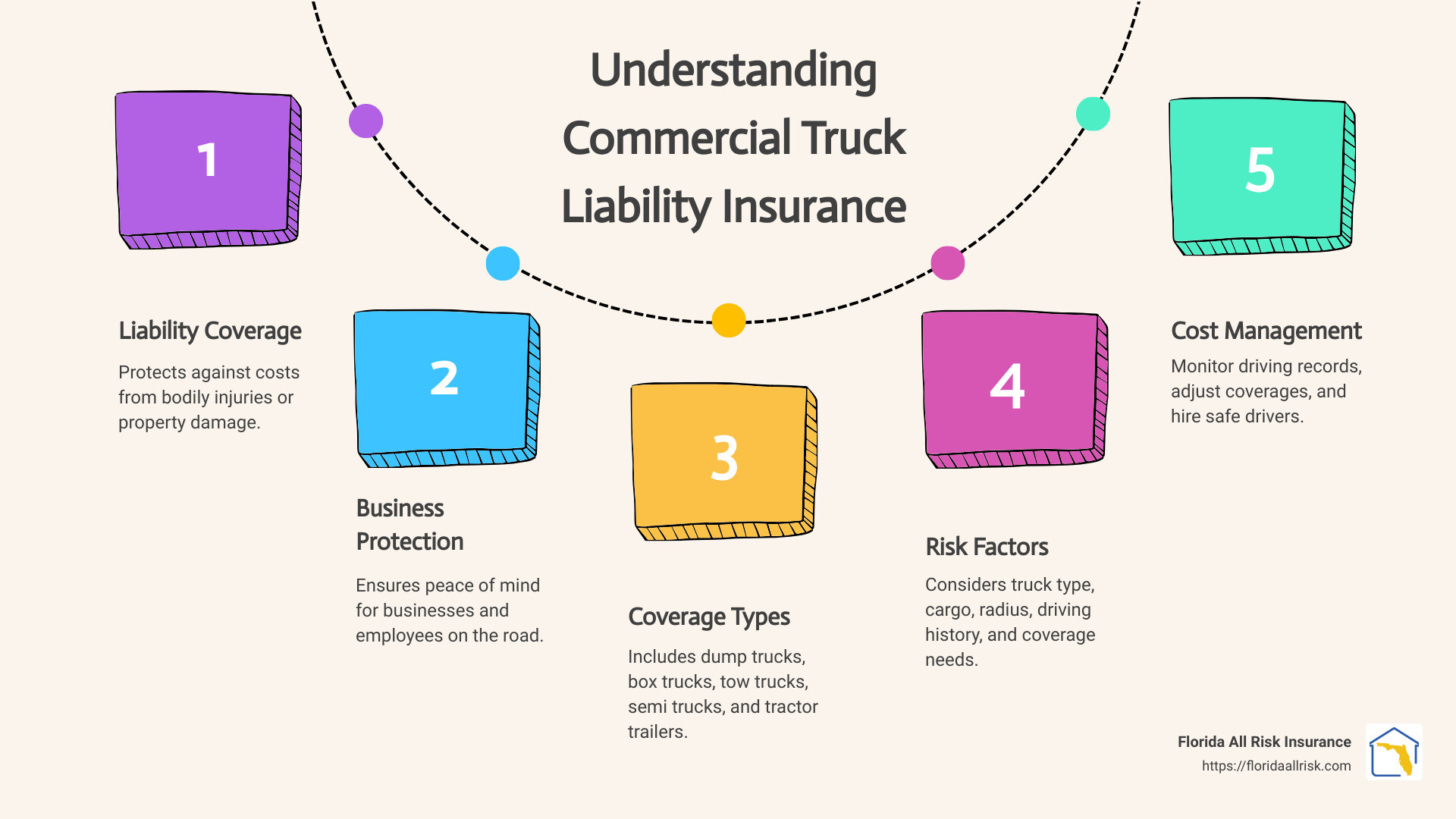
Commercial truck liability insurance is your safety net if your business involves the use of company-owned vehicles like trucks or trailers. Here’s what you need to know at a glance:
- Liability Coverage: Shields you from costs related to bodily injuries or property damage caused during business operations.
- Business Protection: Provides peace of mind for you and your employees while on the road.
- Coverage Types: Includes dump trucks, box trucks, tow trucks, semi trucks, and tractor trailers.
Navigating commercial truck liability insurance involves understanding different types of coverages designed to protect your assets and personnel. With potential risks ranging from accidents to theft, having comprehensive coverage is crucial for any business reliant on vehicles for daily operations.
My name is Jason Miller. With over 20 years in the insurance industry, specializing in commercial truck liability insurance, my team at Florida All Risk Insurance thrives on providing custom solutions to protect your business effectively. Let’s dig deeper into understanding the nuances of commercial truck liability insurance.
Understanding Commercial Truck Liability Insurance
When it comes to commercial truck liability insurance, understanding the types of coverage available is essential to protecting your business.
Coverage Types
-
Bodily Injury Coverage: This is a critical component that covers medical expenses and legal fees if someone is injured in an accident involving your commercial truck. It ensures that your business is safeguarded against claims that could otherwise lead to significant financial loss.
-
Property Damage Coverage: This coverage handles the costs associated with damage to another person’s property caused by your truck. Whether it’s a fender bender or a more serious collision, having this coverage means you won’t bear the financial burden alone.
-
Financial Protection: Beyond just immediate costs, commercial truck liability insurance provides long-term financial protection. It can save your business from devastating out-of-pocket expenses and potential bankruptcy due to lawsuits or claims.

Why It’s Important
Accidents on the road can happen in the blink of an eye. Whether you’re dealing with harsh weather, unpredictable traffic, or unexpected mechanical failures, the risks are always present. Commercial truck liability insurance acts as a safety net, ensuring that your business can continue to operate without the crippling financial impact of an accident.
Real-Life Example
Consider a scenario where one of your trucks is involved in an accident that injures a third party and damages their vehicle. Without proper coverage, your business could be liable for tens of thousands of dollars in medical bills and repair costs. With commercial truck liability insurance, these expenses are covered, allowing you to focus on running your business rather than worrying about financial fallout.
Understanding these elements of commercial truck liability insurance ensures your business is not only compliant with legal requirements but also prepared for unforeseen events. Next, we’ll look into the key factors that influence the cost of this essential coverage.
Key Factors Influencing Insurance Costs
When it comes to commercial truck liability insurance, several factors play a crucial role in determining the cost of your policy. Understanding these factors can help you make informed decisions and potentially save on premiums.
Truck Type
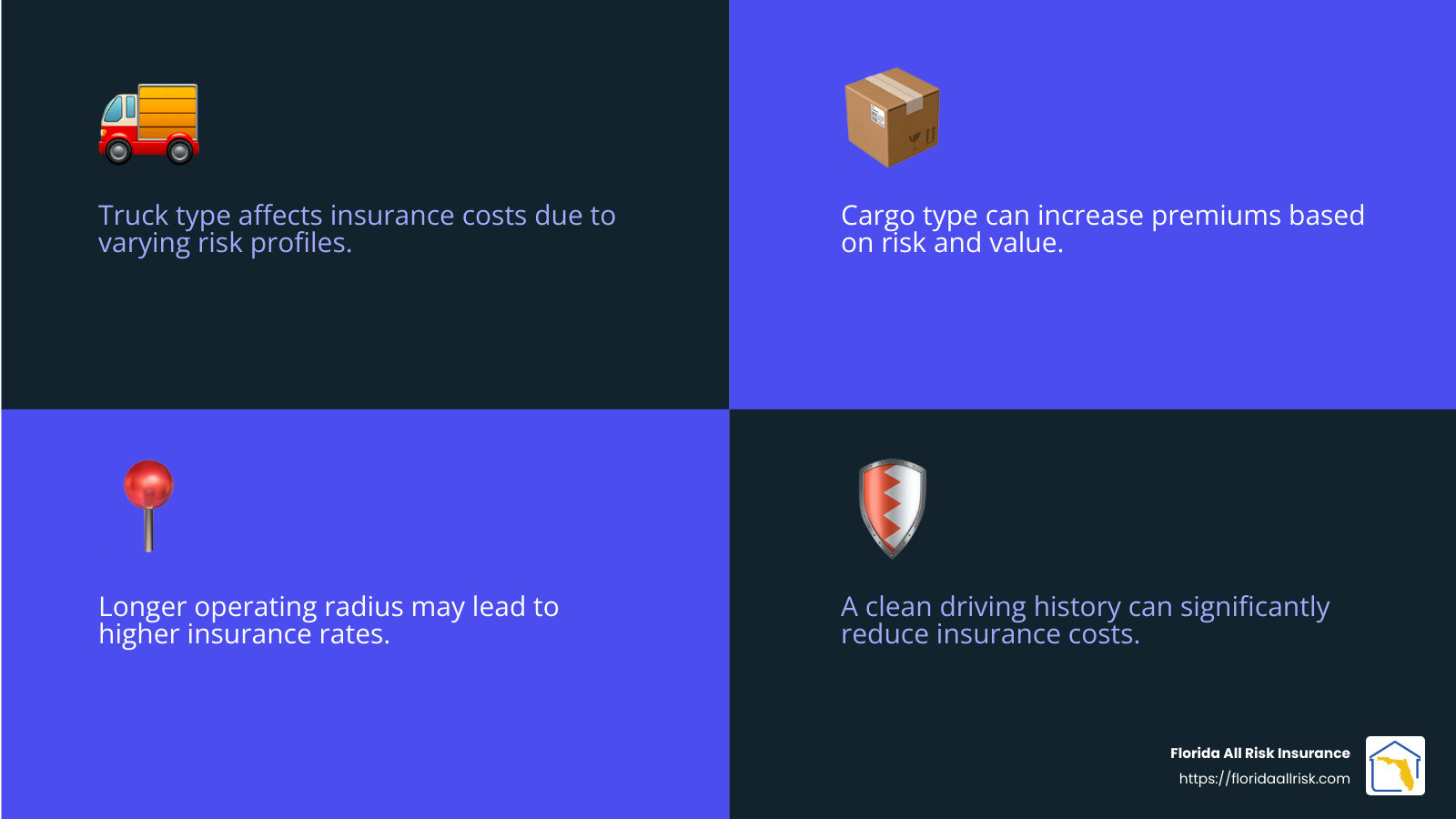
The type of truck you operate significantly impacts your insurance costs. For instance, a semi-truck will typically have higher insurance premiums than a box truck due to its size and the potential damage it can cause in an accident. Each truck type has unique risk profiles that insurers consider when calculating premiums.
Cargo Type
The kind of cargo you haul also influences your insurance rates. Hauling hazardous materials, like chemicals or flammable liquids, often results in higher premiums due to the increased risk of accidents and spills. Conversely, transporting non-hazardous goods, like furniture or food items, might lead to lower insurance costs.
Operating Radius
Your operating radius—the distance your trucks travel—affects your insurance costs. Trucks that operate locally typically have lower premiums than those traveling long distances across state lines. This is because longer routes increase the chances of accidents and mechanical issues.
Driving History
The driving history of your employees is a major factor in determining insurance costs. Insurers look for a clean driving record with minimal accidents or violations. Hiring drivers with excellent records can significantly reduce your premiums. Implementing regular driving record checks can help maintain low insurance costs.
Coverage Requirements
The amount and type of coverage you choose will directly impact your insurance costs. While it might be tempting to opt for minimal coverage to save money, it’s crucial to ensure that your business is adequately protected. Balancing coverage needs with budget constraints is key to managing insurance costs effectively.
By understanding these factors, you can better steer the complexities of commercial truck liability insurance and find a policy that meets your needs without breaking the bank. Next, we’ll discuss the types of vehicles covered under commercial truck insurance.
Types of Vehicles Covered
When it comes to commercial truck liability insurance, understanding which vehicles are covered is essential for ensuring that your business is adequately protected. Different types of trucks have specific insurance needs, and each plays a unique role in the transportation industry.
Dump Truck
Dump trucks are vital for construction and landscaping projects, as they transport loose materials like dirt, sand, and gravel. Due to their heavy-duty operations and the increased risk of accidents, insurance for dump trucks is mandatory in all 50 states. This type of coverage addresses the unique risks associated with transporting and dumping heavy loads.
Box Truck
Box trucks, also known as straight trucks, are commonly used for transporting goods locally. They are often used by delivery services and moving companies. Box truck insurance is designed to protect your business from financial losses due to accidents, theft, or damage to the truck or its cargo.
Tow Truck
Tow trucks serve a critical function in roadside assistance and vehicle recovery. Given their role in towing other vehicles, they require specialized insurance. Tow truck insurance covers both the tow truck itself and the vehicles being towed, providing financial protection against potential damages during transport.
Semi Truck
Semi trucks, or tractor units, are the backbone of long-haul trucking. They transport goods across vast distances, often interstate. Due to their size and the extensive travel involved, semi truck insurance is essential. This coverage protects against liability claims and physical damages, ensuring that both the truck and its cargo are secure.
Tractor Trailer
Tractor trailers, or articulated lorries, combine a tractor unit with one or more trailers to carry freight. Like semi trucks, they are crucial for long-distance hauling. Tractor trailer insurance is required by law for interstate operations, providing coverage for liability, cargo protection, and physical damages.
Each of these vehicles plays a unique role in the logistics and transportation industry. Understanding the specific insurance requirements for each can help you choose the right coverage for your business. Next, we’ll explore how you can save on commercial truck liability insurance.
How to Save on Commercial Truck Liability Insurance
Running a trucking business can be costly, but there are several strategies you can use to save on commercial truck liability insurance. Here are some practical tips:
Monitor Driving Records
Keeping an eye on your drivers’ records is crucial. Insurance companies often offer lower premiums to businesses that have drivers with clean records. Regularly check driving histories to ensure that your drivers are maintaining safe practices. This not only helps in negotiating better rates but also reduces the risk of accidents.
Adjust Coverages
Review your insurance coverages periodically. You might be paying for coverages that are unnecessary or that could be adjusted to better fit your current needs. For example, if you’ve downsized your fleet, ensure that your policy reflects this change. Tailoring your coverage can lead to significant savings.
Hire Safe Drivers
Invest in hiring drivers with a proven track record of safe driving. Experienced and cautious drivers are less likely to be involved in accidents, which can lower your insurance costs. Consider implementing a thorough vetting process and offering incentives for maintaining a clean driving record.
Implement Risk Management Policies
Establishing comprehensive risk management policies can reduce the likelihood of accidents and claims. This includes regular vehicle maintenance checks, safety training, and implementing technology like GPS tracking to monitor driver behavior. By proactively managing risks, you not only create a safer work environment but also potentially lower your insurance premiums.
By focusing on these areas, you can effectively manage and reduce your commercial truck liability insurance costs, keeping your business financially secure. Next, we’ll answer some frequently asked questions about commercial truck liability insurance.
Frequently Asked Questions about Commercial Truck Liability Insurance
What kind of insurance do I need for a trucking company?
For any trucking business, motor truck general liability insurance is essential. This covers bodily injury and property damage that might occur during business operations. If a truck causes an accident and injures someone or damages their property, this insurance helps cover the costs.
Additionally, consider coverage for cargo loss or damage. This protects your business if goods are lost or damaged during transit. Depending on your operations, you might also need non-owned trailer coverage or hired auto physical damage coverage.
Is commercial truck insurance expensive?
The cost of commercial truck insurance can vary widely. Several factors influence the price, including the type of truck, cargo, operating radius, and driving history. For example, a business using semi-trucks for long-haul routes might pay more than one using box trucks for local deliveries.
On average, premiums can range from a few thousand to tens of thousands of dollars annually. However, you can manage costs by hiring safe drivers and implementing risk management policies.
Which state has the cheapest commercial truck insurance?
Insurance costs can vary significantly from state to state. Factors like state regulations, accident rates, and even weather conditions can affect premiums. For instance, states with lower traffic congestion and fewer accidents might offer cheaper insurance rates.
To find the best rates, compare quotes from different insurers within your state. While cost is important, ensuring adequate coverage is crucial to protect your business.
Conclusion
At Florida All Risk Insurance, we understand that every trucking business is unique. That’s why we offer personalized service to help you find the right commercial truck liability insurance for your needs. Our team works closely with you to assess your specific requirements and provide custom coverage options that fit your business operations.
We pride ourselves on offering competitive rates, ensuring you get the best value for your investment. By partnering with a wide range of carriers, we can tailor coverage plans that not only protect your assets but also keep your premiums manageable. Whether you’re operating a fleet of dump trucks or a single box truck, we have the expertise to support your insurance needs.
Let us help you steer the complexities of commercial truck insurance. With Florida All Risk Insurance, you can focus on what you do best—keeping your business on the road.
For more information on our trucking coverage options, visit our Trucking Insurance page.