Commercial liability insurance providers: Secure 2025
Why Your Business Needs a Liability Shield
Commercial liability insurance providers offer essential protection that can mean the difference between a minor setback and business bankruptcy. As one industry expert notes, “passion and commitment cannot prevent accidents”—and when they happen, a single liability claim can devastate even the most successful business.
The search for the right commercial liability insurance provider doesn’t have to be overwhelming. The key is to find a partner who understands your unique risks and can match you with the right coverage.
The statistics are sobering: a significant number of companies may face closure after a major loss without proper coverage. With trip-and-falls being a leading cause of injury, the question isn’t whether you need liability insurance—it’s which provider will give you the best protection for your specific business needs.
I’m Jason Miller, a second-generation insurance professional with over 20 years of experience helping Florida businesses steer the landscape of commercial liability insurance providers. Having built Florida All Risk Insurance into a leading provider throughout the state, I understand how critical it is to match businesses with the right coverage and carrier for their unique risks.
Related content about commercial liability insurance providers:
- chubb general liability
- general liability insurance
- commercial liability insurance for small business
Understanding Commercial General Liability (CGL) Insurance
Imagine a customer slips on a freshly mopped floor in your business and breaks their ankle. Suddenly, you’re facing a lawsuit that could cost tens of thousands of dollars in medical bills and legal fees. This is exactly why Commercial General Liability (CGL) insurance exists, and it’s why smart commercial liability insurance providers make it the cornerstone of business protection.
CGL insurance is your business’s financial bodyguard, stepping in when third parties claim your business caused them harm or damaged their property. It’s a protective shield that covers legal defense costs, settlements, and judgments. This coverage is essential for handling third-party claims—lawsuits filed by customers, vendors, or visitors. Without it, a single claim could drain your business bank account and threaten its survival. Learn more about Business Liability Insurance.
What CGL Typically Covers
A CGL policy is a comprehensive safety net for various incidents that can occur during your day-to-day operations.
- Bodily Injury Liability: This covers the costs when someone is physically hurt on your property or due to your operations. It includes medical expenses, lost wages, and pain and suffering. For example, if a customer trips over a loose cord in your office, or a restaurant patron gets food poisoning, this coverage would apply.
- Property Damage Liability: This protects you when your business accidentally damages someone else’s belongings. It covers the cost to repair or replace the damaged property. For instance, if your landscaping crew accidentally breaks a client’s window with a rock, or an IT consultant accidentally shorts out a client’s server, this coverage would handle the claim.
- Personal and Advertising Injury: This handles claims of non-physical harm, such as libel, slander, copyright infringement, or misappropriation of advertising ideas. In our highly connected world, this protection is more valuable than ever. An example would be if your business used a photograph in a social media campaign without the proper license, leading to a copyright infringement lawsuit.
- Medical Payments: This coverage quickly pays for minor medical expenses when someone is hurt on your property, regardless of who was at fault. This goodwill gesture can prevent small incidents from escalating into major lawsuits by addressing the injured party’s immediate needs.
- Tenant’s Legal Liability: If you rent your business space, this is crucial. It protects you if you accidentally damage the property you’re leasing, such as by causing a fire or water damage. Many commercial landlords require tenants to carry this coverage as a condition of the lease. Learn more about Commercial Lease Liability Insurance.
- Legal Defense Costs: Your CGL policy covers attorney fees, court costs, and investigation expenses related to a covered claim, even if the lawsuit is ultimately found to be groundless. This protection is invaluable, as the cost of defending a lawsuit can be financially crippling on its own.
Common CGL Exclusions
While CGL is comprehensive, it doesn’t cover everything. Understanding these exclusions is vital for building a complete insurance portfolio that leaves no critical gaps.
- Professional Errors: CGL won’t cover claims arising from professional advice or services that lead to financial losses for clients. This is about the quality of your professional work, not a physical accident. For this, you need separate General Liability Errors and Omissions Insurance.
- Employee Injuries: Injuries to your team members are covered by Workers’ Compensation insurance, not CGL. Most states, including Florida, legally require businesses with employees to carry this coverage.
- Commercial Auto Accidents: Vehicle-related incidents, whether in a company-owned car or an employee’s vehicle used for business, require dedicated Comprehensive Business Vehicle Insurance.
- Intentional Acts: Insurance is designed for accidents. It will not pay for deliberate harm or damage caused by you or an employee.
- Contractual Liability: If you sign a contract that voluntarily assumes liability you wouldn’t normally have (e.g., indemnifying another party), CGL may not cover it unless it’s a liability you would have had anyway.
- Electronic Data: Damage to or loss of electronic data is a specialized risk. CGL typically excludes this, which is why dedicated cyber liability insurance is essential for modern businesses.
The key takeaway is that CGL insurance is incredibly valuable, but it works best as part of a broader risk management strategy that addresses all your specific business risks.
Who Needs Liability Insurance and Why It’s Crucial

Commercial liability insurance providers don’t just serve large corporations. In reality, any business that interacts with the public needs this protection. Whether you run a food truck, a home-based consultancy, a retail shop, or a manufacturing plant, you are exposed to liability risks. Every customer, vendor, and visitor who interacts with your business represents a potential claim.
Liability insurance is often a practical necessity. Many clients, especially larger companies, will refuse to work with you without seeing a Certificate of Insurance. Landlords almost universally require it as a condition for commercial leases. Beyond these contractual requirements, the financial reality is stark: legal defense costs alone can be staggering, even for baseless lawsuits. A major uncovered loss can easily threaten a company’s survival. For more information, see Insurance for Small Businesses and Commercial Property and Business Interruption Insurance.
High-Risk Industries and Professions
While every business needs liability protection, some face inherently higher risks due to the nature of their work:
- Contractors: Working on client properties with tools and heavy equipment creates significant exposure to property damage and bodily injury. See Contractor Liability Coverage.
- Consultants: Professional advice that leads to a client’s financial loss can result in major claims for negligence or errors. See Liability Insurance for Consultants.
- Retailers and Restaurants: High foot traffic increases the risk of slip-and-fall incidents, while food service carries the additional risk of product liability from foodborne illnesses.
- Healthcare Professionals: While medical malpractice covers professional services, general liability is still needed for incidents like a visitor tripping in the waiting room. See HVAC General Liability Insurance.
- Trucking Companies: Beyond commercial auto insurance, trucking operations have broader liability exposures at loading docks, warehouses, and depots. See Commercial Truck Liability Insurance.
- Manufacturers: Face significant product liability risk if a product they create is defective and causes injury or property damage to a consumer.
- Real Estate Agents: Risks include clients being injured during property viewings or claims of misrepresentation about a property’s condition.
Beyond CGL: Other Essential Liability Policies
CGL is the foundation, but a complete protection plan often requires other specialized policies to create a comprehensive safety net:
- Professional Liability (Errors & Omissions): Crucial for any business providing advice or services (e.g., accountants, architects, IT consultants). It covers financial loss to a client due to your alleged errors, negligence, or failure to perform your service. See Professional Liability Insurance for Independent Contractors.
- Directors and Officers (D&O) Liability: Protects the personal assets of company leaders from lawsuits related to their management decisions, such as mismanagement of funds or failure to comply with regulations.
- Cyber Liability: Essential for any business that stores sensitive customer data. It covers costs associated with data breaches, including forensic investigation, customer notification, credit monitoring, public relations, and regulatory fines.
- Commercial Umbrella Liability: Provides an extra layer of coverage above the limits of your other liability policies (like CGL and commercial auto). It kicks in when a catastrophic claim exhausts your primary policy limits. See Excess Public Liability.
- Employment Practices Liability Insurance (EPLI): Protects against claims from employees alleging discrimination, harassment, wrongful termination, or other employment-related issues. These lawsuits are increasingly common and can be very costly to defend.
These policies work together to create a comprehensive shield, allowing you to run your business with confidence and peace of mind.
How to Evaluate and Choose a Commercial Liability Insurance Provider
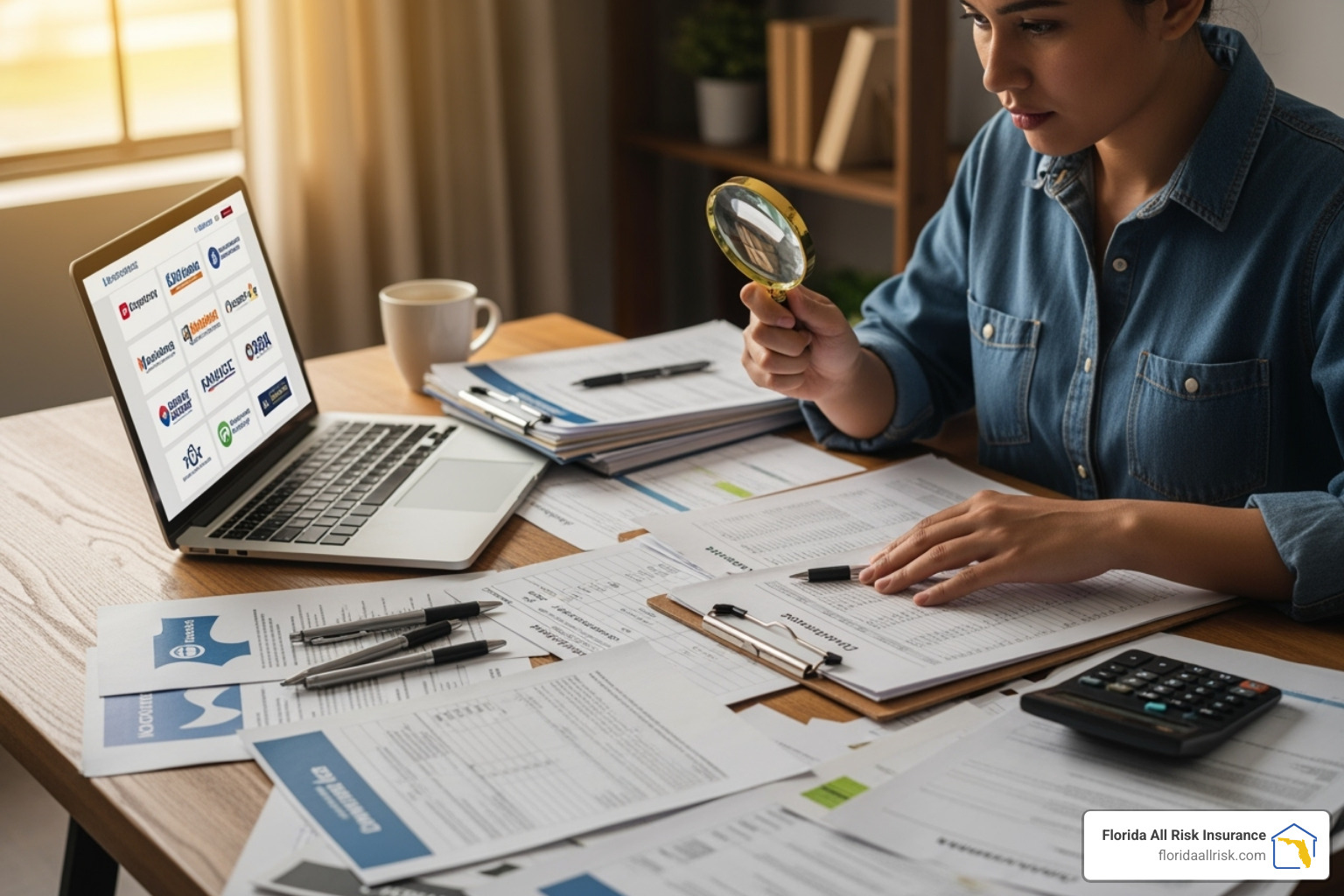
Choosing the right commercial liability insurance providers is a critical business decision, as important as hiring a key employee or securing financing. Think of it as finding a long-term partner who will be there to support you when you need to file a claim and help you adapt your coverage as your business grows. A little due diligence now can save you massive headaches later. Policy customization is key, as your insurance should reflect your unique risks, not a one-size-fits-all template. Learn more about how to Buy Business Insurance.
Key Criteria for Comparing Providers
When evaluating providers, look beyond the price tag and consider these crucial factors:
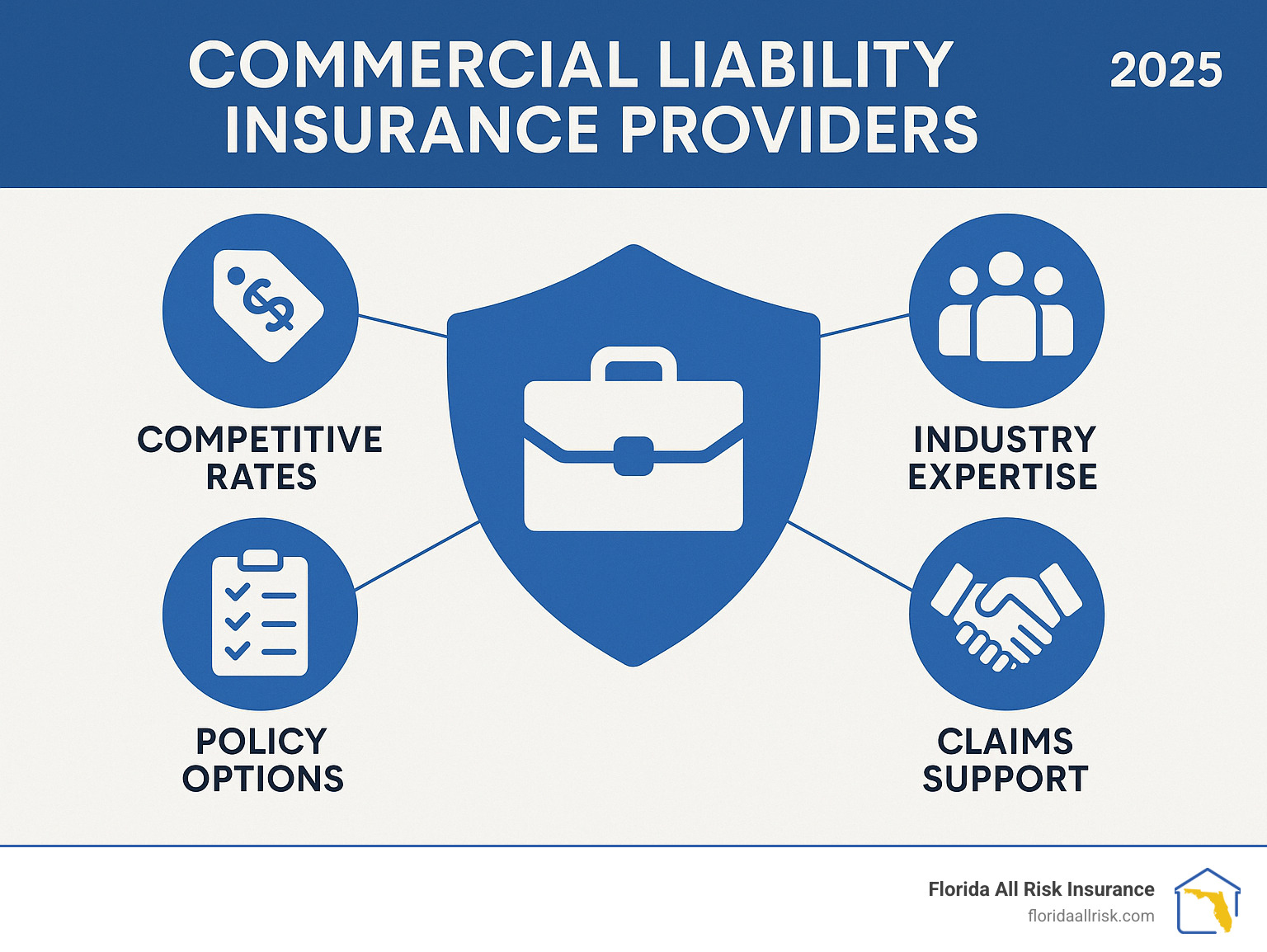
- Financial Strength: An insurance policy is only as good as the company’s ability to pay claims. Check the provider’s rating from independent agencies like A.M. Best. Look for a provider with an A- (Excellent) rating or better to ensure they are financially stable and can meet their obligations even in the event of widespread disasters.
- Customer Service and Support: When you have a question or need to make a change, you want prompt, knowledgeable assistance. Is it easy to contact a real person? Do they offer an online portal for managing your policy and getting certificates of insurance? Good service is crucial, especially during the stress of a claim.
- Claims Handling Process: The real test of an insurer is how they handle claims. Research their reputation. Look for providers known for a fair, transparent, and efficient claims process. Reading reviews and asking other business owners about their experiences can provide valuable insight. A poor claims experience can be more damaging than the initial incident itself.
- Coverage Options and Flexibility: Your business is unique. The best providers offer a range of endorsements and options to customize coverage to fit your specific risks and budget. Avoid carriers that try to fit you into a rigid, pre-packaged policy.
- Industry Specialization: A provider who understands the nuances of your industry can offer more relevant advice, risk management tips, and custom coverage options. For example, a provider specializing in construction will be better equipped to cover risks related to scaffolding and subcontractors than a generalist.
- Price and Value: The cheapest option isn’t always the best. A typical CGL policy with $1 million per occurrence and $2 million aggregate coverage costs around $450 annually for a low-risk small business. A significantly lower quote may indicate dangerous gaps in coverage, lower limits, or a high number of exclusions. Focus on the overall value—the right coverage from a reliable provider at a fair price.
How to Obtain Your Policy: Working with an Independent Agency
You have a few options for securing a policy. Independent agents, like us at Florida All Risk Insurance, represent multiple carriers. We shop the market on your behalf to find the best combination of coverage and price, acting as your long-term advisor and advocate. This gives you choice, unbiased advice, and crucial support during the claims process. See Independent Business Insurance Agents.
Other options include direct writers, who are employees of a single insurance company and only sell that company’s products, and online insurtech platforms, which offer speed and convenience but may lack the personalized guidance needed for businesses with complex risks. Find out more about how to Buy Business Insurance Online.
Understanding and Managing Your Liability Insurance Cost
Several factors influence your premium. Understanding them can help you manage your Liability Insurance Cost.
- Industry Risk: Higher-risk industries like construction pay more than lower-risk ones like graphic design. See High Risk General Liability Insurance.
- Business Size and Revenue: Larger businesses with higher revenues and more employees generally have greater exposure and higher premiums.
- Claims History: A clean claims history demonstrates good risk management and can help keep premiums down, while frequent claims will increase them.
- Location: Operating in a dense urban area like Tampa General Liability Insurance can carry different risks and costs than a rural location.
- Coverage Limits and Deductibles: Higher coverage limits increase premiums. A deductible is the amount you pay out-of-pocket on a claim before insurance kicks in. Choosing a higher deductible can lower your premium, but you must be able to comfortably afford that amount if a claim occurs. It’s about finding the right balance. See How Much General Liability Insurance Do I Need.
The Policy Lifecycle: From Application to Claim
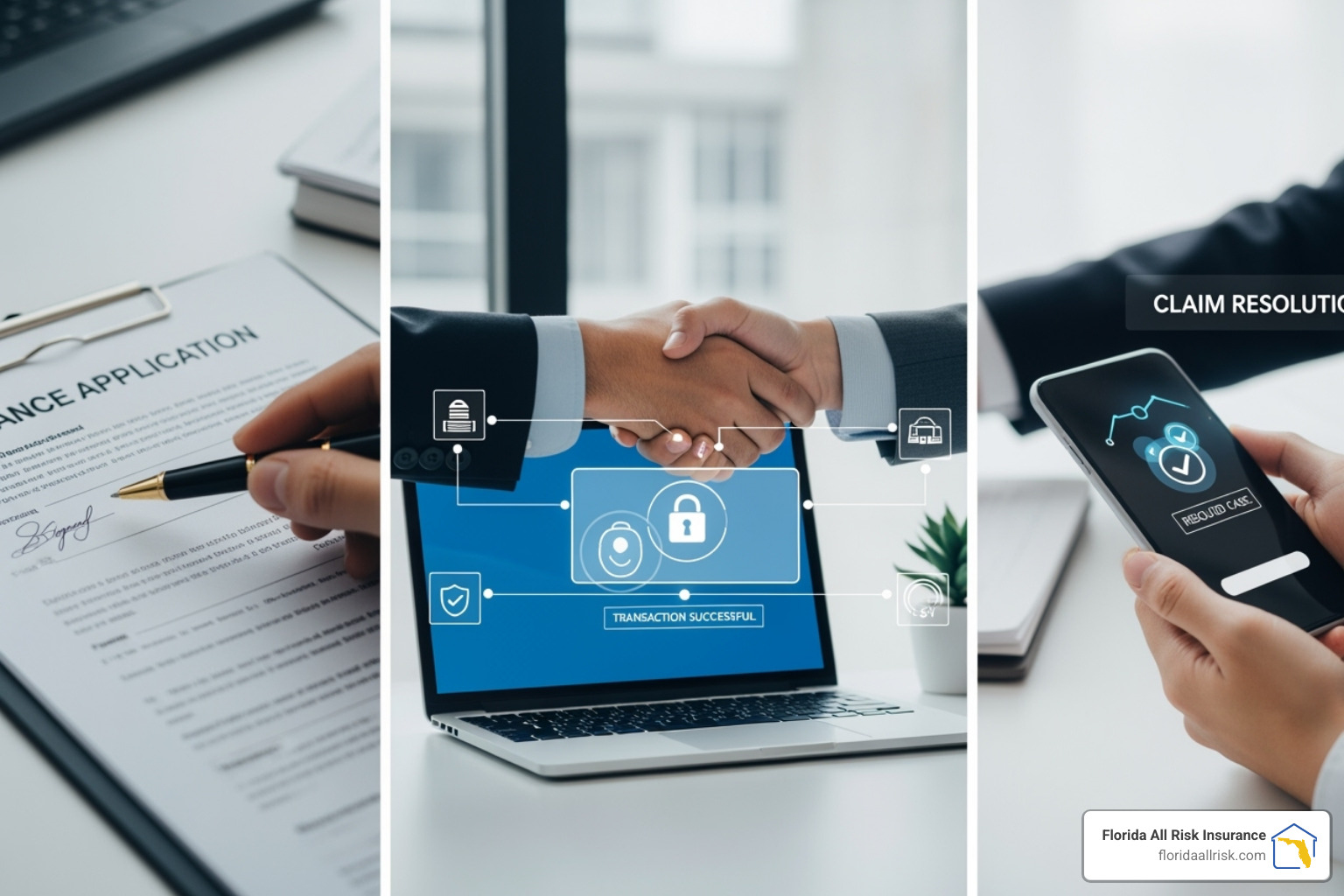
Understanding the insurance lifecycle, from application to a potential claim, helps you make better decisions. Experienced commercial liability insurance providers guide you through each step, making the process manageable. The fundamentals are careful documentation, clear communication, and having the right support.
The Application and Quoting Process
Getting a policy starts with sharing your business story. You’ll provide details like your industry, revenue, employee count, and operations. This information helps insurers assess your risk and price your coverage fairly.
The application process is often straightforward, with many providers offering user-friendly online forms. You can get a GL Insurance Quote quickly. After you apply, an underwriter reviews your information to determine your final quote. Once you review the quote and are ready to proceed, you pay the premium to bind coverage and activate your policy.
How to File a Commercial Liability Claim
Knowing the claims process ahead of time can reduce stress during a difficult situation.
- Immediate Steps: After an incident, prioritize safety. Get medical attention for anyone injured and take steps to prevent further damage.
- Document Everything: Use your phone to take photos of the scene and any damage. Collect names and contact information for everyone involved, including witnesses. Get police or paramedic report numbers if applicable.
- Notify Your Insurer Promptly: Contact your provider within 24-48 hours. Have your policy number ready and provide a clear, honest description of the incident.
- Work with the Claims Adjuster: The adjuster is your guide. They will investigate the incident, gather information, and determine how your policy applies.
- Investigation and Resolution: The adjuster will conduct a thorough investigation. Afterward, they will work with you on a fair settlement if the claim is covered or explain why if it is denied.
- Legal Defense: A key benefit of CGL is coverage for legal defense costs if a lawsuit is filed against you, regardless of the outcome. This protection can be a business-saver.
A strong relationship with your insurance agent or provider is key to a smooth claims experience.
Frequently Asked Questions about Commercial Liability Insurance Providers
Here are clear answers to some of the most common questions we hear from business owners.
What is the difference between general liability and professional liability insurance?
This is a crucial distinction. In short, general liability covers physical risks (bodily injury and property damage), while professional liability covers financial risks (financial harm resulting from your professional services or advice).
- General Liability (CGL) protects against claims like a customer slipping in your store, your work damaging a client’s property, or libel in an advertisement. It deals with the tangible consequences of your operations.
- Professional Liability (E&O) protects against claims that your advice, service, or failure to provide a service caused a client financial loss. For example, if an accountant makes an error that leads to IRS penalties for a client, or an architect’s design flaw causes costly rework, E&O insurance would respond. See General Liability Errors and Omissions Insurance.
Many businesses, especially those providing services or advice, need both policies to cover their full range of risks.
How quickly can I get a Certificate of Insurance (COI)?
A Certificate of Insurance (COI) is a one-page document that proves you have active insurance coverage. Clients and landlords often require it before they will work with you or lease you space.
The good news is that getting a COI is fast and easy. Once your policy is active, we can typically generate and send you a COI the same day you request it, often within a few hours. Many modern commercial liability insurance providers have online portals that allow you to generate COIs on-demand, 24/7.
Does forming an LLC protect me from all liability?
This is a common and dangerous misconception. An LLC (Limited Liability Company) provides valuable personal liability protection. It creates a legal separation between your personal assets (home, car, savings) and your business debts. If the business is sued or cannot pay its bills, your personal assets are generally safe.
However, an LLC does not protect the business itself from lawsuits. If someone is injured at your business or your work causes damage, they can sue your company. The business’s assets—its bank accounts, equipment, and future earnings—are still at risk. CGL insurance is what protects the business’s assets. You need both an LLC (to protect your personal assets) and liability insurance (to protect your business assets) for comprehensive protection. Learn more about Business Insurance for LLC.
What are policy limits, and how do I choose the right ones?
Policy limits are the maximum amount an insurer will pay for a covered claim. They are typically expressed in two ways:
- Per-Occurrence Limit: The maximum amount the insurer will pay for a single incident or claim.
- Aggregate Limit: The total maximum amount the insurer will pay for all claims during a policy period (usually one year).
A common structure is a $1 million per-occurrence limit and a $2 million aggregate limit. Choosing the right limits depends on several factors: your industry’s risk level, the value of your business assets, and contractual requirements from clients. A contractor working on a large commercial project will likely need higher limits than a freelance writer. It’s wise to choose limits that would be sufficient to protect your business from a worst-case scenario lawsuit.
Conclusion: Partnering with the Right Provider for Total Peace of Mind
Navigating commercial liability insurance providers is a critical task for any business owner. The right partner is as important as the policy itself. To protect your business, you must assess your unique risks, compare providers on key criteria like financial strength and claims handling, and understand your policy’s coverages and exclusions.
Expert guidance can make all the difference. As an independent agency, Florida All Risk Insurance partners with you to explore options from numerous top-rated carriers. We shop the market to find custom coverage that truly protects your Florida-based business. We are here to offer personalized advice, advocate on your behalf, and provide peace of mind.
Don’t let an unexpected incident derail your dreams. Take the proactive step to protect your business’s future.
Get your comprehensive general liability coverage today!
Contact Us
Ready to protect your Florida business with the right commercial liability insurance providers? We’re here to help you steer your options and find the perfect coverage for your unique needs.
At Florida All Risk Insurance, we believe in building lasting relationships with our clients. As your independent insurance partner, we’re committed to providing personalized service that goes beyond just selling policies. We take the time to understand your business, assess your risks, and match you with the best coverage from our network of trusted carriers.
Whether you’re a small business owner just starting out or an established company looking to review your current coverage, we’re ready to answer your questions and provide expert guidance. Our team has the experience and local knowledge to help Florida businesses like yours stay protected.
Florida All Risk Insurance
Address: Saint Petersburg, FL
Phone: (727) 777-9999
Email: [email protected]
Don’t wait until it’s too late. Contact us today to discuss your commercial liability insurance needs and get a personalized quote from multiple top-rated carriers. We make the process simple, straightforward, and stress-free.
Authoritative Resources:
For additional information about commercial liability insurance requirements and best practices, we recommend these trusted resources:
- Insurance Information Institute: Commercial General Liability – Comprehensive overview of CGL coverage and industry standards
- U.S. Small Business Administration: Business Insurance Requirements – Official guidance on insurance requirements for small businesses
These resources provide valuable insights to help you make informed decisions about your business insurance needs.