

Commercial Insurance St. Petersburg FL: Your Comprehensive Guide to Business Protection
Commercial insurance St. Petersburg FL is the bedrock of resilience for any enterprise in Florida’s vibrant Sunshine City. Whether you’re operating a busy restaurant on Central Avenue, a high-tech firm in the Innovation District, a marine supply company near the port, or a construction business building the city’s future, the right insurance coverage is not just a safety net—it’s a strategic asset. It shields your investment, your employees, and your future from the myriad of risks that can surface without warning.
St. Petersburg boasts a uniquely dynamic and diverse economy. It’s a mix woven from tourism, world-class healthcare, advanced manufacturing, a thriving arts scene in the Warehouse Arts District, and robust marine industries. This economic variety means that no two businesses face the exact same set of risks. A gallery owner has different liability concerns than a charter boat captain, and a software developer faces threats entirely different from a hotelier. Compounding these are the city’s geographical realities: its beautiful coastline also brings significant exposure to hurricanes, storm surges, and flooding, requiring specialized coverage that goes far beyond a standard policy.
This guide is designed to explain commercial insurance. We will translate complex jargon into actionable insights, helping you make informed decisions for your business. We’ll conduct a deep dive into essential coverages like General Liability, Commercial Property, and Workers’ Compensation, and explore specialized policies custom to St. Pete’s key industries. Our goal is to illuminate how local risks shape your insurance needs and demonstrate how a dedicated independent agent can secure the most comprehensive protection at the most competitive rates.
I’m Jason Miller, a second-generation insurance professional with over two decades of dedicated experience in the Florida market. My agency, Florida All Risk Insurance, was founded on the principle of providing bespoke insurance solutions for Florida businesses. We specialize in navigating the complexities of commercial insurance in St. Petersburg FL. My team and I live and work here; we understand the local challenges intimately and leverage our relationships with a wide array of insurance carriers to build customized, resilient protection plans for our clients.
Terms related to commercial insurance St. Petersburg FL:
- independent business insurance agents
- best commercial real estate insurance
- commercial property and business interruption insurance
The Essential Toolkit Part 1: Foundational Liability and Property Policies
Every business in St. Petersburg, regardless of size or industry, needs a foundational layer of protection. This starts with policies that cover your legal responsibilities to others and protect the physical assets you’ve worked so hard to acquire. These core coverages form the non-negotiable base of a robust risk management plan.
General Liability Insurance: Your Shield in a Litigious World
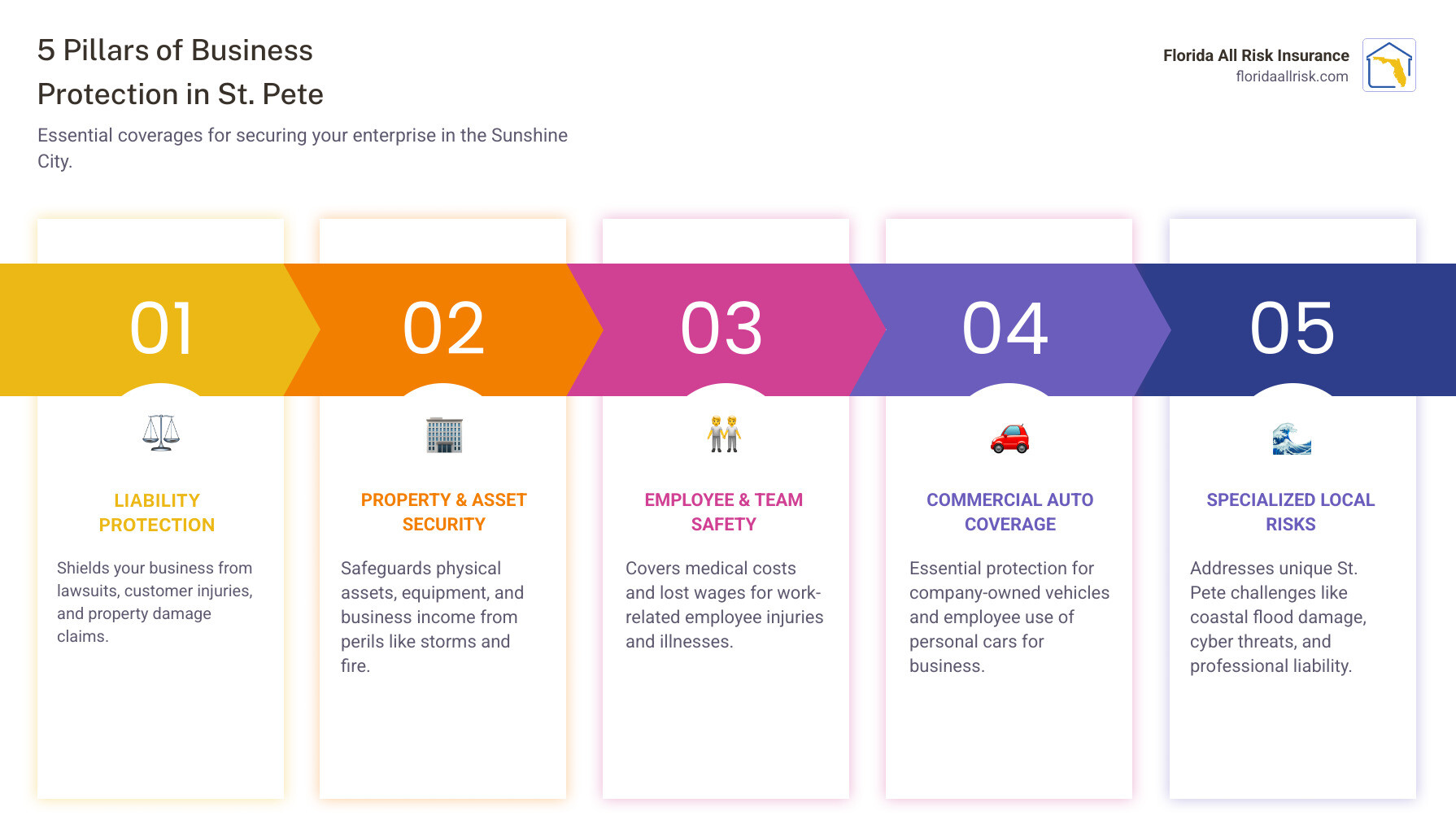
Often referred to as “slip-and-fall” insurance, General Liability Insurance is your business’s first and most crucial line of defense against claims from third parties. Its protection is broad, typically covering three main areas:
- Bodily Injury: This covers claims if a customer, vendor, or other non-employee is injured on your business premises. For a St. Pete restaurant, this could be a patron slipping on a wet floor. For a retail shop on Beach Drive, it could be a customer tripping over a misplaced display.
- Property Damage: This applies if your business operations cause damage to someone else’s property. A landscaping company in the Old Northeast neighborhood might accidentally break a client’s window, or a plumber’s faulty installation could cause water damage in a commercial building.
- Advertising Injury: This protects against claims of libel, slander, copyright infringement, or misappropriation of advertising ideas. Imagine a new St. Pete marketing firm inadvertently using a slogan too similar to a competitor’s, triggering a lawsuit. General Liability can cover the legal fallout.
Crucially, a General Liability policy covers not only the potential judgments or settlements but also the legal defense costs, which can be financially crippling even if the lawsuit is ultimately found to be baseless. While Florida law doesn’t mandate this coverage for most businesses, it is a practical and contractual necessity. Landlords, event organizers, and major clients will almost certainly require you to provide a certificate of insurance proving you have adequate General Liability coverage before they will engage with you. For a deeper look, see this info about General Liability Insurance for Small Business.
Commercial Property Insurance: Safeguarding Your Physical Assets
Your business’s physical footprint—the building you own, your specialized equipment, computers, inventory, and even the office furniture—represents a massive capital investment. Commercial Property Insurance is designed to fund the repair or replacement of these assets following damage from a covered peril, such as fire, theft, or vandalism.
For any business in St. Petersburg, understanding the limitations of a standard property policy is vital. As we’ll explore further, damage from floods and windstorms/hurricanes is almost always excluded and requires separate, specialized coverage. A standard policy protects against more common risks, ensuring that a kitchen fire or a major theft doesn’t put you out of business.
An indispensable component often included with or added to a property policy is Business Interruption Insurance (also known as Business Income coverage). If a covered event like a fire forces you to shut down temporarily, this coverage can be a lifeline. It replaces lost net income and covers continuing operating expenses like rent, payroll, and loan payments. It can also cover the costs of moving to a temporary location. For a St. Pete business, this coverage is the key to surviving a disaster and reopening your doors. To learn more, find Details on Commercial Property Insurance.
The Essential Toolkit Part 2: Protecting Your People and Vehicles
Beyond your premises and legal liabilities, a comprehensive insurance plan must account for your two most vital operational assets: your employees and your vehicles. In Florida, the insurance for these is not just a good idea—it’s mandated by law.
Workers’ Compensation: A Legal and Moral Obligation
If you have employees, Workers’ Compensation insurance is a legal requirement in Florida. The law is specific: non-construction businesses with four or more employees (including owners who are corporate officers) must carry coverage. For the construction industry, the threshold is just one employee. This insurance creates a critical safety net for your team and your business.
Here’s how it works: If an employee suffers an injury or illness as a direct result of their job duties, Workers’ Comp provides two primary benefits:
- Medical Benefits: It covers the costs of all necessary medical treatment, from emergency room visits and surgery to physical therapy and prescriptions.
- Indemnity (Lost Wage) Benefits: It replaces a portion of the employee’s lost wages while they are unable to work and recovering from the injury.
Workers’ Comp is a “no-fault” system. This means benefits are paid regardless of who was at fault for the injury. This is a grand bargain: employees receive prompt medical care and wage replacement without having to sue their employer, and in return, employers are protected from costly negligence lawsuits filed by injured workers. Failing to carry required coverage can result in severe penalties from the state, including stop-work orders and fines. For official details on state law, visit the Florida Division of Workers’ Compensation.
Commercial Auto Insurance: Coverage for Business on the Move
If your business owns, leases, or uses any vehicles for work-related purposes, a Commercial Auto Insurance policy is legally required. This applies to a fleet of construction trucks, a single delivery van for a florist, or a car used for sales calls. A critical mistake many small business owners make is assuming their personal auto policy will cover them. It won’t. Personal policies contain a “business use exclusion,” creating a massive and dangerous coverage gap.
Commercial Auto policies are specifically designed to handle business risks and typically provide higher liability limits. Key coverages include:
- Liability Coverage: Pays for bodily injury and property damage you cause to others in an at-fault accident.
- Physical Damage Coverage: Includes Collision (covers damage to your vehicle from a crash) and Comprehensive (covers damage from other events like theft, vandalism, or hitting an animal).
- Hired and Non-Owned Auto Coverage: This is essential. Hired Auto covers vehicles you rent or borrow for business. Non-Owned Auto protects your business if an employee has an accident while driving their personal vehicle for a work-related errand, like a trip to the post office or a client meeting. This prevents a lawsuit against your employee from extending to your business.
For businesses with specialized vehicles, like dump trucks or tractor-trailers, more specific coverages are needed. You can Learn about Commercial Truck Insurance for these unique needs.
Beyond the Basics: Specialized Insurance for St. Petersburg’s Key Industries
While the core policies provide a foundation, many businesses in St. Petersburg require specialized coverage custom to their unique operations and industry-specific risks. An off-the-shelf policy is rarely sufficient. Here’s a look at essential specialized insurance for some of our city’s most prominent sectors.
For Marine and Boating Businesses
St. Petersburg’s identity is intrinsically linked to the water. For businesses operating in this space, from marinas and boat repair shops to charter fishing fleets and tour operators, standard insurance is woefully inadequate. Key coverages include:
- Marina Operators Legal Liability (MULL): Protects a marina against liability for damage to boats and watercraft in their care, custody, or control.
- Protection & Indemnity (P&I): This is the marine equivalent of general liability, covering a vessel owner’s liability for injuries to crew, passengers, and damage to other vessels or docks.
- Hull Insurance: This is physical damage coverage for the vessel itself, covering damage from collisions, sinking, fire, and other perils of the sea.
- Jones Act Coverage: A specific form of workers’ compensation for crew members working on vessels.
For Hospitality: Restaurants, Bars, and Hotels
The thriving hospitality scene along Central Avenue and the beaches faces unique public-facing risks. Beyond general liability, these businesses need:
- Liquor Liability Insurance: Essential for any business that sells or serves alcohol. It protects against claims of injury or property damage caused by an intoxicated patron. This is often excluded from general liability policies.
- Food Spoilage Coverage: Reimburses the business for the cost of perishable stock lost due to a power outage or equipment failure—a common occurrence after a Florida storm.
- Cyber Liability Insurance: Hotels and restaurants process a high volume of credit card transactions and personal data through booking systems, making them prime targets for data breaches.
For Construction and Contractors
As St. Pete continues to grow, contractors and construction firms are in high demand. Their work, however, is fraught with risk that requires specific protection:
- Builder’s Risk Insurance: A form of property insurance that covers a structure while it is under construction. It protects against damage from fire, vandalism, and weather events.
- Contractor’s Tools and Equipment Floater: Covers tools and equipment that are mobile and move from job site to job site. This is typically not covered under a standard commercial property policy.
- Professional Liability (Errors & Omissions): Crucial for design-build firms, architects, and engineers. It covers financial losses to a client resulting from mistakes or negligence in their professional services (e.g., a design flaw that leads to costly rework).
For Professional Services and Tech Firms
St. Petersburg’s growing Innovation District is home to tech startups, consultants, lawyers, and accountants. For these businesses, their biggest risks are not physical but professional and digital:
- Professional Liability (Errors & Omissions or E&O): This is the most critical coverage. It protects the business against claims of negligence, mistakes, or failure to perform professional duties that result in a client’s financial loss. A single mistake in code, a missed deadline, or bad advice can lead to a major lawsuit.
- Cyber Liability Insurance: An absolute must-have. It covers the costs associated with a data breach, including forensic investigation, customer notification, credit monitoring, public relations, and potential fines and penalties, especially concerning regulations like HIPAA for healthcare-related tech.
Navigating Coastal Risks: A Deep Dive into Flood and Windstorm Insurance
For any St. Petersburg business owner, this is a critical reality: your standard commercial property policy does not cover damage from flood or windstorm. These two perils represent the most significant catastrophic threats to our region and require separate, dedicated insurance policies. Underestimating this fact can be a business-ending mistake.
Flood Insurance: Covering the Waters
Flooding in St. Petersburg can result from hurricane-driven storm surge, overflowing bays, or even intense inland rainfall. Protection is available from two main sources:
- The National Flood Insurance Program (NFIP): This is a federal program managed by FEMA. NFIP policies are available to businesses in participating communities. While essential, they have limitations. Coverage amounts are capped (e.g., $500,000 for the building and $500,000 for its contents for commercial properties), and they do not include business interruption coverage. There is also typically a 30-day waiting period before the policy takes effect.
- Private Flood Insurance: A growing number of private insurance companies now offer their own flood policies. These often provide significant advantages over the NFIP, including higher coverage limits, the option to include business interruption coverage, and shorter waiting periods. An independent agent can compare private market options with the NFIP to find the best solution for your specific property and risk tolerance.
Recent changes to the NFIP under a system called Risk Rating 2.0 have altered how premiums are calculated, basing them more on a property’s specific flood risk rather than just its flood zone. This makes it more important than ever to work with a knowledgeable agent who understands these changes. For more details, read our guide on Flood Insurance for Businesses.
Windstorm & Hurricane Insurance: Bracing for the Storm
Windstorm coverage, which includes damage from hurricanes, is also sold as a separate policy or as an endorsement in Florida. This is the policy that will respond when a hurricane damages your roof, breaks windows, or causes structural failure.
A key feature of this coverage is the hurricane deductible, which works differently from a standard deductible. Instead of a flat dollar amount (e.g., $1,000), a hurricane deductible is typically a percentage of your property’s total insured value, usually 2%, 5%, or 10%.
Example: Your commercial building is insured for $1,000,000 and you have a 5% hurricane deductible. Your deductible for a named hurricane would be $50,000 ($1,000,000 x 0.05). You would be responsible for this first $50,000 of damage before your insurance coverage begins to pay. Understanding and planning for this potentially large out-of-pocket expense is a critical part of hurricane preparedness.
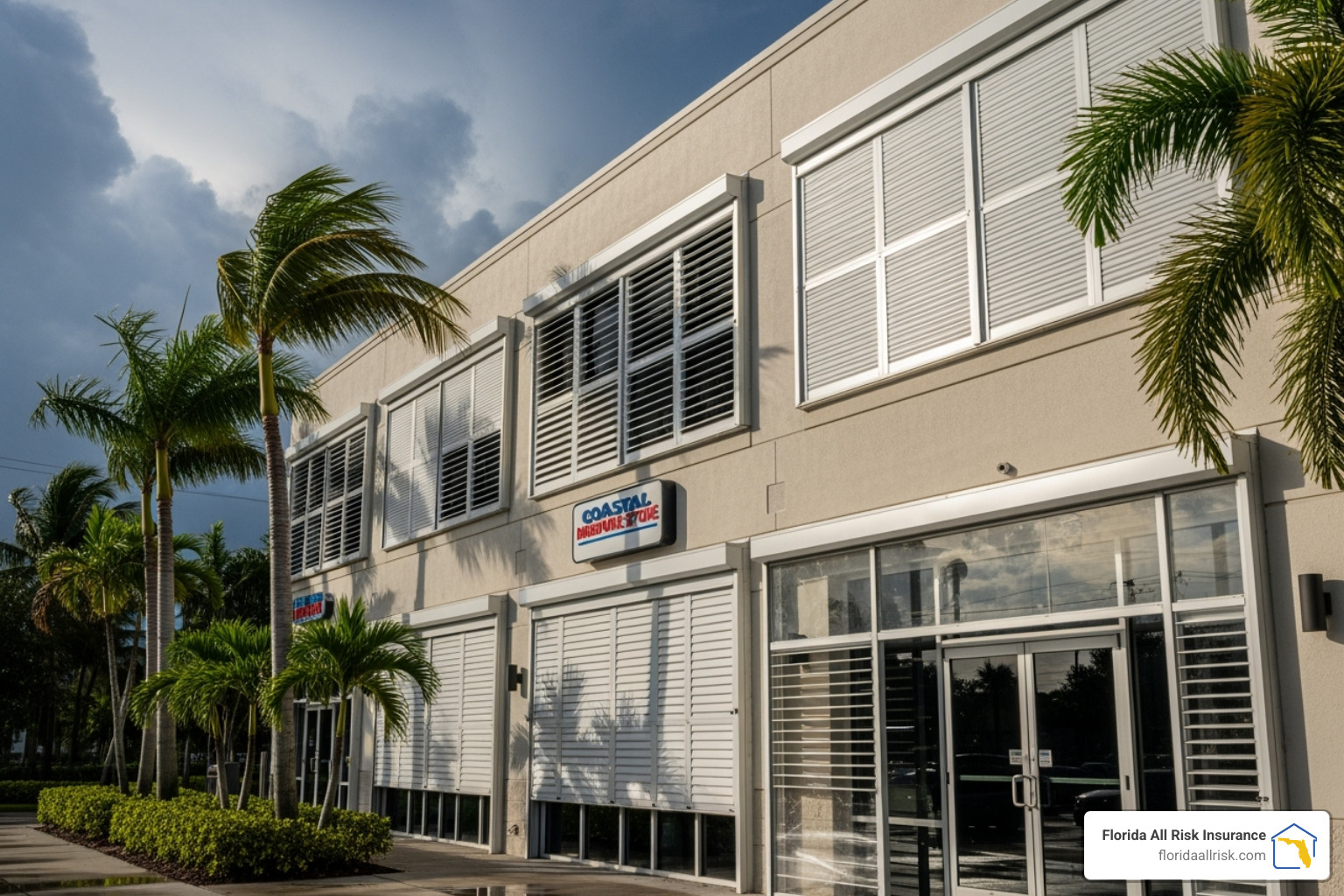
Fortunately, you can lower your windstorm premium by investing in wind mitigation. Documented features like hurricane-rated shutters, impact-resistant windows, a newer roof built to modern codes, and a hip roof shape can earn you significant discounts from insurers. An agent can help you identify which mitigation efforts will provide the best return on your insurance costs.
Key Factors Influencing Your Insurance Costs in St. Petersburg
The premium for your commercial insurance in St. Petersburg FL is not an arbitrary number. It’s the result of a detailed underwriting process where insurers assess the specific risks your business presents. Understanding these factors empowers you to manage them effectively and, in turn, control your insurance costs.
What Determines Your Premium?
Insurers analyze a wide range of data points to calculate your rates. The most influential factors include:
- Industry and Operations: A roofing contractor’s work is inherently riskier than an accountant’s, leading to higher liability and workers’ comp premiums. The specific services you offer and materials you handle are scrutinized.
- Location, Location, Location: Your physical address in St. Petersburg is paramount for property insurance. Businesses in a high-risk flood zone (like an ‘A’ or ‘V’ zone) or closer to the coast will face significantly higher flood and windstorm premiums than those inland and at a higher elevation.
- Claims History (Loss Run): Your history of past claims is a strong predictor of future losses. A business with frequent claims, even small ones, will be seen as higher risk and face higher premiums or even non-renewal. A clean record is your best asset.
- Business Size and Revenue: The number of employees directly impacts your workers’ compensation premium. Your annual revenue is a key factor in determining general liability rates, as it reflects the scale of your operations.
- Coverage Limits and Deductibles: The amount of coverage you choose directly affects the price. Higher liability limits mean higher premiums. Conversely, choosing a higher deductible (the amount you pay out-of-pocket on a claim) can lower your premium, but requires you to have sufficient cash flow to cover it.
- Safety and Risk Management Protocols: Insurers reward proactive businesses. Having documented safety programs, employee training manuals, a formal fleet safety plan, and good building maintenance can lead to substantial credits and discounts.
Actionable Strategies to Reduce Your Insurance Costs
You are not powerless in the face of insurance costs. You can take proactive steps to make your business more attractive to insurers:
- Bundle Policies: For many small to medium-sized businesses, combining General Liability and Commercial Property into a Business Owner’s Policy (BOP) can offer significant savings over buying them separately.
- Prioritize Safety: Implement and document a formal safety program. Conduct regular training, maintain a clean and hazard-free workplace, and foster a culture of safety. This is the most effective way to lower your workers’ comp and liability costs over the long term.
- Manage Your Deductibles Wisely: If your business has a healthy cash reserve, consider raising your property or auto deductibles. The premium savings can be significant, but be sure you can comfortably cover the higher out-of-pocket cost if a claim occurs.
- Review Coverage Annually: Your business is not static. Meet with your agent every year to review your policies. As your business grows or changes, your insurance needs will evolve. This ensures you are not over-insured for risks you no longer have or under-insured for new ones.
- Maintain a Good Claims Record: Don’t file small, nuisance claims that you could easily cover as a cost of doing business. Saving your insurance for significant losses will protect your favorable claims history.

Why a Local St. Petersburg Agency is Your Strategic Partner
It might seem easy to buy insurance from a national call center or a website. However, for a business in St. Petersburg, choosing an insurance provider is as critical as choosing the right policy. Partnering with a local, independent insurance agency offers distinct, tangible advantages that a remote 1-800 number simply cannot match. It’s the difference between being a policy number and having a dedicated risk advisor.
The Power of Choice: Access to a Diverse Insurance Marketplace
Independent agencies are not beholden to a single insurance company. We are appointed to represent multiple carriers, from large national brands to regional insurers who specialize in the unique risks of the Florida market. This structure allows us to act as your personal insurance shopper. We analyze your specific needs and then solicit quotes from numerous carriers to find the optimal blend of coverage, service, and price.
This flexibility is a powerful asset. It means we can craft truly customized solutions rather than trying to fit your business into a pre-packaged box. If one carrier’s rates increase dramatically at renewal, or if their claims service falters, we have the freedom to proactively move your coverage to a better-suited partner, ensuring you always have the best protection and value available.
Best Expertise in St. Pete’s Unique Risk Environment
Running a business in Pinellas County means contending with risks that are unique to our coastal geography and economy. A local agent possesses firsthand, ground-level experience with these challenges. We understand the nuances of local flood zones, the specific requirements for wind mitigation credits, and the insurance implications of St. Petersburg’s building codes.
This local knowledge goes beyond weather. We see the seasonal shifts in tourism and their impact on hospitality businesses. We understand the specific liability exposures of marine contractors working on the bay and the professional risks faced by the growing number of tech firms in the city. This allows us to provide proactive risk management advice, helping you identify and mitigate potential issues before they can escalate into costly claims. We can recommend specific safety protocols or contractual language that will strengthen your position.

A Personal Advocate for Claims and Service
When a loss occurs—whether it’s a hurricane, a lawsuit, or a fire—the true value of a local agent becomes crystal clear. Instead of navigating a confusing claims department on your own, you have a personal advocate in your corner. We provide personalized guidance through the entire claims process, from filing the initial report to negotiating with the adjuster. We leverage our knowledge of your policy and our established relationships with the carriers to ensure a smoother, faster, and fairer resolution. We speak the language of insurance so you don’t have to.
Our commitment is to a long-term relationship, not a single transaction. We conduct regular policy reviews to ensure your coverage adapts as your business grows and evolves. You have a dedicated partner who is invested in your success and is always just a local phone call away. Learn More about local St. Petersburg FL insurance agencies and the benefits they offer.
Frequently Asked Questions About Commercial Insurance in St. Petersburg
Navigating the landscape of commercial insurance St. Petersburg FL often raises many questions for business owners. Here are clear, straightforward answers to some of the most common inquiries we receive.
What commercial insurance is legally required for my business in Florida?
In Florida, the two primary state-mandated coverages are Workers’ Compensation and Commercial Auto insurance.
- Workers’ Compensation: This is required for most non-construction businesses with four or more employees (full-time or part-time) and for construction businesses with one or more employees. It provides medical and wage benefits to employees injured on the job.
- Commercial Auto Insurance: If your business owns, leases, or uses vehicles, you must have commercial auto insurance with specific minimum liability limits as required by Florida law.
While General Liability Insurance is not typically mandated by state statute, it is a practical necessity. Most commercial landlords, client contracts, and professional licensing boards will require you to carry it, making it essential for day-to-day operations.
How do I determine the right amount of coverage for my business?
This is a strategic process, not a guessing game. A qualified agent will perform a thorough risk analysis of your business. This involves evaluating your industry, daily operations, number of employees, annual revenue, physical assets, and vehicle fleet. We also review your contractual obligations, as contracts with clients or landlords often specify minimum required insurance limits. The goal is to find the optimal balance: enough coverage to allow your business to survive a catastrophic loss, but not so much that you are paying for unnecessary protection.
What is the difference between a captive agent and an independent agent?
This choice fundamentally impacts your options.
- A captive agent represents a single insurance company (e.g., State Farm, Allstate). They can only offer you products from that one carrier. While they may know their company’s products well, your choices are limited.
- An independent agent, like Florida All Risk Insurance, represents multiple insurance carriers. We are not tied to any one company, allowing us to shop the entire market on your behalf. This fosters competition, leading to better pricing and more coverage options. We serve as your unbiased advisor, focused on finding the best solution for your needs, not on selling a specific product.
My business is home-based. Do I still need commercial insurance?
Yes, absolutely. A homeowner’s insurance policy provides very limited to no coverage for business-related activities. It will not cover business liability (e.g., a client tripping in your home office), damage to business equipment, or loss of business inventory. You will need, at a minimum, a general liability policy and a commercial property policy or endorsement to properly protect your home-based business.
What is Cyber Liability Insurance and why do I need it?
Cyber Liability Insurance is a specialized policy that protects your business from the high costs of a data breach or other cyber attack. If your business stores any sensitive customer, employee, or patient data (names, addresses, credit card numbers, social security numbers), you are a target. This policy covers expenses like forensic investigation, customer notification, credit monitoring services, public relations, and legal defense. It is as essential as general liability.
What is a Certificate of Insurance (COI) and when will I need one?
A Certificate of Insurance is a one-page document that serves as proof of your insurance coverage. It summarizes your key policies, coverage limits, and policy effective dates. You will frequently be asked to provide a COI when signing a commercial lease, entering into a contract with a new client, or applying for certain professional licenses. Your agent can typically issue these for you quickly and at no cost.
Let’s Build Your Business’s Shield
Operating a successful business in St. Petersburg is an immensely rewarding endeavor, but it’s one that comes with inherent risks that can jeopardize everything you’ve built. A thoughtfully constructed commercial insurance portfolio is not an expense; it is a vital protective shield. It provides the financial backing and peace of mind necessary to focus on innovation, customer service, and growth, confident that you are prepared for the unexpected.
A resilient protection strategy begins with a deep understanding of your core coverages, a clear-eyed assessment of the unique coastal risks we face, and an appreciation for the specialized policies your industry demands. Navigating this complex terrain can be daunting, which is why partnering with a knowledgeable, local independent agency is a game-changer. An agent who understands both the intricacies of the insurance market and the specific challenges facing St. Petersburg businesses can identify critical coverage gaps, prevent you from overpaying, and serve as your staunchest advocate when you need it most.
Proactive risk management is an ongoing process. It involves regularly reviewing your coverage as your business evolves, implementing robust safety measures to control long-term costs, and preparing diligently for threats like hurricane season. At Florida All Risk Insurance, we are committed to the success of our local business community. We take the time to learn your operations, understand your goals, and leverage our extensive network of insurance carriers to build the best possible combination of coverage and value.
Take the Next Step
Don’t leave your business’s future to chance. Contact us today for a no-obligation review of your current insurance program.
Florida All Risk Insurance
Address: 6534 Central Ave, St. Petersburg, FL 33707
Phone: (727) 345-6789
Email: [email protected]
Find our St. Petersburg location on a map

