

Commercial general liability insurance is a vital safeguard for businesses, big or small, across Florida. It acts as a protective shield by covering expenses related to bodily injuries, property damage, and personal or advertising injuries that might occur in the course of business operations. Businesses can face significant financial risk without it. Here’s a quick breakdown of why it’s so essential:
- Protection against claims of bodily injury or property damage.
- Security for expenses related to legal defenses and settlements.
- Coverage for personal and advertising injuries, such as slander and copyright infringement.
I’m Jason Miller, a seasoned expert in the insurance industry with over 20 years of experience. I’ve been devoted to providing businesses with comprehensive solutions, like commercial general liability insurance, to ensure they thrive without unforeseen hindrances.

Commercial general liability insurance basics:
– business general liability insurance
– general liability insurance for small business
– what does general liability insurance cover
What is Commercial General Liability Insurance?
Commercial general liability insurance is a must-have for businesses. It protects against a range of unexpected events that could lead to financial loss. Let’s explore the specifics of what this insurance covers.
Coverage Overview
At its core, commercial general liability insurance helps cover costs associated with claims of bodily injury, property damage, and personal or advertising injury. These claims can arise from everyday business activities and can be costly.
Bodily Injury
Imagine a customer slipping on a wet floor in your store and breaking a leg. The medical bills and potential lawsuit could be financially devastating. This is where bodily injury coverage comes in, helping cover medical expenses and legal fees.
Property Damage
Consider a scenario where an employee accidentally breaks a client’s window while working on a project. Property damage coverage would help pay for repairs and any associated legal costs. Without this coverage, such incidents could significantly impact your bottom line.
Personal and Advertising Injury
Businesses are also protected against claims of libel, slander, and false advertising. For instance, if an advertisement inadvertently defames a competitor, you could face a lawsuit. This insurance covers legal expenses and settlements in such cases.
Real-World Examples
- Slippery Floors: A customer slips and falls in a grocery store, leading to a lawsuit for bodily injury.
- Faulty Equipment: An employee’s mistake during installation causes damage to a client’s property.
- Misleading Ads: A business faces a claim for false advertising due to an error in their marketing campaign.

These examples highlight the importance of having commercial general liability insurance. It acts as a safety net, allowing businesses to operate with peace of mind, knowing they are protected against these risks.
In the next section, we’ll explore the key features of CGL insurance, including premises operations and products completed operations.
Key Features of CGL Insurance
Commercial General Liability (CGL) insurance is a crucial tool for businesses. It shields them from various liabilities that could arise during normal operations. Let’s break down some of its key features, which make it indispensable for business protection.
Premises Operations
Premises operations coverage is like a safety guard for your business location. It covers injuries or damages that occur on your business premises or as a result of your business activities. For example, if a customer trips over a loose carpet in your office, this coverage helps handle the medical expenses and any legal claims that might follow.
Products Completed Operations
Once a product leaves your store or a service is completed, the risk doesn’t end. Products completed operations coverage steps in to cover injuries or damages that occur away from your business premises, caused by your products or completed work. Imagine a scenario where a chair you sold collapses, causing injury. This coverage would help with legal costs and damages.
Personal and Advertising Injury
In the business world, words matter. Personal and advertising injury coverage protects against claims of libel, slander, or false advertising. This means if your marketing inadvertently harms another’s reputation, this insurance can cover the legal fees and any settlements. It’s crucial in today’s digital age, where information spreads quickly.
Excess Liability
Sometimes, claims exceed the limits of a standard CGL policy. This is where excess liability insurance comes in. It provides additional coverage for those unexpected, high-cost claims that go beyond your policy’s limits. Think of it as an extra layer of financial protection.
Umbrella Liability
For even broader coverage, businesses can opt for umbrella liability insurance. This policy not only extends your existing liability limits but also covers certain risks not included in your primary policies. It’s like having a backup plan for your backup plan, ensuring you’re covered from all angles.
These features make commercial general liability insurance a versatile and essential part of a business’s risk management strategy. By understanding and utilizing these coverages, businesses can operate with confidence, knowing they’re protected against a wide range of potential liabilities.
Next, we’ll dive into the cost factors and pricing of CGL insurance to help you understand what to expect when budgeting for this essential coverage.
Cost Factors and Pricing
When it comes to commercial general liability insurance, understanding the cost is crucial for budgeting. Let’s break down the factors that influence pricing, so you can make informed decisions for your business.
Average Cost and Monthly Premium
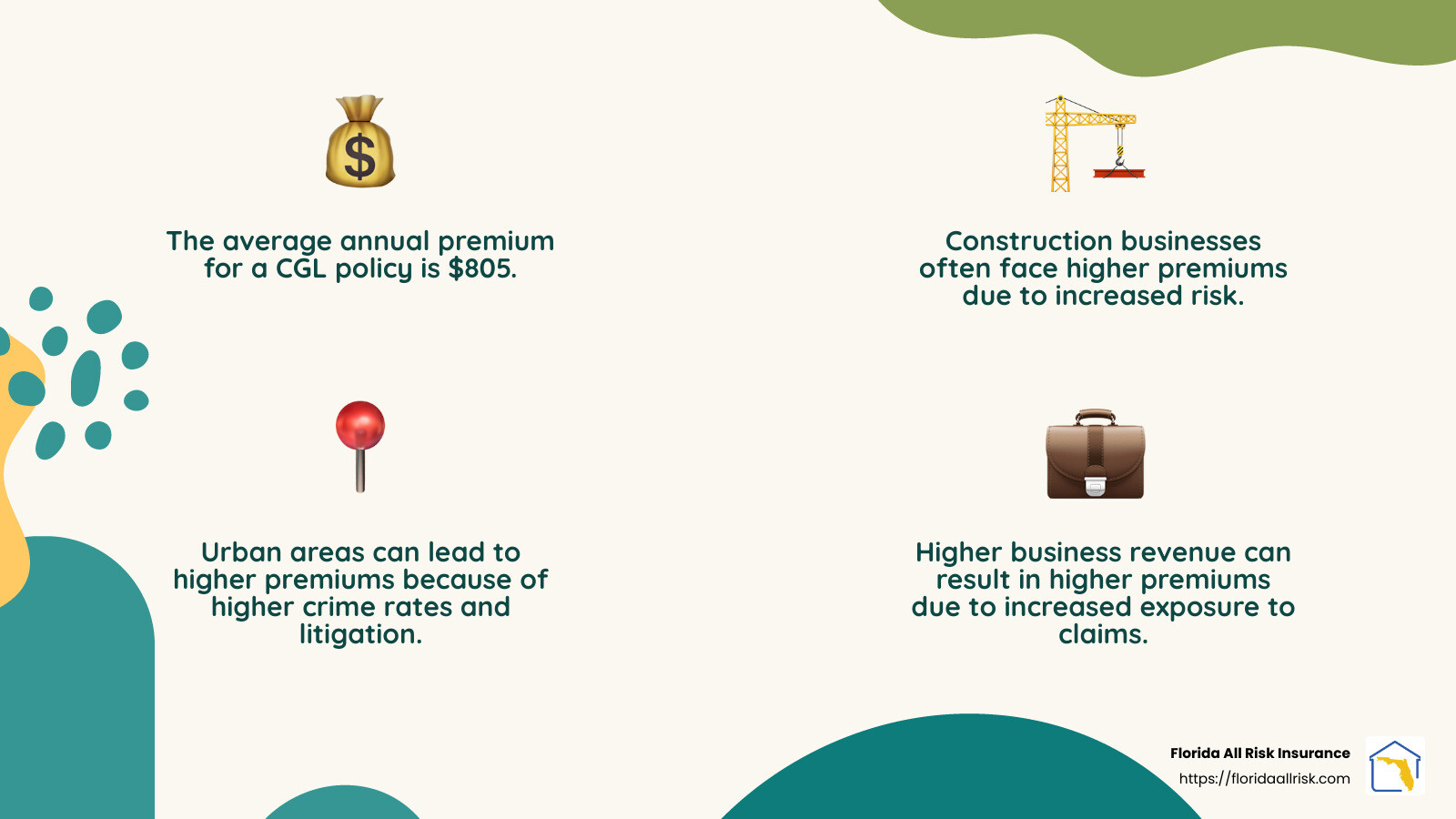
The typical annual premium for a CGL policy is around $805, which translates to about $67 per month. However, these figures can vary based on several factors specific to your business.
Business Type
The nature of your business plays a significant role in determining your insurance cost. Businesses with higher risk, like construction companies, tend to face higher premiums compared to those in less risky fields, such as consulting.
Location
Where your business operates can also affect your insurance costs. Urban areas with higher crime rates or more frequent litigation might lead to higher premiums. Conversely, businesses in rural or less populated areas might benefit from lower rates due to reduced risk.
Revenue
Your business’s revenue is another key factor. Higher revenue often correlates with higher premiums because more income typically means more exposure to potential claims. Insurance companies view larger businesses as having more at stake.
Coverage Limits
The coverage limits you choose will directly impact your premium. Opting for higher limits provides more protection but comes at a higher cost. It’s a balance between adequate coverage and affordability.
Tailoring Your Policy
To get the best value, consider tailoring your policy to your business’s specific needs. Evaluate your risk factors and choose coverage limits that align with your risk tolerance and budget.
Understanding these cost factors will help you steer the pricing of CGL insurance, ensuring you can protect your business without breaking the bank. Next, we’ll explore the different types of claims and policy options available to further safeguard your enterprise.
Claims and Policy Types
When it comes to commercial general liability insurance, understanding the types of claims and policies is essential. Let’s explore the key options available to you.
Claims-Made vs. Occurrence Policies
Claims-Made Policies cover claims reported during the policy period, regardless of when the incident occurred. This means if you have a policy from June 1, 2022, to May 31, 2023, any claims reported within this timeframe are covered, even if the incident happened earlier.
Occurrence Policies, on the other hand, cover incidents that happen during the policy period, regardless of when the claim is filed. So, if an incident occurs while your policy is active from June 1, 2022, to May 31, 2023, the claim will be covered even if you report it after the policy has expired.
Prior Acts and Run-Off Coverage
To prevent gaps in coverage, especially with claims-made policies, businesses can opt for Prior Acts Coverage or Run-Off Coverage.
Prior Acts Coverage, also known as “nose” coverage, protects against claims from incidents that occurred before the policy start date, provided these incidents are reported after the policy begins. This is crucial if you’re switching insurers and want to ensure no past incidents fall through the cracks.
Run-Off Coverage, or “tail” coverage, extends the reporting period after a policy expires. Typically, claims-made policies offer a short window (30 to 60 days) for reporting late claims. Run-off coverage extends this period, often for one to five years or even indefinitely, for an additional premium. This is particularly useful if you decide not to renew your policy or switch to a different insurance provider.
Choosing the Right Policy
Selecting between claims-made and occurrence policies depends on your business needs and risk appetite. Claims-made policies may be less expensive initially, but occurrence policies offer peace of mind with their comprehensive coverage approach.
Understanding these claims and policy types will help you make informed decisions to protect your business effectively. Next, we’ll tackle some frequently asked questions about commercial general liability insurance to further clarify your options.
Frequently Asked Questions about Commercial General Liability Insurance
How much does a $1 million CGL policy cost?
The cost of a $1 million commercial general liability insurance policy can vary widely. On average, small businesses might pay between $300 and $1,000 annually for this coverage. Factors influencing the cost include the type of business, its location, revenue, and chosen coverage limits. For instance, a business in a high-risk industry, like construction, may see higher premiums compared to a low-risk service provider.

Who is covered under a CGL policy?
A CGL policy primarily covers the named insured, which is the business entity or individual specified in the insurance contract. This coverage typically extends to the business owner, employees, and sometimes other parties like contractors, if they are listed as additional insureds. It’s crucial to ensure that all relevant parties are named in the policy to avoid coverage gaps.
What is the difference between personal and commercial liability insurance?
Personal liability insurance and commercial liability insurance serve different purposes. Personal liability insurance protects individuals against claims arising from personal activities that cause harm or damage to others. This is often included in homeowners or renters insurance policies.
In contrast, commercial liability insurance protects businesses from claims related to their operations, such as bodily injuries or property damage caused by business activities. While personal liability covers personal actions, commercial liability is essential for safeguarding business operations and assets against potential lawsuits.
Understanding these distinctions helps businesses and individuals ensure they have the right coverage in place for their specific needs. In our next section, we’ll wrap up with the importance of CGL insurance and how Florida All Risk Insurance can help tailor coverage to your needs.
Conclusion
Commercial General Liability (CGL) Insurance is a crucial safeguard for any business, big or small. It protects against unexpected events that could otherwise lead to financial disaster. From bodily injuries to property damage, CGL insurance provides a safety net that allows businesses to operate with peace of mind.
At Florida All Risk Insurance, we understand the unique challenges businesses face. Based in St. Petersburg, Florida, we offer personalized and comprehensive insurance solutions custom to your specific needs. Our team works tirelessly to ensure you get the right coverage at competitive rates, whether you’re a sole proprietor or a large corporation.
We pride ourselves on providing access to a wide range of carriers. This means we can offer custom coverage options that fit your business perfectly, without breaking the bank. Our goal is to make sure you’re not only covered but covered well.
As an independent agency, we put your needs first. We believe in building long-lasting relationships with our clients, ensuring you have the support you need every step of the way. By choosing Florida All Risk Insurance, you’re choosing a partner committed to protecting your business’s future.
For more information on how we can help you secure your business with commercial general liability insurance, visit our General Liability Insurance page. Let us help you find the best coverage solutions for your business today!

