

Cheapest flood insurance Florida: Top 3 Smart Savings
Why Finding Affordable Flood Protection Matters for Florida Homeowners
Finding the cheapest flood insurance Florida options can save you hundreds of dollars annually while protecting your most valuable investment. With Florida homeowners paying an average of $781 per year for National Flood Insurance Program (NFIP) coverage, understanding your options is crucial for your wallet and your peace of mind.
Quick Answer: Top 3 Ways to Find the Cheapest Flood Insurance in Florida:
- Compare NFIP vs Private Insurance – Private insurers often offer lower rates for lower-risk properties
- Get an Elevation Certificate – Proves your home sits higher than flood levels, potentially reducing premiums by hundreds
- Implement Flood Mitigation – Lift utilities, install flood vents, or raise your home to qualify for discounts
Florida’s unique geography makes it one of America’s most flood-prone states. 36% of all properties in Florida have greater than a one-in-four chance of severe flood impact over the next 30 years. Yet many homeowners find too late that their standard homeowners insurance excludes flood damage entirely.
The financial stakes are enormous. Just one inch of water can cause more than $25,000 in damage to an average home. Hurricane Ian alone left between $10-16 billion in uninsured flood damage across Florida in 2022.
But here’s the good news: savvy homeowners who understand the system can often find even better deals through private insurers or by qualifying for discounts. The key is knowing where to look and how to position your property for the lowest possible rates.
I’m Jason Miller, and I’ve been helping Florida families steer the complex flood insurance market for over 20 years as a second-generation insurance professional. Through my experience with cheapest flood insurance Florida solutions, I’ve seen how the right strategy can save homeowners significant money while ensuring complete protection.
Understanding Flood Insurance Costs in Florida
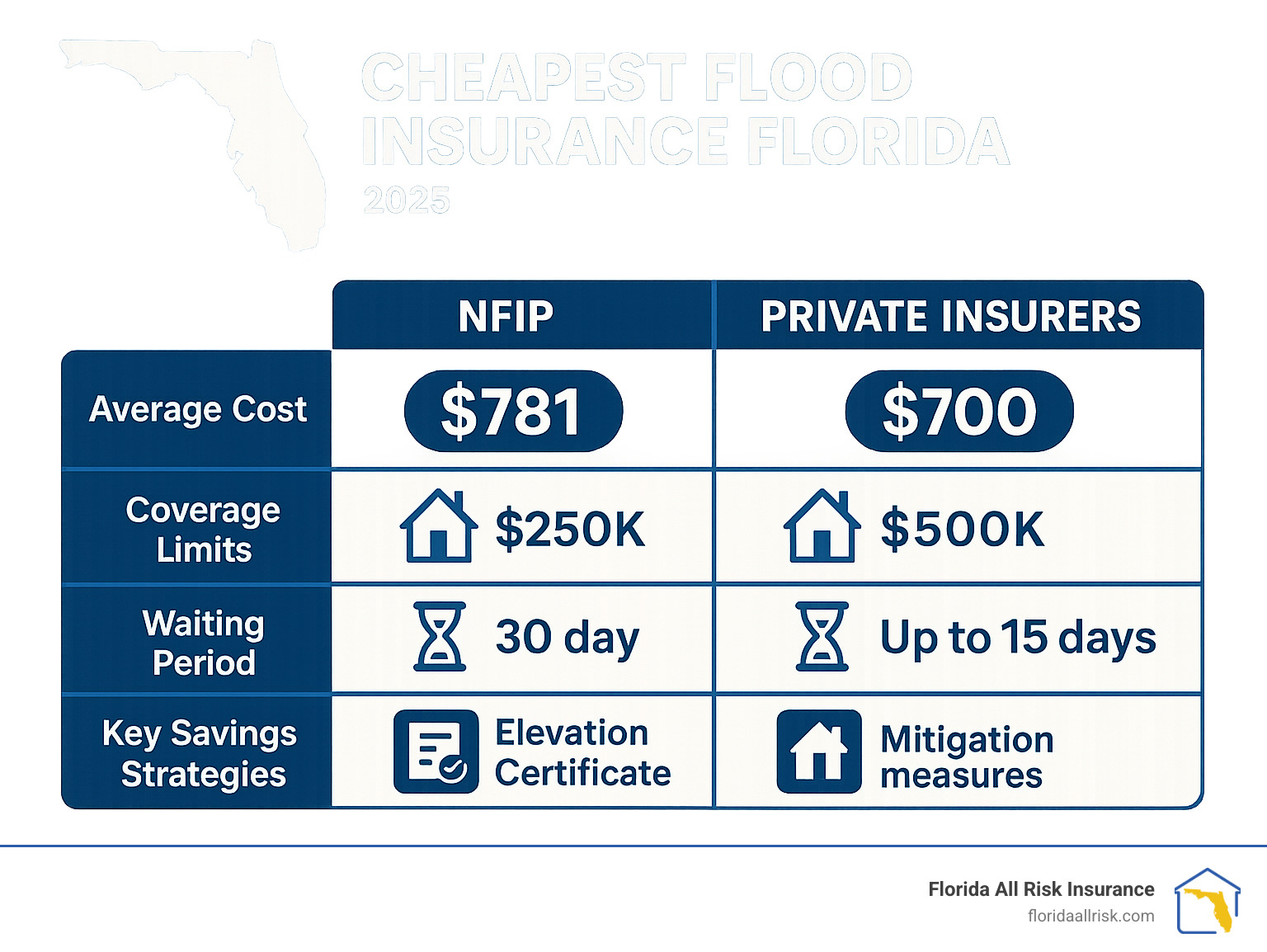
Flood insurance costs in Florida aren’t one-size-fits-all; they’re as unique as your home’s fingerprint. The state’s peninsula geography exposes it to multiple flood perils, from powerful hurricane storm surges along its extensive coastline to inland pluvial flooding caused by torrential downpours overwhelming drainage systems. Add fluvial flooding from overflowing rivers and lakes, and it’s clear why finding the cheapest flood insurance Florida offers is a top priority. When you start shopping, you’ll find costs vary dramatically. Through the National Flood Insurance Program (NFIP), Florida homeowners typically pay around $781 to $792 per year. Private flood insurance adds another layer, averaging around $1,479 annually in Florida, but often providing higher coverage limits and more flexible terms. For some homeowners, especially those in lower-risk areas, private insurers can offer the most competitive rates.
To see how rising seas could affect your neighborhood over time, explore the interactive maps in the NOAA Sea Level Rise Viewer. Pair that data with the property-specific details available from the FEMA Flood Map Service Center to get the clearest picture of your real-world flood exposure.
Several major factors drive your costs, especially under FEMA’s new Risk Rating 2.0 methodology:
- Location and Elevation: This remains the single biggest factor. Your home’s precise geographic coordinates are now analyzed for proximity to various water sources—the coast, rivers, lakes, and even smaller streams. But it’s not just about distance; it’s about elevation. An Elevation Certificate officially documents your home’s height, particularly the first-floor height, relative to the predicted flood levels. A home just a few feet higher than its neighbor can see a dramatically lower premium.
- Property Value and Replacement Cost: Your premium is directly tied to how much it would cost to rebuild your home, not its market value. This is known as the Replacement Cost Value (RCV). Insurers consider local construction costs, materials, and the size and features of your home to determine the RCV. A higher RCV means you need higher coverage limits, which in turn increases your premium. It’s crucial to ensure your coverage accurately reflects your RCV to avoid being underinsured after a disaster.
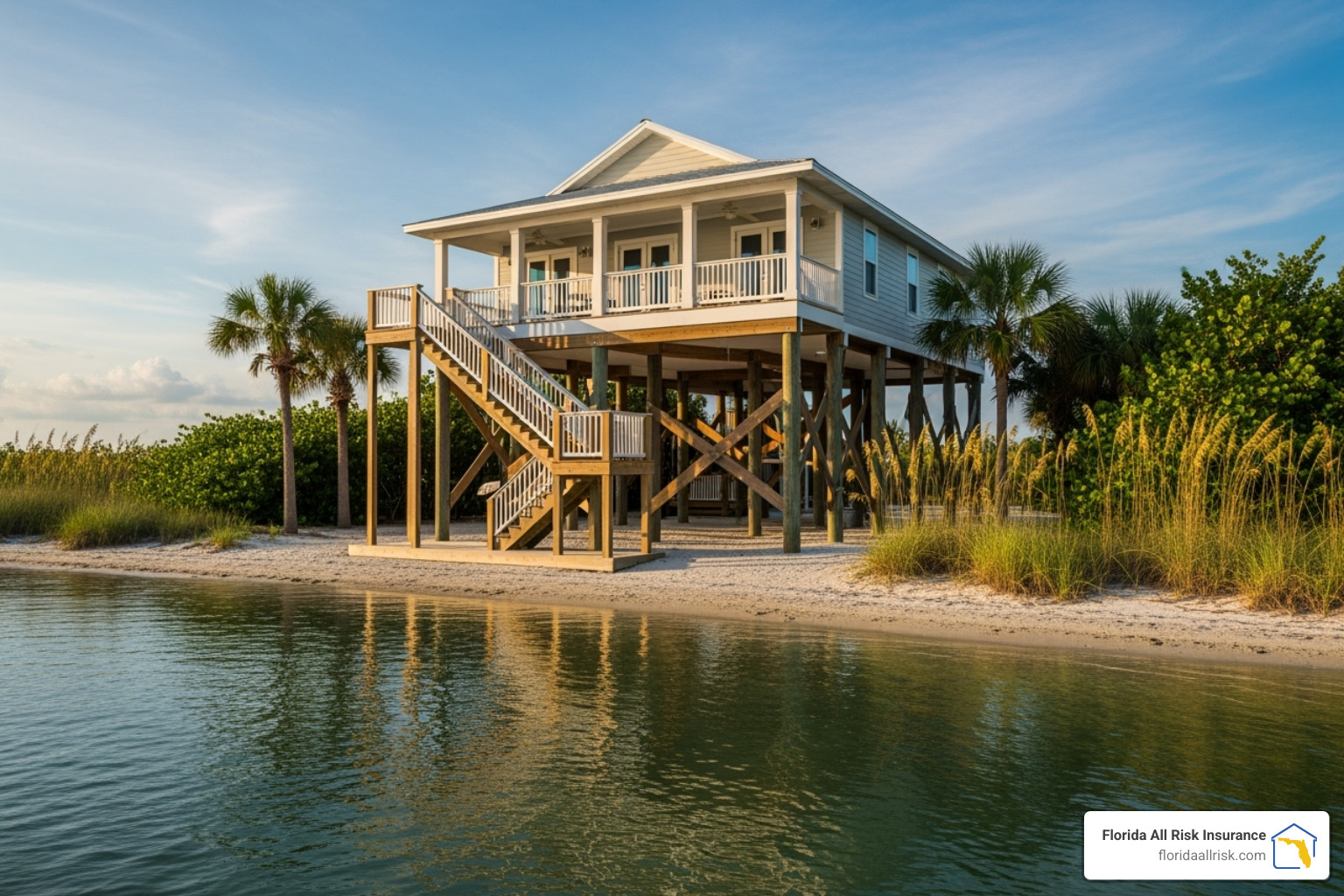
- Construction and Mitigation Features: The way your home is built can make or break your premium. Homes constructed to modern, resilient standards, like the Florida Building Code, often fare better. Specific features that can earn you significant discounts include having an liftd foundation (e.g., on stilts or pilings), installing certified flood vents in foundation walls to allow water to pass through, and elevating utilities like HVAC systems and water heaters above the anticipated flood level.
Understanding what you’re buying is crucial. Flood insurance covers the physical structure of your home—foundation, walls, electrical and plumbing systems, and built-in appliances. Contents coverage protects furniture, clothing, and electronics. But it has notable gaps: it won’t cover landscaping, swimming pools, decks, or vehicles. Most items in basements or below-grade enclosures aren’t covered, and you won’t get help with temporary living expenses under a standard NFIP policy, a critical gap that can leave families scrambling for housing after a flood.
How Flood Zone Designation Affects Your Premium
For decades, your flood zone determined your premium. FEMA divides Florida into risk zones. High-risk zones (A, V) have a 1% or greater annual chance of flooding. This adds up to a 26% chance over a 30-year mortgage. If you have a federally-backed mortgage in one of these zones, flood insurance is required. Moderate-to-low-risk zones (X, B, C) are not risk-free; more than 25% of flood claims come from people living outside these high-risk areas. Heavy rainfall or overwhelmed storm drains can cause flooding anywhere. While zones are no longer the primary rating factor for the NFIP, they still determine whether insurance is mandatory and are used by private insurers in their own risk assessments.
How FEMA’s Risk Rating 2.0 Impacts Your Bill
In October 2021, FEMA’s Risk Rating 2.0 moved to a custom, property-specific approach. The old system was based on your flood zone; the new system examines every detail of your property as an individual risk. FEMA now considers your first-floor height, precise distance to multiple water sources, cost to rebuild, and unique flood history and claims. This shift means two identical homes in the same neighborhood might have different premiums based on subtle differences. Your individual property characteristics matter more than ever. Features like flood vents and proper elevation certificates can now directly and significantly impact your premium, making mitigation efforts more valuable than ever.
NFIP vs. Private Flood Insurance: Which is Cheaper for You?
When you’re hunting for the cheapest flood insurance Florida has to offer, you’re choosing between the government-backed National Flood Insurance Program (NFIP) and the private flood insurance market. Neither option is universally cheaper. Your specific situation will determine which path saves you the most money.
| Feature | National Flood Insurance Program (NFIP) | Private Flood Insurance |
|---|---|---|
| Coverage Limits | Building: Up to $250,000; Contents: Up to $100,000 | Building: Up to $5,000,000+; Contents: Up to $500,000+ |
| Cost | Standardized rates; Average $781-$1067/year in FL; Risk Rating 2.0 | Varies widely; Can be lower for low-risk, higher for high-risk |
| Waiting Period | Typically 30 days | Often 7-15 days (sometimes shorter) |
| Additional Coverages | Limited; No Additional Living Expenses (ALE) | Often offers ALE, Loss of Use, Pool Repair, etc. |
| Flexibility | Standardized policies; Less customization | More customizable policies and endorsements |
| Availability | Available in participating communities | Varies by carrier and risk appetite |
| Claims History Impact | Considers property’s history under RR2.0 | Considers property’s history, often more granularly |
The key differences boil down to government-backed reliability versus private market innovation. NFIP offers consistency and availability even in the riskiest areas, while private insurers bring competition, customization, and often better coverage options. One major consideration is waiting periods. Private insurers often activate policies in just 7-15 days, compared to NFIP’s standard 30-day wait. Coverage limits also differ dramatically. Perhaps most importantly, private insurers may offer additional living expenses coverage when NFIP doesn’t. If a flood forces you out of your home, this coverage pays for hotels and other temporary costs.
National Flood Insurance Program (NFIP)
The NFIP has been the backbone of flood protection in America since 1968. Managed by FEMA, its standardized policies mean the same coverage everywhere. This brings predictability but less flexibility. The coverage limits are straightforward: $250,000 maximum for building coverage and $100,000 maximum for contents. For many homeowners, these limits provide adequate protection. The 30-day waiting period is NFIP’s most challenging feature. You can’t wait until a hurricane is approaching to buy protection. What NFIP doesn’t cover is also important: there’s no coverage for additional living expenses, no pool coverage, and limited coverage for items in basements. The program’s greatest strength is its availability in high-risk areas where private insurers won’t offer coverage.
The Private Flood Insurance Advantage
Private flood insurance has exploded in popularity across Florida. The most obvious advantage is dramatically higher coverage limits. While NFIP caps building coverage at $250,000, private insurers routinely offer $5 million or more. Shorter waiting periods of 7-15 days can be a game-changer. The customization options are also a major draw. You can add coverage for your pool, increase contents limits, or add additional living expenses coverage. For homeowners in lower-risk areas, private insurance often delivers genuine savings. Private insurers can price your specific property more precisely. Bundling opportunities with your homeowners policy can also lead to discounts. The trade-off is availability. Private insurers can choose which risks to accept, so options might be limited in extremely high-risk areas.
How to Find the Cheapest Flood Insurance in Florida: Actionable Savings Strategies
Finding the cheapest flood insurance Florida isn’t about luck; it’s about being proactive. By putting a few clever strategies into action, you can bring those costs down. Combining strategies—like elevating your home and getting an Elevation Certificate—can open up multiple discounts. It might take some upfront effort, but the long-term savings and peace of mind are invaluable.
Comparing Policies to Find the Cheapest Flood Insurance in Florida
The simplest way to find the cheapest flood insurance is to shop around. Don’t settle for the first quote. We always recommend getting quotes from both the NFIP and private insurance providers. A cheaper policy isn’t better if it leaves you underinsured. Always compare the coverage details, not just the price tag. Make sure the limits for your building and contents truly reflect replacement costs. This is where working with an independent agency shines, as we can compare options side-by-side to find the best value for your home.
What an Elevation Certificate Means for Finding the Cheapest Flood Insurance in Florida
An Elevation Certificate (EC) can be your secret weapon. Think of it as your home’s flood-risk report card, prepared by a licensed surveyor, engineer, or architect. This document provides specific details about how high your home sits relative to the Base Flood Elevation (BFE). By proving your home’s lowest floor is higher than the BFE, an EC tells insurers your home is less risky, which usually means lower premiums. You’ll typically need an EC if your home is in a high-risk flood zone (A or V) and was built after your community’s first Flood Insurance Rate Map (FIRM) was established.
Lower Your Premium with Flood Mitigation
Investing in flood mitigation is a fantastic way to lower your insurance premiums. FEMA offers discounts for homes that take these proactive steps. Some of the most effective strategies include elevating your home entirely, installing flood vents to allow water to flow through enclosed areas, moving critical mechanical equipment like your HVAC and water heater to higher floors, and using flood-resistant materials.
Adjust Your Policy and Deductible
Another powerful trick is to smartly adjust your policy’s deductible and coverage. Choosing a higher deductible means you agree to pay more out-of-pocket in a claim, which lowers your annual premium. NFIP deductibles range from $1,000 to $10,000. You can also separate your building and contents coverage. If your home has few valuable items, you might opt for building-only coverage. Lastly, review your coverage amounts annually. Your home’s value can change, and checking your limits ensures you’re not paying for coverage you don’t need or leaving yourself underinsured.
Navigating Florida’s Flood Insurance Requirements
Understanding when flood insurance is legally required in Florida goes hand-in-hand with finding the cheapest flood insurance Florida has to offer. These requirements are a safety net, ensuring that when the next big storm comes, families won’t lose everything.
Is Flood Insurance Mandatory in Florida?
It depends on your specific situation. While Florida doesn’t require every homeowner to carry flood insurance, it becomes mandatory in several scenarios:
- Mortgage lender requirements are the most common reason. If your home is in a high-risk flood area (FEMA zones A or V) and you have a mortgage from a federally regulated lender, flood insurance is not optional.
- Citizens Property Insurance requirements have created another path to mandatory coverage. Florida’s state-backed insurer is phasing in flood insurance requirements for its policyholders, with all homes to be covered by January 1, 2027, with some exemptions.
- Federal disaster assistance recipients are typically required to maintain flood insurance to remain eligible for future aid.
Even when not legally mandated, we strongly recommend considering it. More than 40% of flood insurance claims come from outside high-risk flood areas.
What Your Flood Insurance Policy Covers (and What It Doesn’t)
Understanding your policy is crucial. Flood insurance is specifically for damage from rising water.
Building coverage protects the physical structure of your home. This includes your home’s foundation, electrical and plumbing systems, central air conditioning, water heaters, furnaces, built-in appliances like dishwashers, permanently installed carpeting, cabinets, and debris removal.
Contents coverage protects your personal belongings. This means your clothing, furniture, electronic equipment, portable air conditioners, washers, and dryers are covered.
Now, here’s what flood insurance doesn’t cover:
- Additional Living Expenses (ALE) are not covered by standard NFIP policies. This means you’re on your own for temporary housing costs.
- Basement coverage is extremely limited. While essential items like furnaces are covered, most personal property and finished walls are not.
- Outdoor structures and landscaping like decks, patios, fences, trees, and lawns are excluded.
- Vehicles are not covered by flood insurance; that falls under your auto policy.
- Earth movement damage from erosion or landslides is not covered.
- Currency, precious metals, and important documents are also typically excluded.
Frequently Asked Questions about Florida Flood Insurance
What is the average cost of flood insurance in Florida?
The average NFIP policy costs around $781 per year in Florida. However, this number doesn’t tell the whole story. Your actual cost could be dramatically different. Some of our clients pay as little as $450 annually, while others might see premiums of $3,500 or more. The wide range depends on your specific flood risk, property’s value, coverage amounts, and whether you go with NFIP or private insurance. Private options can sometimes be cheaper for lower-risk homes, especially under the new Risk Rating 2.0 system. The key takeaway is not to assume the average applies to you.
Can I get flood insurance if I live in a high-risk area?
Absolutely. The National Flood Insurance Program was designed specifically for high-risk areas. If you live in a high-risk flood zone and have a mortgage from a federally regulated lender, you’re required to carry flood insurance. This isn’t optional; it’s a federal mandate to protect both you and the lender. While premiums in high-risk zones are higher, they are still a fraction of what you’d pay to recover from flood damage out-of-pocket. The good news is that living in a high-risk area doesn’t mean you’re stuck with sky-high premiums. Cost-saving strategies like getting an Elevation Certificate or implementing flood mitigation can be particularly effective.
How long does it take for a flood insurance policy to take effect?
For NFIP policies, there’s typically a 30-day waiting period from the date you purchase your policy before coverage begins. This prevents people from buying insurance only when a storm is heading their way. However, there are important exceptions. If you’re buying flood insurance as a requirement for a new home loan closing, coverage can take effect immediately. This is where private flood insurance can offer a real advantage: many private insurers offer shorter waiting periods, sometimes as little as 7-15 days. This difference can be crucial during hurricane season.
Your Partner in Protection
After spending years helping Florida families steer the complex flood insurance landscape, I’ve learned that finding the cheapest flood insurance Florida offers isn’t just about the lowest quote—it’s about understanding your unique situation and making smart, informed decisions.
Your home’s flood risk is as individual as your fingerprint. The elevation of your property, its distance from water, and construction materials all play a role in your premium. That’s why a one-size-fits-all approach simply doesn’t work.
Getting an elevation certificate can be one of your most powerful tools. I’ve seen homeowners save hundreds annually just by proving their home sits higher than the base flood elevation. Implementing flood mitigation measures takes this a step further, protecting your home while actively reducing your insurance costs.
But the most important step is comparing quotes effectively. It’s not enough to look at the price. You need to understand what you’re getting for your money. This is where working with an independent agency like Florida All Risk Insurance makes all the difference. We don’t work for just one insurance company—we work for you. We have access to both NFIP policies and multiple private carriers, which means we can do the heavy lifting of comparing options side by side.
Don’t wait for the waters to rise. Flood insurance has waiting periods, and the best rates go to those who plan ahead. Take control of your flood insurance costs today. To get started with finding your optimal flood coverage solution, explore our flood coverage options.
Contact Us
Florida All Risk Insurance
Address: Saint Petersburg, FL
Phone: (727) 777-9999
Email: [email protected]
Website: joea233.sg-host.com/

