

Cheap general liability insurance for subcontractors: Secure 2025
Why Subcontractors Can’t Afford to Go Without General Liability Insurance
As a subcontractor in Florida, you are the specialized force that brings construction projects to life. Whether you’re a master electrician wiring a new commercial space in St. Petersburg, a skilled plumber installing systems in a Tampa high-rise, or a painter adding the final touches to a coastal home, your expertise is the backbone of the industry. But in a field defined by physical risk and complex contracts, that expertise alone isn’t enough to protect your business. One stray spark, one misplaced ladder, or one leaky pipe can trigger a catastrophic lawsuit that threatens to dismantle everything you’ve built.
This is where cheap general liability insurance for subcontractors becomes the most critical tool in your entire kit. It’s not just another business expense; it’s your license to operate on professional job sites and the financial armor that shields your personal assets from business liabilities. General contractors and project owners understand the risks involved, which is why they universally demand a Certificate of Insurance (COI) before you can even unload your tools. Without it, your bids are dead on arrival.
Many subcontractors overestimate the cost and underestimate the necessity of this coverage. Let’s clear the air with some facts:
- Entry-level policies are incredibly affordable, often starting around $21 per month.
- The average premium for a small subcontracting business falls between $42 and $77 per month, a modest investment for comprehensive peace of mind.
- Smart strategies, like bundling your general liability with tools and equipment coverage, can slash your premiums by up to 25%.
- This insurance covers the pillars of third-party risk: legal defense fees, medical bills for injuries, repair costs for property damage, and settlements or judgments.
Finding affordable, high-quality protection is entirely achievable when you approach it with the right knowledge. This guide is designed to be your definitive resource. We will break down exactly what general liability insurance covers, explain the factors that determine your cost, and provide a clear, actionable playbook for securing the best possible rates. We’ll also explore the other key policies that form a complete safety net, ensuring your business is resilient enough to withstand the unexpected and ready for profitable growth.
The Unshakeable Foundation: Why General Liability Insurance is Non-Negotiable for Subcontractors

Commercial General Liability (CGL) insurance is the bedrock of risk management for any business, but for subcontractors, it’s a lifeline. It’s designed to protect your business from claims that your operations caused bodily injury to a third party or damaged their property. While Florida state law doesn’t mandate CGL for every trade, the reality of the market does. Virtually every general contractor, project manager, and commercial client will refuse to hire a subcontractor who cannot provide a valid Certificate of Insurance. They do this to transfer risk away from their own operations; if your work causes a problem, they want your insurance policy to be the first line of defense.
A standard CGL policy is your shield against a host of common job site perils. Let’s explore the core protections with real-world scenarios:
-
Third-Party Bodily Injury: This covers medical expenses, legal fees, and potential settlements if a non-employee is injured due to your work.
- Scenario: You’re an HVAC subcontractor installing ductwork. You leave a tool cart in a hallway, and the property owner’s representative trips over it, suffering a broken wrist. Your CGL policy would cover their medical bills, physical therapy, and your legal costs if they decide to sue for negligence.
-
Third-Party Property Damage: This pays for the repair or replacement of property you don’t own but have accidentally damaged.
- Scenario: You’re a plumber soldering a pipe in a multi-million dollar home. A stray spark ignites nearby insulation, causing a small fire that results in significant smoke damage to custom cabinetry and painted walls. Your CGL policy would cover the cost to repair the walls, replace the cabinets, and mitigate the smoke damage.
-
Products-Completed Operations: This is a vital protection that covers claims of injury or damage that arise after you’ve finished the job and left the site. Construction defects can often take months or years to surface.
- Scenario: You’re an electrician who wired a new retail store. Six months after the grand opening, faulty wiring in a junction box you installed overheats and causes a fire, destroying thousands of dollars in inventory. Your products-completed operations coverage would respond to the claim for the damaged inventory.
-
Personal and Advertising Injury: This protects against less tangible harms, such as libel, slander, copyright infringement, or misappropriation of advertising ideas.
- Scenario: To promote your painting business, you post before-and-after photos on your social media. Unfortunately, you mistakenly use a photo from a competitor’s website and claim it as your own work. The competitor sues you for copyright infringement and damaging their brand. This is the type of claim your advertising injury coverage is designed to handle.
-
Medical Payments: This provides small, immediate payouts for minor injuries to third parties, regardless of who was at fault. It’s designed to quickly resolve minor incidents and prevent them from escalating into larger lawsuits.
Without CGL, the cost of defending against even a single one of these scenarios could bankrupt your business and put your personal assets—your home, savings, and vehicles—at risk. For a more exhaustive look at policy details, the Insurance Information Institute’s guide to CGL is an excellent resource. General liability insurance is what legitimizes your business, satisfies contractual requirements, and allows you to focus on your craft with the confidence that you’re protected.
Deconstructing the Cost: What Really Drives Your General Liability Premium?

While the average cost of general liability insurance for subcontractors is refreshingly low—typically between $500 and $900 per year—your specific premium is not a one-size-fits-all number. Insurance carriers are experts in risk assessment, and they calculate your rate by analyzing a unique blend of factors specific to your business. Understanding these factors empowers you to have more informed conversations with your agent and identify areas where you can control costs.
Here are the primary drivers of your insurance premium:
-
Your Specific Trade and Risk Profile: This is the most significant factor. Insurers rely on decades of claims data to determine the inherent risk of different professions. A trade with a higher frequency or severity of claims will naturally have higher premiums.
- High-Risk Example (Roofer): Roofers work at height, handle hot materials, and face extreme weather, leading to a high risk of employee falls, third-party injuries from falling debris, and catastrophic property damage from faulty installations. Their premiums will be on the higher end.
- Moderate-Risk Example (Electrician/Plumber): These trades carry significant risk of fire or water damage if work is done improperly. The potential for a single claim to be very expensive keeps their rates in the moderate-to-high range.
- Lower-Risk Example (Interior Painter): While still facing risks like paint spills or tripping hazards, the potential for a catastrophic, multi-million dollar claim is far lower than for a roofer, resulting in some of the most affordable premiums.
-
Business Location (ZIP Code): Where you operate matters. Premiums can vary based on state and local factors. In Florida, insurers pay close attention to coastal proximity due to hurricane risk, which can increase the chances of water damage claims. Additionally, some counties or cities have a more litigious environment, meaning lawsuits are more common, which can also drive up rates.
-
Business Size (Payroll and Revenue): Your gross sales and annual payroll are used as a measure of your operational size or “exposure.” The logic is simple: a subcontractor with a $2 million revenue and a crew of 15 is on more job sites and performing more work than a solo operator with $100,000 in revenue. More work means more opportunities for an accident to occur, leading to a higher premium.
-
Claims History: Your track record is a direct reflection of your risk. A business with a clean history of no claims for five years will receive preferential pricing. Conversely, a subcontractor with multiple recent claims will be seen as a higher risk, leading to surcharges on their premium or, in some cases, difficulty finding coverage at all.
-
Coverage Limits and Deductibles: The amount of protection you buy directly impacts the price.
- Limits: The industry standard for subcontractors is a $1,000,000 per occurrence / $2,000,000 aggregate limit. The “per occurrence” limit is the maximum the policy will pay for a single incident, while the “aggregate” is the total it will pay for all claims within the policy year. Increasing these limits to $2M/$4M to satisfy a large contract will increase your premium, though often not by a proportional amount.
- Deductible: Your deductible is the amount you pay out-of-pocket on a claim before the insurance company starts paying. A higher deductible (e.g., $2,500 instead of $500) demonstrates you’re willing to share more of the risk, which will lower your annual premium. However, you must be financially prepared to cover that higher amount if a claim occurs.
The Subcontractor’s Playbook for Finding Affordable General Liability Insurance
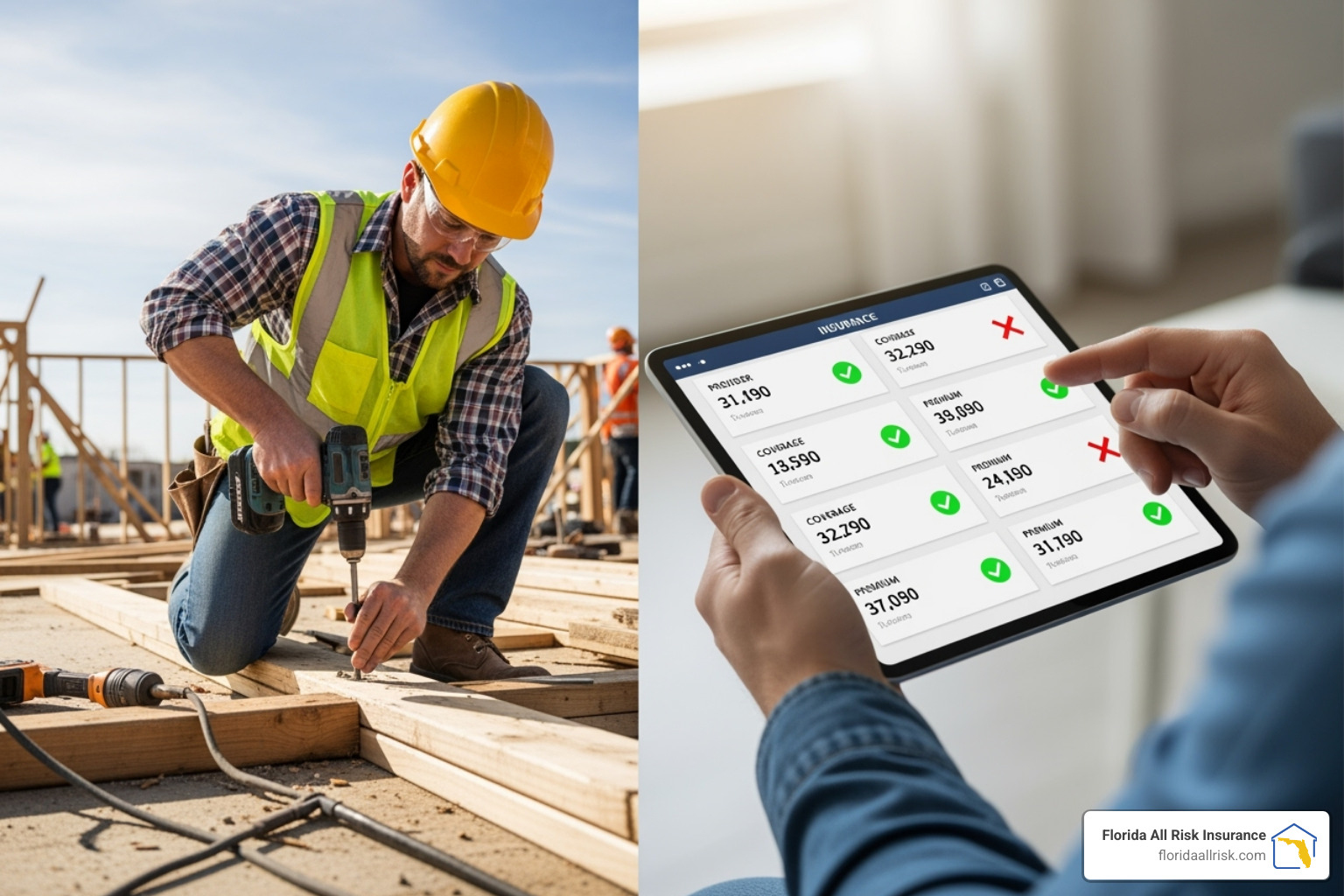
Securing cheap general liability insurance for subcontractors is not about sacrificing crucial protection for a lower price. It’s about implementing smart, strategic actions that make your business more attractive to insurers, forcing them to compete for your business with their best rates. Here is a proven, three-part strategy to minimize your costs while maximizing your coverage.
Strategy 1: Work with an Independent Agent to Compare Quotes
This is the single most effective strategy for saving money. Not all insurance carriers price risk the same way. One carrier might have extensive, positive claims experience with electricians and offer them highly competitive rates, while another may view them as high-risk and charge more. You won’t know who offers the best value unless you shop the market.
- Independent Agent (Your Best Choice): An independent agent, like Florida All Risk Insurance, works for you, not for a single insurance company. We represent dozens of A-rated carriers that specialize in construction. We take your business information once and submit it to multiple markets simultaneously, presenting you with a side-by-side comparison of coverage and pricing. This creates competition and ensures you get the best possible deal.
- Captive Agent: A captive agent works for one specific company (e.g., State Farm, Allstate). They can only offer you that one company’s products and pricing, regardless of whether it’s a good fit or a competitive rate for your trade.
- Direct Writer: Buying directly from a company online can seem fast, but you lose the expert guidance of an agent who can help you steer complex requirements like additional insured endorsements or waivers of subrogation.
Strategy 2: Bundle Policies for Powerful Discounts
Insurers love it when you place more of your business with them, and they reward you with significant discounts. The most common way for subcontractors to do this is with a Business Owner’s Policy (BOP). A BOP is a package deal that combines General Liability insurance with Commercial Property insurance into one seamless, discounted policy. Businesses that bundle can save up to 25% compared to buying the policies separately.
The property portion of a BOP is incredibly valuable, as it can be custom to protect your most vital business assets, such as:
- Your Tools and Equipment: Whether they are at your shop, in your truck, or on a job site.
- Leased or Owned Office/Shop Space: Protecting the building itself.
- Business Personal Property: Covering your office contents like computers, desks, and inventory.
Strategy 3: Implement and Document Robust Risk Management
Insurers set premiums based on perceived risk. The more you can do to demonstrate that you run a safe, professional operation, the lower your premiums will be over the long term. A strong safety culture prevents the claims that drive up your costs.
Actionable steps to lower your risk profile include:
- Develop a Written Safety Manual: Create a formal document outlining your safety procedures, from proper ladder use to hazardous material handling. This shows insurers you are proactive about safety.
- Conduct Regular Safety Meetings: Hold weekly or bi-weekly “toolbox talks” with your crew to discuss job-specific hazards and reinforce safety protocols. Keep a log of who attended and what was discussed.
- Maintain Your Equipment: Keep detailed maintenance logs for all major tools and equipment. Well-maintained gear is less likely to fail and cause an injury or property damage.
- Enforce Personal Protective Equipment (PPE): Strictly require all personnel on your job sites to use appropriate PPE, such as hard hats, safety glasses, and gloves.
- Use High-Quality Subcontractor Agreements: Work with a lawyer to draft a standard agreement that includes clear scope-of-work language, payment terms, and appropriate indemnification clauses to protect your business contractually.
Decoding Your Policy: A Practical Guide to Insurance Jargon That Matters
An insurance policy is a legal contract filled with specialized language. As a subcontractor, you don’t need to be an expert, but mastering a few key terms is essential. General contractors will often demand specific endorsements and conditions in their contracts, and understanding what they’re asking for can be the difference between winning a bid and being disqualified.
Certificate Holder vs. Additional Insured: The Critical Distinction
This is the most common point of confusion for subcontractors. Both appear on your Certificate of Insurance (COI), but their roles are vastly different.
- Certificate Holder: This is simply the person or entity (usually the general contractor or project owner) who is receiving proof that you have insurance. They have no rights or coverage under your policy. It’s like showing someone your driver’s license to prove you’re licensed to drive.
- Additional Insured: This is a powerful endorsement that extends your policy’s protection to cover another party (the GC or owner). If a claim arises from your work (your “ongoing or completed operations”), your insurance policy will defend the additional insured and pay for covered damages on their behalf. GCs demand this because it transfers the risk of your work directly to your insurance carrier, protecting their own policy and claims history.
- Scenario: A visitor to a construction site trips over your extension cord and sues both you and the general contractor. Because you named the GC as an additional insured, your general liability policy would step in to pay for the legal defense and any settlement for both your company and the GC.
Key Endorsements and Clauses You Must Know
- Waiver of Subrogation: Subrogation is the right of your insurance company to sue a responsible third party to recover money they paid out on a claim. A waiver of subrogation is an endorsement where you agree to give up this right. GCs require this to prevent your insurer from suing them after paying a claim that might have been partially their fault. It’s another layer of protection for the GC.
- Primary and Noncontributory (P&NC): This is another common requirement. It dictates the order in which policies respond to a claim. “Primary” means your policy must pay first, before the GC’s policy. “Noncontributory” means your policy cannot seek contribution from the GC’s policy to share the loss. In short, this ensures your policy is the one and only policy to respond to claims arising from your work.
-
Occurrence vs. Claims-Made Policy Forms: This is a fundamental structural difference in policies.
- Occurrence: Covers incidents that happen during the policy period, no matter when the claim is filed. This is the standard and preferred form for construction, as a defect you created today might not result in a claim for years.
- Claims-Made: Only covers claims that are filed during the policy period. If you cancel the policy or switch carriers, you lose coverage for all past work unless you buy expensive “tail coverage.” Avoid claims-made policies for CGL whenever possible.
-
Common Exclusions: Be aware of what your policy doesn’t cover. Typical exclusions include damage to your own work (builder’s risk or faulty workmanship issue), employee injuries (covered by workers’ comp), auto accidents (covered by commercial auto), and professional design errors (covered by professional liability).
Building Your Fortress: A Complete Insurance Portfolio for Modern Subcontractors
General liability insurance is the cornerstone of your risk management plan, but it doesn’t cover every risk your business faces. A truly resilient business is protected by a comprehensive portfolio of insurance policies that work together to create a fortress of protection. Relying on CGL alone leaves you exposed to several common and potentially devastating financial losses. Here are the other essential coverages every subcontractor should consider.
| Coverage | What It Handles | Why a Subcontractor Needs It |
|---|---|---|
| Workers’ Compensation | Employee medical bills & lost wages from on-the-job injuries. | Required by law in Florida for construction businesses with one or more employees. It protects your team and shields you from lawsuits by injured employees. Operating without it can lead to massive state fines and personal liability for injuries. |
| Commercial Auto | Liability and physical damage for vehicles used for business purposes. | Your personal auto policy excludes business use. If you cause an accident while driving to a job site or hauling materials, only a commercial auto policy will cover the damages. This also includes coverage for trailers and equipment attached to your vehicle. |
| Inland Marine (Tools & Equipment) | Theft, damage, or loss of your tools and equipment while they are in transit, on a job site, or stored off-site. | General liability covers damage you do to other people’s property, not your own. If thousands of dollars of your tools are stolen from your truck or a job site overnight, this is the policy that replaces them so you can get back to work. |
| Professional Liability (E&O) | Claims of financial loss due to faulty advice, design errors, or professional negligence. | Increasingly vital for subcontractors who provide any form of consultation, design-build services, or value engineering. If you recommend a specific system that fails to perform as promised, causing a financial loss for the client, this policy covers the resulting lawsuit. |
| Commercial Umbrella | Provides an extra layer of liability limits above your General Liability and Commercial Auto policies. | Standard policies can be exhausted by a single catastrophic claim (e.g., a multi-vehicle accident or a structural failure causing severe injuries). An umbrella policy provides an additional $1M, $2M, or more in coverage for when a lawsuit exceeds your primary limits. |
Bundling these policies with the same carrier that writes your general liability can often open up deeper multi-policy discounts, further reducing your total cost of insurance. An independent agent can analyze your specific operations—the vehicles you drive, the tools you own, and the services you provide—to build a customized, cost-effective program that leaves no dangerous gaps in your protection. For more context, see our overview of general liability insurance for small business.
Conclusion: Secure Your Business Without Breaking the Bank
Finding cheap general liability insurance for subcontractors is not a myth; it’s a strategic business decision that is absolutely essential for your survival and growth in the competitive Florida construction market. Throughout this guide, we’ve demonstrated that comprehensive protection is not only affordable but is the fundamental requirement for accessing the most profitable projects and safeguarding your personal financial future.
Let’s recap the core takeaways that empower you to take control of your insurance costs:
- General Liability is Non-Negotiable: It’s your ticket onto the job site and the shield that stands between a lawsuit and your personal assets. With policies starting as low as $21 per month, the cost of being uninsured is a gamble no professional should take.
- You Must Shop Smart: The key to the best rates is making top-rated insurance carriers compete for your business. Working with an independent agent is the most effective way to compare the market and find the optimal balance of price and protection.
- Proactive Management Pays Dividends: Bundling policies can save you up to 25%, and implementing a documented safety program will lower your premiums over time by reducing the claims that drive up costs.
- Knowledge is Power: Understanding key terms like “Additional Insured” and “Waiver of Subrogation” allows you to confidently meet contractual requirements and avoid dangerous coverage gaps.
As an independent agency, Florida All Risk Insurance specializes in navigating the unique challenges and opportunities within Florida’s construction industry. We’ve helped thousands of subcontractors just like you, from St. Petersburg to the entire state, secure customized, competitive coverage. We do the shopping for you, translate the jargon, and act as your long-term risk management partner.
Don’t leave your business exposed for another day. Every project you take on without the right protection is a roll of the dice with your livelihood. Take the decisive step to protect your hard work, your reputation, and your peace of mind.
Get a personalized general liability insurance quote today and find just how affordable comprehensive protection can be when you have an expert on your side.
Contact Us
Florida All Risk Insurance
Address: Saint Petersburg, FL
Phone: (727) 800-5669
Email: [email protected]
Conclusion: Protect Your Business—Without Overspending
General liability insurance isn’t a luxury; it’s the price of admission to profitable projects and the shield that keeps personal assets safe when accidents happen. The good news is that coverage remains affordable when you:
- Compare quotes through an independent agent.
- Bundle policies for multi-line discounts.
- Document solid safety practices to keep losses (and premiums) low.
Ready to check pricing custom to your trade, crew size, and job locations? Florida All Risk Insurance can deliver multiple quotes in minutes and walk you through the fine print so you only pay for what you need.
Call us at (727) 555-1234 or email [email protected] to request your personalized general liability quote today.
Contact Us
Florida All Risk Insurance
Saint Petersburg, FL
Phone: (727) 555-1234
Email: [email protected]
Conclusion: Secure Your Business Without Breaking the Bank
Let me be straight with you: cheap general liability insurance for subcontractors isn’t just possible—it’s absolutely essential for your business survival. Throughout this guide, we’ve covered the key strategies that can help you protect your livelihood without emptying your wallet.
Here’s what we’ve learned: general liability insurance is non-negotiable in today’s construction industry. Whether it’s a legal requirement or not, your clients will demand it, and one accident without coverage could wipe out everything you’ve worked to build. The good news? Affordability is absolutely achievable when you know how to shop smart.
The three core strategies we’ve discussed can dramatically reduce your insurance costs. Comparing quotes from multiple carriers through an independent agent gives you the power to find the best value. Bundling your policies can save you up to 25% on your total insurance costs—that’s real money back in your pocket. And implementing strong risk management practices not only keeps your crew safer but also signals to insurers that you’re a low-risk client worth rewarding with better rates.
We’re not just talking about saving a few dollars here and there. We’re talking about building a comprehensive protection strategy that covers your business from every angle while keeping your budget intact. From understanding the difference between certificate holders and additional insureds to knowing exactly what coverage limits you need, these details matter when claims arise.
As an independent agency, Florida All Risk Insurance helps subcontractors steer their options to find custom, competitive coverage. We understand the unique challenges you face in Florida’s construction market, from hurricane risks to complex contractor requirements. Our experience with thousands of subcontractors has taught us exactly how to secure the protection you need at prices that make sense for your business.
Don’t let another day pass with inadequate coverage or overpaying for protection you don’t fully understand. Take the next step to protect your livelihood. Your business, your family, and your peace of mind depend on making the right insurance decisions today.
Get a personalized general liability insurance quote today and find how affordable comprehensive protection can be when you work with agents who understand your business.
Contact Us
Florida All Risk Insurance
Address: Saint Petersburg, FL
Phone: [Insert Phone Number]
Email: [Insert Email Address]
Conclusion: Secure Your Business Without Breaking the Bank
Finding cheap general liability insurance for subcontractors doesn’t have to feel like searching for a needle in a haystack. Throughout this guide, we’ve shown you that affordable protection is not only possible—it’s essential for your business’s survival and growth.
Let’s recap the key takeaways that can transform your insurance shopping experience. General liability insurance is absolutely essential for any subcontractor who wants to stay in business. Whether you’re installing HVAC systems, laying tile, or painting homes, accidents happen, and without proper coverage, a single lawsuit could wipe out everything you’ve worked to build.
Affordability is completely achievable when you know where to look and how to shop smart. Policies starting at just $21 per month mean you can protect your business for less than what most people spend on their morning coffee each week. The average subcontractor pays between $42-$77 monthly, which is a small price to pay for peace of mind and the ability to secure profitable contracts.
We’ve shared three smart strategies for savings that can dramatically reduce your premiums. First, always compare quotes from multiple providers—the differences can be substantial. Second, bundle your policies whenever possible, as combining general liability with property coverage can save you up to 25% annually. Third, implement strong risk management practices that show insurers you’re serious about safety, which translates directly into lower premiums over time.
The path forward is clearer now. You understand what coverage you need, how much it should cost, and where to find the best deals. You know the difference between certificate holders and additional insureds, and why both matter for your business relationships. Most importantly, you’ve learned that cheap general liability insurance for subcontractors isn’t about cutting corners—it’s about being a smart shopper who knows how to balance cost with comprehensive protection.
As an independent agency, Florida All Risk Insurance helps subcontractors steer their options to find custom, competitive coverage. We work with multiple top-rated carriers, which means we can shop the market for you, comparing policies and prices to ensure you get the best value for your specific needs. Our expertise in the Florida market means we understand the unique challenges subcontractors face in our state, from hurricane risks to specific licensing requirements.
Take the next step and protect your livelihood. Every day you operate without proper general liability insurance, you’re gambling with your business’s future. The good news? Getting covered is easier than ever, and with the strategies we’ve shared, you can secure comprehensive protection without straining your budget.
Don’t let another day pass wondering “what if.” Your tools, your reputation, and your financial security are too important to leave unprotected. Get a personalized general liability insurance quote today and find how affordable peace of mind can truly be.
Contact Us
Florida All Risk Insurance
Address: Saint Petersburg, FL
Phone: (727) 800-5669
Email: [email protected]
Why Subcontractors Can’t Afford to Go Without General Liability Insurance
Cheap general liability insurance for subcontractors is more than just smart financial planning—it’s often the difference between landing profitable contracts and watching opportunities slip away. Whether you’re a plumber, electrician, painter, or HVAC specialist working in Florida, general contractors and property owners increasingly demand proof of insurance before you can even step foot on a job site.
Here’s what you need to know about affordable general liability insurance for subcontractors:
- Average cost starts at just $21 per month for basic coverage
- Most subcontractors pay between $42-$77 monthly depending on their trade and risk level
- Bundling with other policies can save up to 25% on your total insurance costs
- Coverage protects against costly lawsuits from customer injuries or property damage
- Required by most general contractors before they’ll hire you for projects
The construction industry faces significant liability risks. As one industry expert noted, “Construction comes with higher risks of personal injuries or property damage,” and without proper coverage, you could be personally liable for devastating financial losses. A single slip-and-fall incident or accidental property damage could cost thousands in legal fees and settlements.
But here’s the good news: affordable protection is absolutely possible when you know where to look and how to shop smart. The key is understanding what coverage you actually need, comparing quotes from multiple carriers, and working with agents who specialize in contractor insurance.
I’m Jason Miller, and I’ve been helping Florida contractors find affordable, comprehensive insurance solutions for over 20 years through Florida All Risk Insurance. My experience working with thousands of subcontractors has shown me exactly how to secure cheap general liability insurance for subcontractors without sacrificing essential protection.
Learn more about cheap general liability insurance for subcontractors:
- general liability insurance
- contractor liability coverage
- how much general liability insurance do i need
Why General Liability Insurance is Non-Negotiable for Subcontractors
General liability insurance, often called Commercial General Liability (CGL), is the bedrock of protection for any subcontractor. It shields your business from the financial fallout of common accidents, injuries, or damages that might occur during your operations.
What exactly does it guard against? Primarily, it handles third-party claims involving:
- Bodily Injury: If someone other than your employee is injured on your job site or due to your work, general liability covers their medical expenses and your legal defense. For example, if a homeowner trips over your tools and breaks an ankle.
- Property Damage: If you accidentally damage someone else’s property while working, this coverage steps in. This could be anything from a dropped hammer smashing a client’s window to a faulty installation causing water damage.
- Advertising Injury: This protects you from claims arising from libel, slander, copyright infringement, or using someone’s image without permission in your advertising.
While the law might not always mandate general liability insurance for every subcontractor, contractual obligations almost certainly will. Most general contractors, municipalities, and clients require proof of general liability insurance before they’ll consider hiring you. Without it, you’re not just risking financial ruin; you’re risking your ability to get work.
This isn’t just about covering your mistakes; it’s about protecting your personal assets. Without this essential coverage, any lawsuit against your business could potentially target your personal savings, home, and other assets. With general liability insurance, your business is a separate entity, and the insurance company steps in to defend you and cover eligible damages.
To dive deeper into what this vital coverage entails, explore our guide on What Does General Liability Insurance Cover?.
What a Standard Policy Covers
A standard general liability policy offers protection against a wide array of unforeseen events:
- Third-Party Bodily Injury: Covers medical costs and legal fees if a non-employee is injured due to your business operations.
- Third-Party Property Damage: If your work inadvertently damages property belonging to someone else, this covers the repair or replacement costs.
- Products-Completed Operations: Covers bodily injury or property damage that occurs after your work is completed. For example, if faulty wiring you installed causes a fire months later.
- Personal and Advertising Injury: Covers claims of libel, slander, false arrest, or copyright infringement.
- Medical Payments: Provides limited coverage for medical expenses for minor injuries to third parties on your premises, regardless of fault.
- Legal Defense Costs: Covers your legal fees, settlements, and judgments up to your policy limits, even if claims are baseless.
For a broader understanding of how these policies function, review A guide to commercial general liability insurance from the Insurance Information Institute.
Understanding the Cost of General Liability Insurance
One of the first questions we’re asked is, “How much does it cost?” The good news is that cheap general liability insurance for subcontractors is often more affordable than you might think.
Based on industry statistics, general liability insurance can start as low as $21 per month for small businesses. Most subcontractors see annual costs ranging from $500 to $800 per year, which breaks down to roughly $42 to $67 per month. While there’s no single “one-size-fits-all” price tag, these figures give you a solid ballpark.
To get a clearer picture of potential costs, check out our insights on General Liability Insurance Cost.
Key Factors That Influence Your Premium
Your general liability insurance premium is calculated based on several unique factors about your business:
- Your Specific Trade: Some trades naturally carry higher risks than others. A roofer or electrician faces more inherent risks than a painter performing minor repairs. Higher perceived risk means higher premiums.
- Business Location: Where you operate matters. Areas with higher rates of claims or specific environmental risks might see higher premiums.
- Number of Employees: More employees generally means more potential for accidents, which can affect your premium.
- Annual Revenue: Higher revenue might suggest more projects and thus more exposure to potential liabilities.
- Claims History: A history of past claims will likely lead to higher premiums. A clean claims record is your best friend for keeping costs down.
- Coverage Limits: Higher limits provide more protection but come with a higher price tag.
- Deductible Amount: Choosing a higher deductible often lowers your premium, but means you’ll pay more upfront if a claim occurs.
How Much Coverage Do You Really Need?
For many subcontractors, a common starting point for general liability limits is $1 million per occurrence and $2 million in aggregate.
- Per Occurrence Limit: The maximum amount your policy will pay for any single incident.
- Aggregate Limit: The total maximum amount your policy will pay out over the entire policy period.
When deciding coverage amounts, consider:
- Your Specific Risk Assessment: What are the worst-case scenarios for your type of work?
- Contract Requirements: General contractors will frequently specify the exact limits they require you to carry.
- Asset Protection: You want enough coverage to protect what you’ve built from devastating lawsuits.
For more detailed guidance, read our article on How Much General Liability Insurance Do I Need?.
How to Find Cheap General Liability Insurance for Subcontractors
Finding cheap general liability insurance for subcontractors isn’t about cutting corners on coverage; it’s about smart shopping and strategic planning. Here are our top strategies to help you secure the best rates.
When you’re looking for Cheap Business Insurance, these proactive measures are key to protecting your wallet and your business.
Strategy 1: Compare Quotes and Work with an Independent Agent
This is perhaps the most crucial step. Just like you wouldn’t buy a new truck from the first dealership you visit, you shouldn’t settle for the first insurance quote you receive.
- Shop Around: Get quotes from multiple insurance providers. Prices for the same coverage can vary significantly between carriers.
- Work with an Independent Agency: As an independent insurance agency based in St. Petersburg, Florida, we don’t work for a single insurance company. Instead, we work with a wide network of top-rated carriers. This means we can shop the market for you, comparing various quotes and policy options to find the best value that meets your specific needs. Unlike captive agents who only offer one company’s products, we have the flexibility to find you truly competitive rates.
Strategy 2: Bundle Policies for Significant Savings
Many insurance providers offer discounts when you purchase multiple policies from them. This is known as bundling, and it’s a fantastic way to secure affordable coverage.
The most common and beneficial bundle for subcontractors is a Business Owner’s Policy (BOP). A BOP typically combines general liability insurance with commercial property insurance into a single, cost-effective policy.
Businesses can save up to 25% by bundling policies. It not only saves you money but also simplifies your insurance management by having fewer policies to track.
Strategy 3: Implement Strong Risk Management to Lower Premiums
Insurance premiums are directly tied to risk. The safer your business operations, the less likely you are to file a claim, and the more attractive you become to insurers.
Here’s how to make your business lower risk:
- Safety Protocols: Develop and strictly adhere to comprehensive safety protocols on every job site.
- Documenting Procedures: Keep meticulous records of your safety training, equipment maintenance, and project procedures.
- Employee Training: Ensure all employees are thoroughly trained in safety procedures and proper equipment operation.
- Using High-Quality Materials: Investing in quality materials and well-maintained equipment reduces the likelihood of failures that could lead to claims.
- Clear Client Contracts: Draft detailed contracts that clearly define scope of work, responsibilities, and expectations.
For more detailed insights, refer to More on contractor liability coverage.
Decoding Your Policy: Key Terms for Subcontractors
The language of insurance policies can feel overwhelming, but understanding these key terms is essential for your business survival. When working with general contractors and clients, knowing exactly what your policy covers can make the difference between landing a job and losing it.
Certificate Holder vs. Additional Insured: A Crucial Distinction
This distinction is absolutely critical to understand, yet it trips up more subcontractors than any other insurance concept.
Certificate Holder is the simpler concept. This is the person or company who receives a copy of your Certificate of Insurance (COI). Think of it like showing someone your driver’s license—you’re proving you have insurance, but they don’t receive any protection from your policy.
Additional Insured is more complex and important. When you add someone as an additional insured on your general liability policy, you’re extending your insurance coverage to protect them too—but only for claims that arise from your work. If a third party gets injured because of something you did and sues both you and the general contractor, your policy would defend and cover the general contractor as well.
General contractors demand this arrangement because it’s all about risk transfer. By being named as an additional insured, the GC ensures that if your work causes problems, your insurance becomes the first line of defense, not theirs.
Key Policy Features to Understand
Occurrence vs. Claims-Made Policies is one of the most important distinctions. An occurrence policy covers incidents that happen during the time your policy is active, regardless of when someone files a claim. A claims-made policy only covers claims that are made and reported while your policy is currently in force. For subcontractors, occurrence policies are almost always the better choice because construction defect claims can surface years after completion.
Policy exclusions define what your policy won’t cover. Common exclusions include professional mistakes, damage to your own property, employee injuries, and vehicle accidents. Understanding these gaps helps you avoid surprises.
Waiver of subrogation is an endorsement that prevents your insurance company from trying to recover money from the general contractor if they pay out a claim. General contractors often require this for additional protection.
Beyond General Liability: Other Essential Insurance for Subcontractors
While general liability insurance forms the cornerstone of your protection, you face unique risks that extend beyond what it covers. Understanding these gaps could save your business from unexpected financial disasters.
For a broader perspective on essential coverage, check out our insights on General Liability Insurance for Small Business.
Other Policies to Consider
Workers’ Compensation is often required by law if you have employees. This coverage handles medical expenses and lost wages for employees who are injured on the job. Without it, a workplace injury could lead to devastating out-of-pocket costs.
Commercial Auto Insurance addresses another critical exposure. Your personal auto policy won’t cover accidents that occur while using your vehicle for business purposes. Commercial auto protects against bodily injury and property damage caused by your business vehicles.
Inland Marine (Tools & Equipment) protects your valuable tools, equipment, and materials while in transit, on job sites, or stored off-premises. General liability won’t cover theft of your own tools, but these are often your most valuable business assets.
Professional Liability (Errors & Omissions) protects you from claims of negligence, errors, or omissions in professional services you provide. This is particularly important for subcontractors who offer consultative services.
Commercial Umbrella Insurance provides an extra layer of liability protection above your primary policies. If a claim exhausts your underlying policy limits, umbrella coverage kicks in for remaining costs.
| Coverage | What It Handles | Who Needs It |
|---|---|---|
| Workers’ Compensation | Employee medical bills & lost wages | Required if you have employees |
| Commercial Auto | Accidents while driving work vehicles | Anyone using vehicles for business |
| Inland Marine | Theft or damage to tools and equipment | Trades relying on expensive tools |
| Professional Liability | Claims of faulty advice or design | Subcontractors providing consulting |
| Commercial Umbrella | Extra liability limits | Firms worried about large lawsuits |
The key is recognizing that cheap general liability insurance for subcontractors becomes even more valuable when part of a well-rounded portfolio addressing all business risks.

