

Why Understanding What Your CGL Policy Covers Is Critical for Florida Businesses
CGL policy covers three main areas of liability protection: bodily injury and property damage, personal and advertising injury, and medical payments. This coverage is foundational, but many Florida business owners don’t fully grasp its details until a claim is denied. In today’s litigious environment, a single lawsuit can devastate an unprotected business, with legal defense costs alone running into the tens of thousands.
What a CGL Policy Covers:
- Coverage A: Bodily injury and property damage to third parties
- Coverage B: Personal and advertising injury (libel, slander, copyright infringement)
- Coverage C: Medical payments for visitors injured on your premises
- Legal defense costs for covered claims
- Product liability for items you manufacture, sell, or distribute
- Completed operations liability for work performed
Commercial General Liability insurance is your first line of defense, but it isn’t a cure-all. It won’t cover employee injuries (that’s Workers’ Compensation), professional mistakes (Errors & Omissions), or cyber attacks (Cyber Liability). Understanding these gaps is as important as knowing what’s covered.
I’m Jason Miller, an insurance specialist with over 20 years of experience helping Florida businesses steer complex insurance decisions. I specialize in explaining what a CGL policy covers and where additional protection is needed, ensuring businesses have the right foundation to thrive.

Key cgl policy covers vocabulary:
- chubb general liability
- general liability errors and omissions insurance
- hvac general liability insurance
What is Commercial General Liability (CGL) Insurance?
Think of Commercial General Liability insurance as your business’s safety net. It’s the policy that steps in when your business is held legally responsible for bodily injury to someone, damage to their property, or faces a related lawsuit. CGL policy covers the essential liability risks that come with running any business, from slip-and-fall accidents to product defects.
At its core, CGL protects your business from financial claims involving bodily injury and property damage to third parties (people who aren’t your employees). It also protects against personal and advertising injury claims like libel, slander, or copyright infringement. If a competitor claims your marketing campaign used their slogan, CGL insurance can cover the legal defense.
The modern CGL policy was introduced in 1986, standardizing coverage and making it much clearer what Commercial General Liability Insurance actually covers, giving business owners a reliable foundation for protection.
The Primary Purpose of CGL Insurance
Lawsuits are a business reality. Even if you’ve done nothing wrong, defending your business in court can be expensive. If you’re found liable, the financial hit can be devastating. Business owners have a legal duty of care to protect the public from harm. When accidents happen, your business might face claims of negligence. Without insurance, you’d pay for legal defense costs, settlements, and judgments out of pocket.
A key feature of CGL insurance is that it covers your legal defense costs even if a lawsuit is groundless. According to an overview of Commercial General Liability Insurance from industry experts, this dual protection for both legal costs and potential damages is what makes CGL so valuable.
Beyond financial loss prevention, CGL insurance is often a contractual requirement. Landlords, clients, and partners frequently require proof of coverage before doing business. Having CGL insurance doesn’t just protect you—it opens doors and provides peace of mind.
Who Needs CGL Insurance?
Nearly every business needs CGL insurance. If you interact with the public, have a physical location, or provide products or services, you have liability risks.
- Small businesses and sole proprietors are not immune to lawsuits. A freelance photographer could face a claim if a guest trips over their equipment.
- Contractors work in other people’s spaces, creating daily risks of property damage or injury.
- Retail stores and restaurants have high foot traffic, increasing the chance of slip-and-fall accidents.
- IT firms and consultants can cause accidental property damage or face advertising injury claims.
Commercial General Liability Insurance for Small Business is especially important in Florida’s active business environment. Whether you’re a one-person operation or a growing company, Florida Small Business Insurance should have CGL as its foundation. It covers any business with a physical location or client interaction, ensuring you’re prepared for the unexpected.
What a Standard CGL Policy Covers: A Detailed Breakdown
A standard CGL policy covers risks through three main pillars of protection: Coverage A, Coverage B, and Coverage C. Together, they create a shield against the most common liabilities your business faces.

Coverage A: Bodily Injury and Property Damage Liability
This is the core of your CGL policy, protecting you when your business operations, premises, or products cause bodily injury to someone or damage their property. For example, if a customer slips on a wet floor in your store and breaks their wrist, your CGL policy can cover their medical expenses and any legal costs if they sue.
Similarly, if a contractor accidentally damages a client’s property while working, that’s covered. Coverage A includes premises liability (incidents on your property) and operations liability (damage you cause while working elsewhere). It also extends to completed operations—for instance, if a plumbing installation you completed weeks ago fails and causes water damage, your policy can cover that damage.
Crucially, the policy also covers your legal defense costs, even if a lawsuit is baseless. For contractors, this aspect of Contractor Liability Insurance Coverage is essential.
Coverage B: Personal and Advertising Injury
Coverage B protects against non-physical injuries. Personal injury in this context refers to offenses like libel and slander (damaging someone’s reputation), wrongful eviction, or malicious prosecution.
Advertising injury protection is vital in today’s competitive market. It covers claims like copyright infringement if your marketing accidentally uses a competitor’s slogan, or defamation if your advertising makes false claims about another business. Your CGL policy provides a safety net when marketing efforts lead to legal trouble.
Coverage C: Medical Payments
Often called “goodwill” coverage, Coverage C is a no-fault provision that covers minor medical expenses for people injured on your premises, regardless of who’s at fault. If a visitor trips and needs a few stitches, this coverage can pay for the urgent care visit.
This serves two purposes: it provides immediate help and often prevents small incidents from escalating into major lawsuits. By quickly covering minor medical bills, you demonstrate care and reduce the likelihood of litigation. The limits are typically modest (e.g., $5,000), but often sufficient for minor situations.
How the CGL Policy Covers Product Liability and Completed Operations
Two critical components of what a CGL policy covers are product liability and completed operations.
Product liability protects you if products you manufacture, sell, or distribute cause bodily injury or property damage. This applies to retailers and manufacturers alike. Risks include manufacturing defects, design defects, and failure to warn (inadequate safety warnings). A restaurant serving contaminated food or a store selling a defectively designed toy could face enormous claims. According to the Insurance Information Institute, these claims can be financially devastating.
For additional context, the U.S. Small Business Administration’s guide to business insurance explains why carrying general liability coverage is a foundational risk-management step for companies of every size.
Completed operations coverage protects you after your work is finished. This is vital for contractors and service businesses. For example, if a deck a contractor built six months ago collapses due to a faulty installation, this coverage would handle the resulting medical bills and legal costs. It’s a key component of General Contractor Insurance Coverage that provides lasting peace of mind.
Understanding What Does General Liability Insurance Cover in these scenarios shows why CGL is foundational protection for nearly every business.
Critical Exclusions: What Your CGL Policy Won’t Cover
While a CGL policy covers a broad range of risks, it’s not an all-in-one solution. Understanding its exclusions is critical to avoid being caught with a coverage gap. These exclusions exist to prevent overlap with other specialized insurance products.

Employee Injuries (Workers’ Compensation)
A common misconception is that CGL covers employee injuries. It does not. CGL is designed to cover bodily injury to third parties—customers, vendors, or the public. Injuries your employees sustain on the job are covered by a separate, mandatory policy: Workers’ Compensation insurance. This policy provides medical benefits and lost wages for employees injured at work, regardless of fault.
To clarify the distinction:
- CGL covers: Bodily injury to non-employees (e.g., a customer slipping in your store).
- Workers’ Compensation covers: Bodily injury to your employees (e.g., an employee getting injured while operating machinery).
Professional Errors & Omissions (E&O)
CGL excludes financial losses resulting from your professional advice or services. It covers bodily injury and property damage, not financial damage from professional mistakes. For example, if an architect’s design flaw leads to costly rework, or an accountant’s error results in tax penalties for a client, CGL will not cover the loss. These risks require Professional Liability insurance, also known as Errors & Omissions (E&O) insurance, which is crucial for any service-based business.
Auto-Related Incidents
Your CGL policy generally excludes bodily injury or property damage arising from the use of automobiles. If your business uses vehicles—owned, leased, or even personal cars for business errands—you need a separate Commercial Auto insurance policy. This covers liability for accidents involving your business vehicles and can also cover damage to the vehicles themselves.
What the CGL Policy Covers for Cyber and Data-Related Risks
Standard CGL policies provide little to no coverage for modern cyber risks. They were designed for physical perils, and policy language has been updated to explicitly exclude most data-related incidents. This means your CGL policy covers virtually none of the costs of a data breach, such as forensic investigation, customer notification, credit monitoring, regulatory fines, or business interruption. For these risks, a dedicated Cyber Liability insurance policy is essential.
Pollution and Environmental Damage
Another significant exclusion is for pollution and environmental damage. The policy typically excludes injury or damage arising from the release or escape of pollutants, whether sudden or gradual. Businesses with environmental liability exposure, such as contractors or manufacturers, should purchase a separate Pollution Liability policy to cover the high costs of cleanup, fines, and third-party claims.
Understanding Your Policy Structure: Occurrence vs. Claims-Made
A crucial structural element of what a CGL policy covers is whether it’s an “occurrence” or “claims-made” policy. This distinction determines the “trigger” that activates your coverage and has significant implications for your long-term protection.
Occurrence Policies: Lifetime Coverage for Incidents
An occurrence policy, the standard for most CGL situations, covers incidents that happen during your policy period, regardless of when the claim is filed. For example, if a contractor’s work from 2020 causes an injury in 2024, the 2020 occurrence policy would respond to the claim, even though it has long since expired. This provides lifetime protection for incidents that occurred while the policy was active.
This structure is valuable because many liability issues, like construction defects or product flaws, don’t surface immediately. With an occurrence policy, you don’t have to worry about these delayed claims falling into a coverage gap.
Claims-Made Policies: Coverage for Claims Filed During the Policy Period
Claims-made policies are more complex. For coverage to apply, the claim must be made against you and reported to the insurer during the policy period. If an incident occurs but the claim is filed after the policy expires, you may not have coverage without an “extended reporting period” or “tail coverage.”
These policies also have a retroactive date, which is the earliest date an incident can occur and still be covered. Any incident that happened before this date is excluded. Claims-made structures are more common for professional liability policies, where errors may not be finded for years.
Comparing Occurrence vs. Claims-Made Policies
The choice between these structures has real implications for your business. Occurrence policies typically cost more upfront but provide straightforward, long-term protection without the need for tail coverage if you switch insurers.
Claims-made policies often start with lower premiums that increase over time. They require careful management, as letting a policy lapse or switching insurers necessitates purchasing tail coverage to protect against future claims from past work.
| Feature | Occurrence Policy | Claims-Made Policy |
|---|---|---|
| Coverage Trigger | Injury/Damage occurs during the policy period. | Claim is made and reported during the policy period. |
| Claim Reporting | Can be reported at any time in the future. | Must be reported during the policy period or an extended reporting period. |
| Cost | Generally higher premium upfront. | Lower initial premium, increases over time. |
| Simplicity | Simpler; no need for tail coverage when switching. | More complex; requires tail coverage or prior acts coverage if you switch. |
| Best For | Most businesses seeking long-term liability protection. | Professional services (doctors, lawyers, architects). |
For most businesses seeking CGL, occurrence policies are preferred for their simplicity and comprehensive protection. They allow you to focus on your business rather than managing retroactive dates and reporting periods, providing true peace of mind about what your CGL policy covers.
Why CGL is Non-Negotiable & How It’s Priced
In Florida’s dynamic business landscape, having a robust CGL policy covers your exposure, making it a non-negotiable necessity for long-term success and financial stability.

The Essential Role of CGL in Modern Business
CGL insurance is your business’s financial bodyguard. It’s often a prerequisite for doing business, with contractual obligations from landlords and clients demanding proof of coverage. Providing a certificate of insurance demonstrates legitimacy and shows partners you take risk management seriously. Most importantly, it protects your business assets from being seized to pay for a judgment. You can’t eliminate all risks, but CGL helps you mitigate the financial impact of unforeseen accidents. Given the high costs of litigation, CGL is a critical investment in your business’s survival.
Factors That Determine Your CGL Insurance Cost
Your General Liability Insurance Cost is based on a careful analysis of your business’s unique risk profile. Key factors include:
- Industry and risk level: A roofing contractor faces higher risks and premiums than a bookkeeper. Some industries require High Risk General Liability Insurance.
- Business size and revenue: More activity, employees, and revenue generally mean more exposure and a higher premium.
- Location: Florida’s legal environment and local claim patterns influence rates. Your zip code is part of the risk equation.
- Claims history: A clean record can lead to lower premiums, while multiple claims signal higher risk and cost.
- Coverage limits and deductible: Higher limits increase your premium, while a higher deductible can lower it but increases your out-of-pocket cost per claim.
The average premium varies widely. A home-based consultant might pay a few hundred dollars annually, while a construction firm could pay several thousand. The key is to view this not as an expense, but as an essential investment in your business’s stability.
Building a Complete Safety Net: Insurance to Complement Your CGL
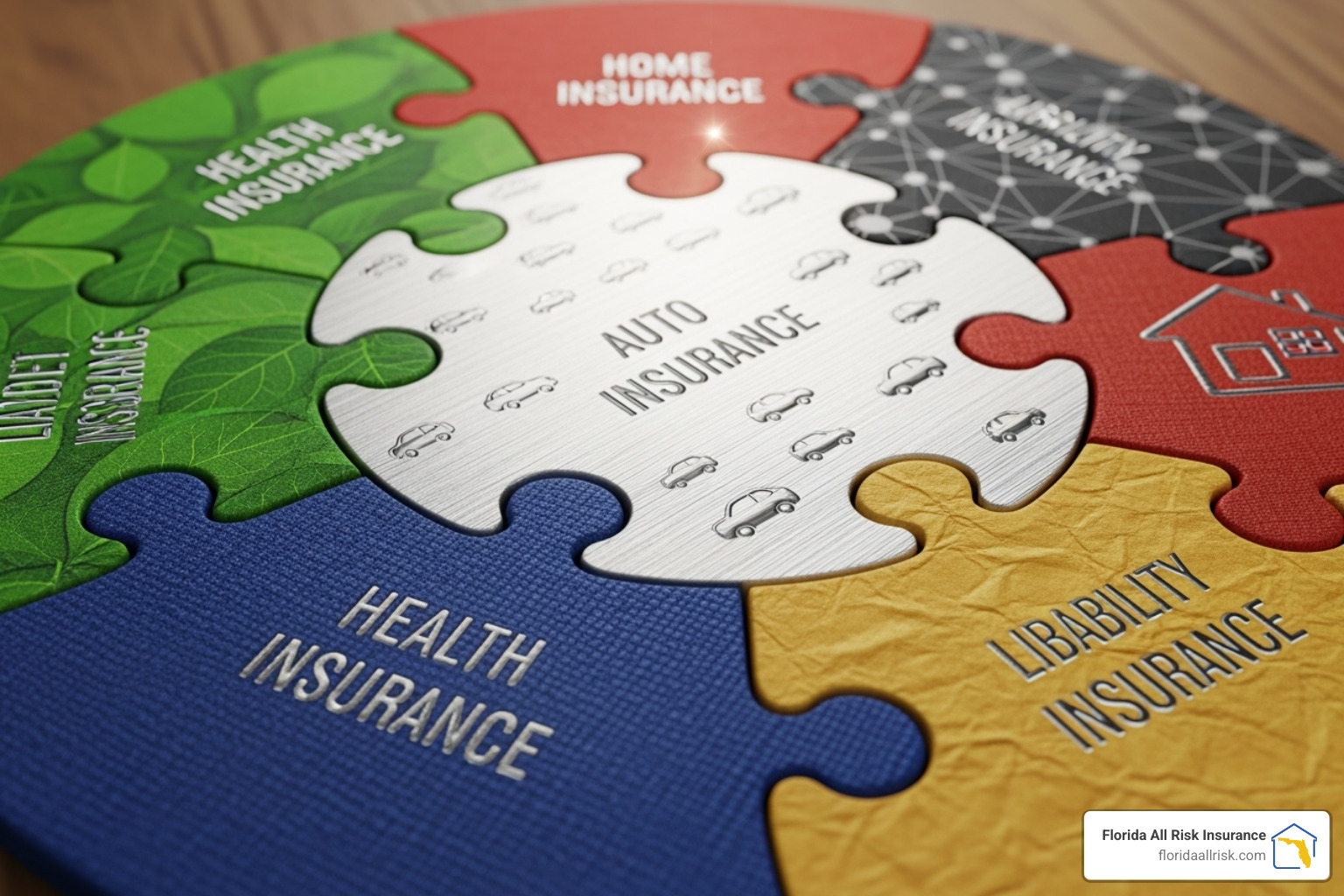
While a CGL policy covers many common liabilities, it’s the foundation, not the entire structure, of your business protection. A complete safety net involves layering additional policies to fill the risk gaps CGL leaves behind. These can sometimes be bundled into a Business Owners Policy (BOP) or a Commercial Package Policy (CPP).
Key Policies to Pair with Your CGL
To ensure your business is fully protected, consider these complementary policies:
-
Commercial Property Insurance: This protects your own physical assets—your building, equipment, inventory, and furniture—from perils like fire, theft, and vandalism.
-
Commercial Auto Insurance: This is essential if your business uses vehicles. It covers liability for accidents and can also cover physical damage to your business vehicles.
-
Commercial Umbrella Insurance: This provides an extra layer of liability protection above the limits of your CGL and auto policies, protecting you from catastrophic claims that could exceed your primary coverage.
-
Workers’ Compensation: Required by law in Florida if you have employees, this policy covers medical expenses and lost wages for employees injured on the job.
-
Professional Liability (E&O): While your CGL policy covers bodily injury and property damage, it doesn’t cover financial losses caused by your professional advice or mistakes. E&O protects your expertise.
-
Cyber Liability Insurance: A standard CGL policy covers almost no cyber risks. This specialized policy is crucial for covering costs related to data breaches, such as data recovery, customer notification, and regulatory fines.
-
Employment Practices Liability Insurance (EPLI): This policy fills another critical gap, which we’ll detail below.
What is Employment Practices Liability Insurance (EPLI)?
EPLI addresses a significant risk that a CGL policy covers nowhere: claims arising from the employer-employee relationship. CGL is for third-party claims, not internal disputes.
EPLI provides coverage against lawsuits filed by employees (current, former, or prospective) for allegations such as:
- Wrongful termination
- Discrimination (based on age, race, gender, etc.)
- Harassment (including sexual harassment)
- Retaliation
These claims can be financially crippling due to high legal defense costs and potential settlements. As noted by sources like the Insurance Information Institute, EPLI has become a critical coverage for businesses of all sizes to protect against disputes your CGL policy will not touch.
Frequently Asked Questions about CGL Coverage
We’ve compiled answers to some of the most common questions we hear about what a CGL policy covers to help you feel confident about your business’s protection.
What is the difference between CGL and professional liability insurance?
The key difference is the type of risk covered. Your CGL policy covers physical risks—bodily injury to a third party or property damage your business causes. Think of a slip-and-fall accident or damaging a client’s property.
Professional Liability insurance (or E&O) covers financial losses a client suffers due to your professional errors, negligence, or failure to perform a service. It protects your advice and expertise. In short, CGL is for the risks of “doing,” while E&O is for the risks of “advising.”
Does a CGL policy cover injuries to my own employees?
No. This is a critical distinction. A CGL policy covers claims from third parties like customers or vendors. Injuries to your own employees that happen on the job are covered by a separate, and legally required, policy: Workers’ Compensation insurance. It is designed specifically to provide medical benefits and wage replacement for your team.
Can I add another business to my CGL policy?
Yes, this is a common practice. You can add another person or entity to your policy as an “Additional Insured” through a policy endorsement. This is often a contractual requirement from clients, landlords, or general contractors. It extends your liability coverage to them for work you do on their behalf or for incidents on property you lease from them, providing them with a layer of protection under your policy.
Your Partner in Comprehensive Business Protection
Understanding what a CGL policy covers can feel complex, but you don’t have to steer it alone. Your CGL coverage is the solid foundation, but true protection requires layering additional coverages to fill the gaps. Too many businesses find these gaps only after a claim occurs.
At Florida All Risk Insurance, we specialize in helping Florida business owners build comprehensive protection plans. We take the time to understand your unique risks, from the obvious to the hidden, to ensure you are properly protected.
As an independent agency, we are not tied to a single insurance company. We act as your advocate, shopping among multiple carriers to find the right blend of coverage at competitive rates. Our goal is to ensure you’re not just insured, but correctly insured.
We can explain what a CGL policy covers and identify where you need complementary protection, whether it’s professional liability, cyber insurance, or another specialized policy.
Contact Us
Florida All Risk Insurance
Saint Petersburg, FL
Phone: (888) 880-9200
Email: [email protected]
Ready to secure your business with the right general liability coverage? Explore our General Liability solutions and get protected today!

