

Cargo insurance for trucks is essential for safeguarding your business from unexpected financial losses. In the trucking industry, the road is filled with unpredictable risks, from accidents to theft, which can lead to significant damage or loss of cargo. With cargo insurance in place, you can protect yourself from the financial burden associated with such mishaps, ensuring peace of mind for both you and your clients.
- What does it cover?
- Losses due to collision, theft, or fire.
- Expenses like debris removal and loss-recovery.
-
Protection against dishonest acts by employees or contracted drivers.
-
Who needs it?
- For-hire truckers using vehicles such as box trucks, tractor-trailers, or flatbeds.
- Risk managers requiring coverage for potential cargo damage.
My name is Jason Miller, a veteran in the insurance industry with over 20 years of experience providing expert guidance on cargo insurance for trucks. Throughout my career, I’ve helped truckers and motor carriers in Florida safeguard their businesses with custom insurance solutions.

Essential Cargo insurance for trucks terms:
– Commercial truck insurance Florida
– Commercial truck liability insurance
Understanding Cargo Insurance for Trucks
Cargo insurance for trucks is a crucial safety net for truckers and businesses involved in the transportation of goods. It provides protection against a variety of transit risks, ensuring that both the truckers and their clients can operate with peace of mind.
Key Elements of Coverage
Understanding the key elements of cargo insurance coverage helps truckers and businesses make informed decisions. Here are the primary components:
-
Removal Expenses: This covers the costs associated with removing debris or pollutants resulting from damaged cargo. For instance, if a truck carrying chemicals overturns, the insurance will cover the cleanup costs.
-
Sue and Labor: This clause helps cover expenses incurred while trying to prevent further loss or damage to the cargo. If a trucker takes immediate action to protect goods after an accident, the costs involved can be claimed.
-
Earned Freight: Protects truckers from losing the payment for transporting goods that are not delivered due to an accident or other covered events.
Who Needs Cargo Insurance?
Cargo insurance is not just a luxury; it’s a necessity for several stakeholders in the trucking industry:
-
Risk Managers: They often require truckers to have cargo insurance to mitigate potential losses and ensure that goods are adequately protected during transit.
-
Commercial Truckers: For-hire truckers, whether they operate dump trucks, cement mixers, or flatbeds, need this insurance to protect themselves from financial losses due to damaged or lost cargo.
-
Client Requirements: Many clients mandate that truckers have cargo insurance before they agree to a contract. This requirement ensures that their goods are protected and that truckers meet professional standards.

In the changing landscape of trucking, having the right cargo insurance for trucks can make a significant difference. It not only protects against potential losses but also improves the professional reputation of truckers and businesses alike.
Types of Cargo Insurance Coverage
Cargo insurance for trucks is designed to protect against a wide range of risks that can occur during the transport of goods. Understanding the types of coverage available is essential for truckers and businesses to ensure they are adequately protected.
Motor Truck Cargo Insurance
Motor truck cargo insurance is the backbone of cargo coverage for truckers. This insurance safeguards the materials being transported against various perils such as fire, collision, and theft. Imagine a scenario where a truck carrying electronics is involved in a collision; this insurance would cover the loss or damage to those goods, offering peace of mind to both the trucker and the client.
However, there are some exclusions to be aware of. For example, items like art, jewelry, and live animals are typically not covered under this policy. Additionally, certain types of vehicles, such as garbage trucks and passenger vans, are not eligible for this coverage.
Specialized Coverage Options
In addition to standard motor truck cargo insurance, there are specialized options custom to specific needs:
-
Refrigeration Breakdown: For those transporting perishable goods, a refrigeration breakdown can lead to significant losses. This specialized coverage protects against spoilage or damage resulting from a sudden failure of the vehicle’s refrigeration or heating unit. For instance, if a truck’s cooling system fails during a summer haul, this insurance would cover the resulting losses.
-
Temperature Protection: Similar to refrigeration breakdown coverage, temperature protection ensures that goods susceptible to temperature changes are protected, even if the issue arises from external factors not related to equipment failure.
-
Load Shift: During transit, cargo can shift, potentially leading to accidents or damage. Load shift coverage protects against such incidents, ensuring that even if cargo moves unexpectedly, the financial impact is minimized.
-
Debris Removal: After an accident, the cleanup of debris can be both costly and time-consuming. Debris removal coverage ensures that these expenses are covered, allowing truckers to focus on getting back on the road quickly.
By understanding and selecting the right cargo insurance options, truckers can protect themselves from a variety of risks, ensuring that they are prepared for any unexpected events that may occur during transit.
Cost Factors and Pricing
Understanding the cost of cargo insurance for trucks is crucial for truckers and businesses. Several factors influence the pricing, and knowing them can help you make informed decisions.
How Much Does Cargo Insurance Cost?
1. Business Type:
The nature of your trucking business impacts insurance costs. For-hire truckers might face different rates compared to owner-operators. Each type of business carries its own set of risks, which insurers consider when setting premiums.
2. Driving History:
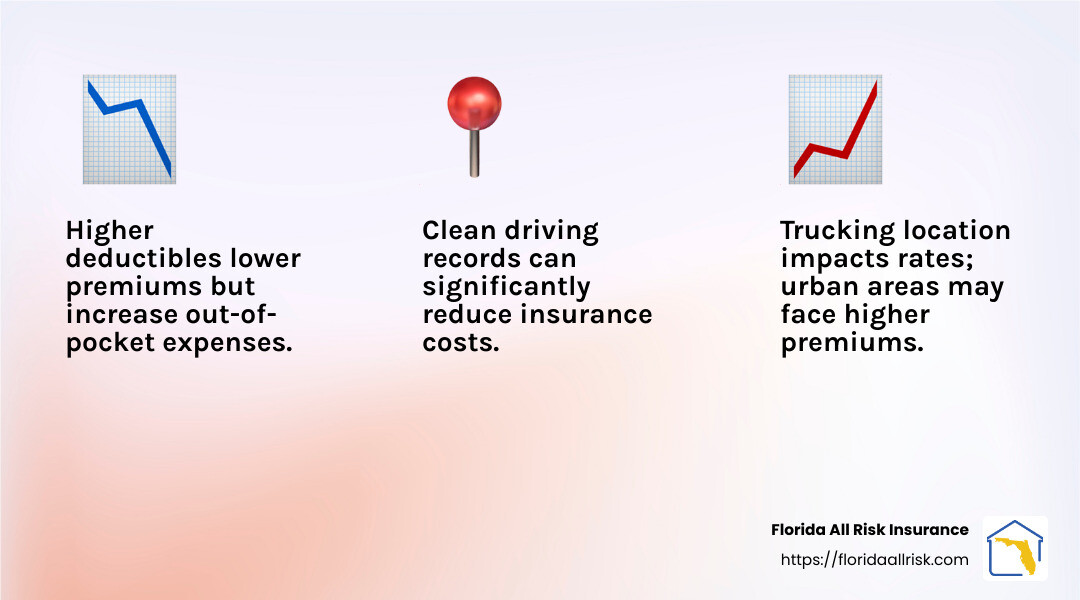
A clean driving record can significantly lower your insurance costs. Insurers often reward truckers with good safety records by offering reduced premiums. Conversely, a history of accidents or violations can lead to higher costs.
3. Location:
Where you operate affects your insurance rates. Truckers in areas with higher traffic or crime rates may see higher premiums due to increased risk. For example, a trucker operating primarily in urban areas might pay more than one in rural regions.
4. Policy Limits:
Choosing higher coverage limits will naturally increase your premium. However, this also means better protection. It’s essential to balance the cost with the level of coverage needed to safeguard your cargo fully.
5. Standard Costs:
Standard costs can vary widely based on the factors mentioned above. On average, truckers might expect to pay anywhere from a few hundred to several thousand dollars annually, depending on their specific situation.
6. Deductible Options:
Opting for a higher deductible can lower your premium. This means you’ll pay more out-of-pocket in the event of a claim, but your regular insurance payments will be reduced. It’s a trade-off between upfront costs and potential future expenses.
By considering these factors, truckers can find a cargo insurance policy that fits their needs and budget. Evaluating each aspect carefully ensures you get the best possible coverage at a price you can afford.
Frequently Asked Questions about Cargo Insurance for Trucks
What is the difference between cargo insurance and freight insurance?
Cargo insurance and freight insurance are often used interchangeably, but they have distinct purposes. Cargo insurance primarily offers transit protection. It covers the goods being transported against risks like theft, damage, or loss during the journey. This type of insurance ensures that the cargo owner is compensated if something goes wrong while the goods are on the move.
On the other hand, freight insurance typically provides broader coverage. It not only includes transit protection but may also cover storage protection. This means it can protect goods while they are temporarily stored at a warehouse or terminal during transit. Freight insurance might also include coverage for delays or misdelivery, offering more comprehensive protection for the entire shipping process.
How much is cargo insurance for a motor truck?
The cost of cargo insurance for a motor truck varies based on several factors. Coverage types play a significant role in determining the cost. Basic coverage for risks like fire, collision, and theft might have a lower premium compared to more specialized options, such as refrigeration breakdown or load shift protection.
The cost range can be broad. On average, truckers might pay anywhere from a few hundred to several thousand dollars annually. Factors influencing this include the type of cargo, the value of the goods, and the trucker’s driving history. Additionally, the policy limits and deductible options chosen will also affect the overall cost. Higher limits and lower deductibles typically result in higher premiums but offer more comprehensive protection.
What is cargo insurance in trucking?
Cargo insurance in trucking is a type of policy designed to protect the goods transported by truckers. It provides damage coverage for items being hauled from one location to another. This insurance is crucial for truckers as it safeguards them from financial losses due to unforeseen events like accidents, theft, or natural disasters.
A key element of cargo insurance is the bill of lading. This document serves as a receipt and contract for the goods being shipped. It outlines the terms and conditions of the transport and is essential for filing a claim if the cargo is damaged or lost. Without proper documentation, receiving compensation for a claim can be challenging.
By understanding these aspects, truckers and businesses can better steer the complexities of cargo insurance and ensure their valuable goods are adequately protected.
Conclusion
At Florida All Risk Insurance, we understand the unique challenges that truckers face on the road. That’s why we offer comprehensive solutions custom to meet the specific needs of the trucking industry. Our cargo insurance for trucks is designed to provide financial protection against a wide range of risks, ensuring that both owner-operators and large fleets can operate with peace of mind.
Custom Coverage for Every Need
Whether you’re a single-unit owner-operator or manage a fleet of over 100 trucks, we have the coverage options to fit your needs. Our policies include essential protections like motor truck cargo insurance, which safeguards against common perils such as fire, collision, and theft. We also offer specialized coverage options for risks like refrigeration breakdown and load shift, ensuring that no matter what you’re hauling, your cargo is protected.
We pride ourselves on offering custom coverage that can be custom to suit your operations. Our team works closely with you to understand your specific requirements and craft a policy that provides the right level of protection without unnecessary costs.
Why Choose Florida All Risk Insurance?
Choosing the right insurance partner is crucial for protecting your trucking business. At Florida All Risk Insurance, we provide personalized service and access to a wide range of carriers, ensuring competitive rates and custom coverage. Our in-house team of experts is dedicated to helping you minimize risks and manage costs effectively.
For more information on how we can help protect your trucking business, visit our trucking insurance page.
With Florida All Risk Insurance by your side, you can keep your focus on the road ahead, knowing that your cargo and livelihood are well-protected.

