

When you buy business insurance, you’re taking a crucial step in safeguarding your venture against unexpected challenges. Whether it’s legal requirements, protecting physical assets, or covering potential liabilities, business insurance ensures your operations aren’t interrupted by unforeseen financial setbacks. Here’s a quick insight into what makes business insurance vital:
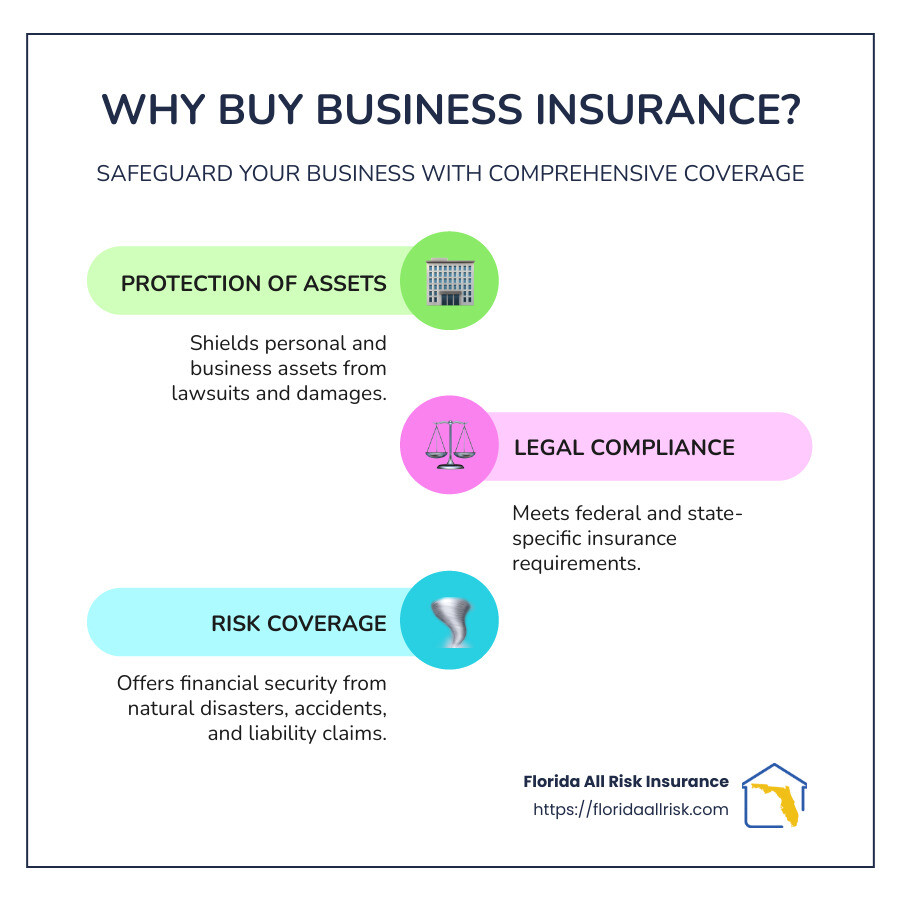
- Protection of Assets: Shields personal and business assets from lawsuits and damages.
- Legal Compliance: Meets federal and state-specific insurance requirements.
- Risk Coverage: Offers financial security from natural disasters, accidents, and liability claims.
Running a business means embracing both its opportunities and risks. While entities like LLCs and corporations provide some protection, business insurance fills in any coverage gaps, making it indispensable for complete protection.
As someone who has spent over two decades navigating the insurance landscape, my experience in helping business owners understand and buy business insurance runs deep. I’m Jason Miller, and having successfully managed insurance companies in Florida, my mission is to empower you with knowledge and competitive coverage.
Basic buy business insurance vocab:
Types of Business Insurance
Understanding the different types of insurance is crucial for protecting your business. Each type of insurance covers specific risks, allowing you to tailor coverage to your business needs. Let’s explore the key types of business insurance:
General Liability Insurance
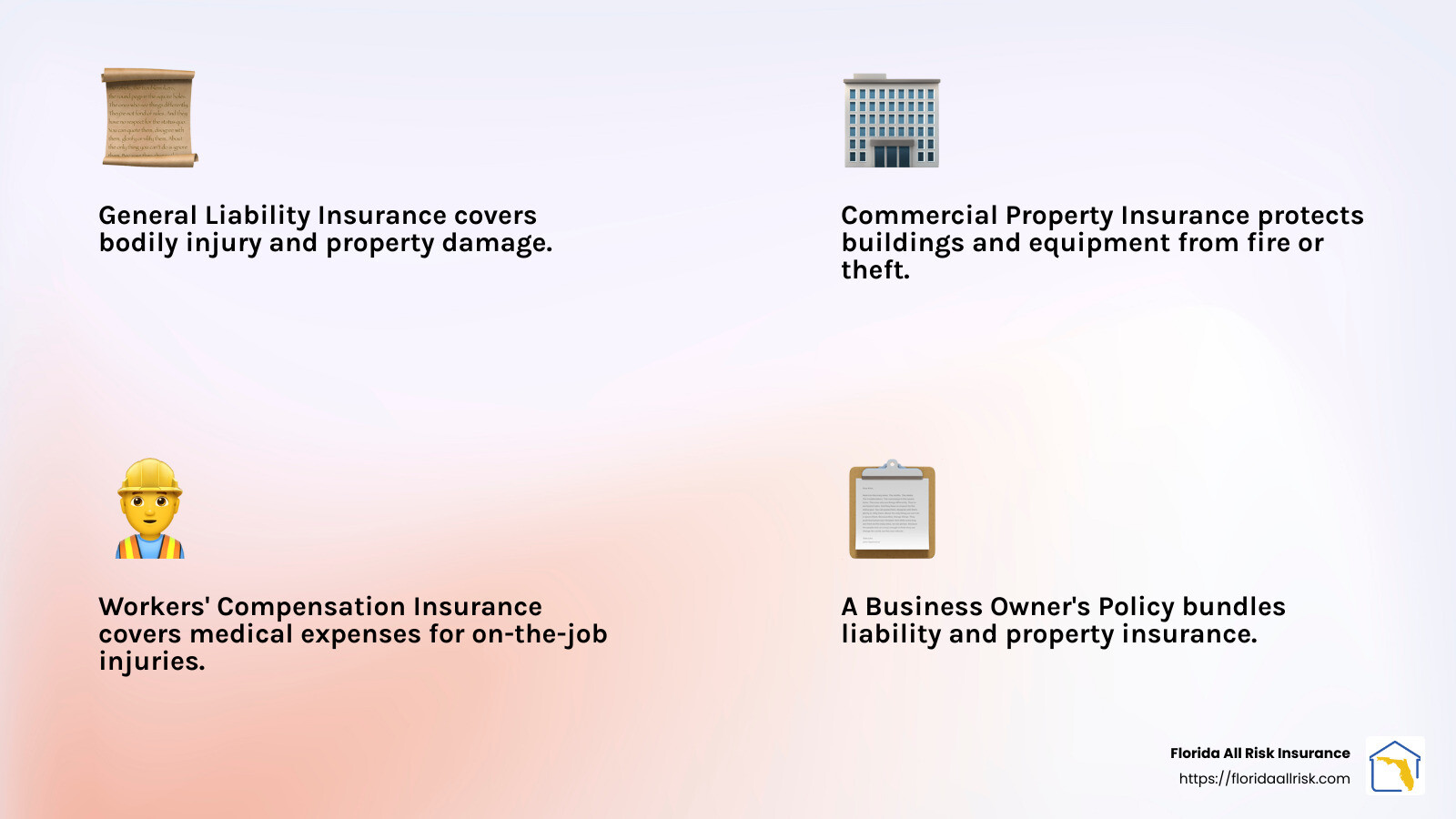
General Liability Insurance is vital for any business. It safeguards against financial loss due to bodily injury, property damage, medical expenses, libel, slander, and lawsuits. This coverage serves as your first line of defense against claims that could otherwise lead to significant financial strain.
Commercial Property Insurance
If your business owns or leases physical space, Commercial Property Insurance is essential. This insurance covers damage to your business’s physical assets, like buildings, equipment, and inventory, from events such as fire, theft, or natural disasters. It ensures that your business can recover quickly after an unexpected event.
Workers’ Compensation Insurance
For businesses with employees, Workers’ Compensation Insurance is typically required by law. It covers medical expenses and lost wages for employees who are injured or become ill on the job. This insurance protects both your employees and your business, reducing the risk of costly lawsuits.
Professional Liability Insurance
Also known as Errors and Omissions (E&O) insurance, Professional Liability Insurance is crucial for businesses that provide services or advice. It covers legal expenses related to claims of negligence, mistakes, or failure to deliver promised services. This insurance is particularly important for professionals like consultants, lawyers, and accountants.
Business Owner’s Policy (BOP)
A Business Owner’s Policy combines general liability and commercial property insurance into one package, often at a reduced cost. This policy is ideal for small to medium-sized businesses, offering a comprehensive solution that simplifies the insurance buying process. It’s a smart choice for those looking to streamline their insurance coverage.
Understanding these types of business insurance can help you make informed decisions when you buy business insurance. Each type of coverage plays a vital role in protecting your venture, ensuring you can focus on growing your business without worrying about potential setbacks.
How to Buy Business Insurance
Buying business insurance can seem daunting, but breaking it down into manageable steps simplifies the process. Here’s how to get started:
Assess Your Risks
Begin by assessing the risks unique to your business. Consider potential mishaps and their impact on your operations. For instance, a restaurant might be concerned about kitchen fires, while a consultancy might focus on the risk of client lawsuits. Understanding these risks is crucial for determining the necessary insurance coverage.
Find a Reputable Agent
Next, find a reputable insurance agent. A knowledgeable agent can navigate you through the complexities of various policies and tailor them to your business needs. They are familiar with the nuances of different coverages and can recommend the most suitable options based on your business type and location.
Shop Around
Don’t settle for the first quote you receive. Shop around to compare prices and coverage options. Different insurers offer varied packages, and costs can differ significantly. Look for comprehensive coverage at a competitive rate. Remember, the least expensive option may not adequately cover your risks.
Re-assess Annually
As your business evolves, so do your insurance needs. Re-assess your insurance annually to ensure your coverage still aligns with your business requirements. Changes such as expansion, new equipment purchases, or increased staff might necessitate policy adjustments. Regular reviews help maintain appropriate coverage and prevent overpaying for insurance that no longer suits your needs.
By following these steps, you can confidently purchase business insurance that safeguards your venture and provides peace of mind. Up next, we’ll delve into the costs associated with business insurance and the factors that influence these costs.
Cost of Business Insurance
Understanding the cost of business insurance is crucial for any business owner. Let’s break down the factors that affect pricing, industry differences, and what you might expect to pay.
Factors Influencing Cost
Several elements determine how much you’ll pay for business insurance:
-
Number of Employees: More employees often mean higher premiums. This is because the risk of workplace incidents increases with staff size.
-
Business Location: Insurance costs can vary by location. For instance, businesses in areas prone to natural disasters might face higher rates.
-
Industry Type: Different industries carry different risks. A construction company might pay more for insurance than a small retail shop due to the higher risk of accidents.
-
Coverage Amount: The more coverage you need, the more you’ll pay. This includes both the types of insurance and the coverage limits you choose.
Industry Differences
Not all businesses are the same, and neither are their insurance needs. Here’s a quick look at how costs can differ by industry:
-
Restaurants: May pay more due to risks like kitchen fires and foodborne illnesses. General liability and liquor liability insurance are often crucial.
-
Retailers: Product liability can be a significant concern. Insurance for potential product defects or customer injuries is vital here.
-
Professional Services: Professions like accounting or consulting often need professional liability insurance to cover errors and omissions.
Cost Estimates
While costs can vary widely, here are some general estimates to give you an idea:
-
General Liability Insurance: Typically ranges from $400 to $1,000 per year for small businesses.
-
Business Owner’s Policy (BOP): Averages around $1,200 annually, combining general liability and property insurance.
-
Workers’ Compensation: Costs depend on the number of employees and industry risk, but small businesses might pay anywhere from $0.75 to $2.74 per $100 of payroll.
It’s important to get a quote that reflects your specific needs. Many insurers, like Florida All Risk Insurance, offer flexible options to tailor coverage to your business.
Next, we’ll guide you through the steps to get started with buying business insurance, whether online or through an agent.
Buy Business Insurance: Steps to Get Started
Getting the right insurance for your business doesn’t have to be complicated. Here are three straightforward ways to buy business insurance:
1. Online Purchase
Buying insurance online is fast and convenient. With just a few clicks, you can get the coverage you need. Here’s how it works:
-
Get a Quote: Start by answering some basic questions about your business. This helps tailor the insurance to your specific needs.
-
Customize Your Coverage: Once you have a quote, you can adjust coverage limits to suit your budget and requirements.
-
Purchase: If you’re happy with the quote, you can proceed to buy. Your coverage will start immediately after payment.
This option is ideal for those who prefer a quick and hassle-free process.
2. Agent Assistance
For a more personalized experience, consider working with an insurance agent. Here’s what to expect:
-
Discuss Your Needs: An agent will ask about your business, its risks, and any specific insurance needs you might have.
-
Get Expert Advice: Agents can explain different coverage options and help you understand what each policy covers.
-
Custom Solutions: They will present you with options that best fit your business, and assist with paperwork to ensure everything is in order.
This approach is great for those who want guidance and a human touch in the insurance buying process.
3. Partnerships
If you use business tools like QuickBooks or LegalZoom, you might be able to purchase insurance directly through these platforms. Here’s how it works:
-
Integrated Solutions: Some business services offer insurance options as part of their platform. This means you can manage your insurance alongside other business tasks.
-
Seamless Experience: You don’t need to leave the platform to get coverage. Everything is handled within the tools you already use.
This method is perfect for those who value convenience and integration with existing business tools.
Regardless of the method you choose, it’s important to ensure your business is properly protected. Florida All Risk Insurance offers flexible options and competitive rates to help you find the best coverage for your needs.
Next, we’ll tackle some frequently asked questions about business insurance to help clear up any lingering doubts you might have.
Frequently Asked Questions about Business Insurance
What is the best insurance for a small business?
For many small businesses, a Business Owner’s Policy (BOP) is a smart choice. It bundles general liability and commercial property insurance, offering comprehensive coverage at a lower cost than buying each policy separately. General liability covers your business against claims of bodily injury and property damage, while commercial property insurance protects your business’s physical assets from events like fire, theft, and vandalism.
How much does insurance for an LLC cost?
The cost of insurance for an LLC varies based on several factors, including industry risk, location, and the types of coverage you need. For example, an LLC in a high-risk industry like construction will likely pay more than one in a lower-risk field like consulting. Additionally, businesses located in areas prone to natural disasters might face higher premiums. On average, small businesses can expect to pay between $500 and $3,000 annually for general liability insurance, but this range can vary widely.
How much is $1,000,000 liability insurance a month?
The cost of a $1,000,000 liability insurance policy can vary based on the business type, location, and specific risks associated with the industry. On average, small businesses might pay around $30 to $100 per month for a policy with this coverage limit. However, businesses with higher risks or those in litigious industries might see higher premiums. It’s crucial to shop around and compare quotes to find the best rate for your business needs.
Conclusion
At Florida All Risk Insurance, we understand that every business is unique. That’s why we offer custom coverage options custom to meet the specific needs of your venture. Our personalized approach ensures that you get the protection you need without paying for unnecessary extras.
We pride ourselves on providing competitive rates across a wide range of insurance products. Whether you’re a small business owner or managing a larger operation, our team is committed to helping you find the best coverage at a price that fits your budget.
Our location in St. Petersburg, Florida, allows us to serve businesses throughout the state with the local expertise and personal touch you deserve. As an independent agency, we have access to a variety of carriers, which means more options and better deals for you.
If you’re ready to buy business insurance or need assistance navigating your options, our team is here to help. Visit our Group Health Insurance page to explore more about our offerings and how we can support your business. Let us help you protect what you’ve worked so hard to build.

