

Business property insurance companies play a crucial role in protecting businesses from unforeseen events that could disrupt operations and cause financial loss. Whether it’s a fire, theft, or natural disaster, having the right commercial property insurance coverage is essential for any business to shield its physical assets and maintain resilience.
- Comprehensive Coverage Options: Focus on policies that cover buildings, equipment, inventory, and even lost income.
- Top Providers: Florida All Risk Insurance is among the most reliable names in the industry.
- Factors to Consider: When choosing a provider, consider factors like cost, location-based risk, and the specific needs of your business.
Business insurance, especially commercial property coverage, ensures that companies can quickly recover from disruptions, keeping dreams and ambitions on track. Selecting a suitable policy requires understanding your business’s unique needs to cover everything from physical structures to data equipment.
I’m Jason Miller, a seasoned expert with over 20 years of experience in the insurance industry, specializing in business property insurance companies. As a second-generation insurance professional, I’m passionate about offering insights to help business owners steer the complex insurance landscape.

Key terms for business property insurance companies:
– commercial property insurance risk
– high risk commercial property insurance
– commercial unit insurance
Understanding Business Property Insurance
Types of Coverage
When it comes to business property insurance, understanding the different types of coverage is vital. This knowledge helps you make informed decisions that protect your business’s physical assets and financial health.
1. Property Insurance
At its core, property insurance covers physical assets such as buildings, equipment, and inventory. This coverage is essential for shielding your business from unexpected events like fires, theft, and natural disasters. It’s like a safety net, ensuring that damage to your property doesn’t lead to financial ruin.
2. Commercial Insurance
Commercial insurance is a broader term that includes various types of coverage designed specifically for businesses. This often bundles property insurance with other necessary coverages like general liability. It’s a comprehensive approach to protecting your business from multiple angles.
3. Coverage Types
Understanding the nuances of coverage types can make a significant difference in the level of protection your business receives. Here are the main types:
-
Replacement Cost: This type of coverage pays to repair or rebuild your property with materials of the same or comparable quality, without deducting for depreciation. It’s like getting a brand-new version of what you lost. For instance, if a fire destroys part of your building, replacement cost coverage will help you rebuild it to its original state.
-
Actual Cash Value (ACV): Unlike replacement cost, ACV coverage reimburses you for the current value of the damaged property, factoring in depreciation. This means you get the value of your property at the time of the loss, not the cost to replace it new.
-
Extended Replacement Costs: This is an added layer of protection that covers costs exceeding your policy’s limits, usually up to a certain percentage. It’s especially useful in situations where rebuilding costs surge unexpectedly, such as after a natural disaster that drives up demand for construction materials and labor.
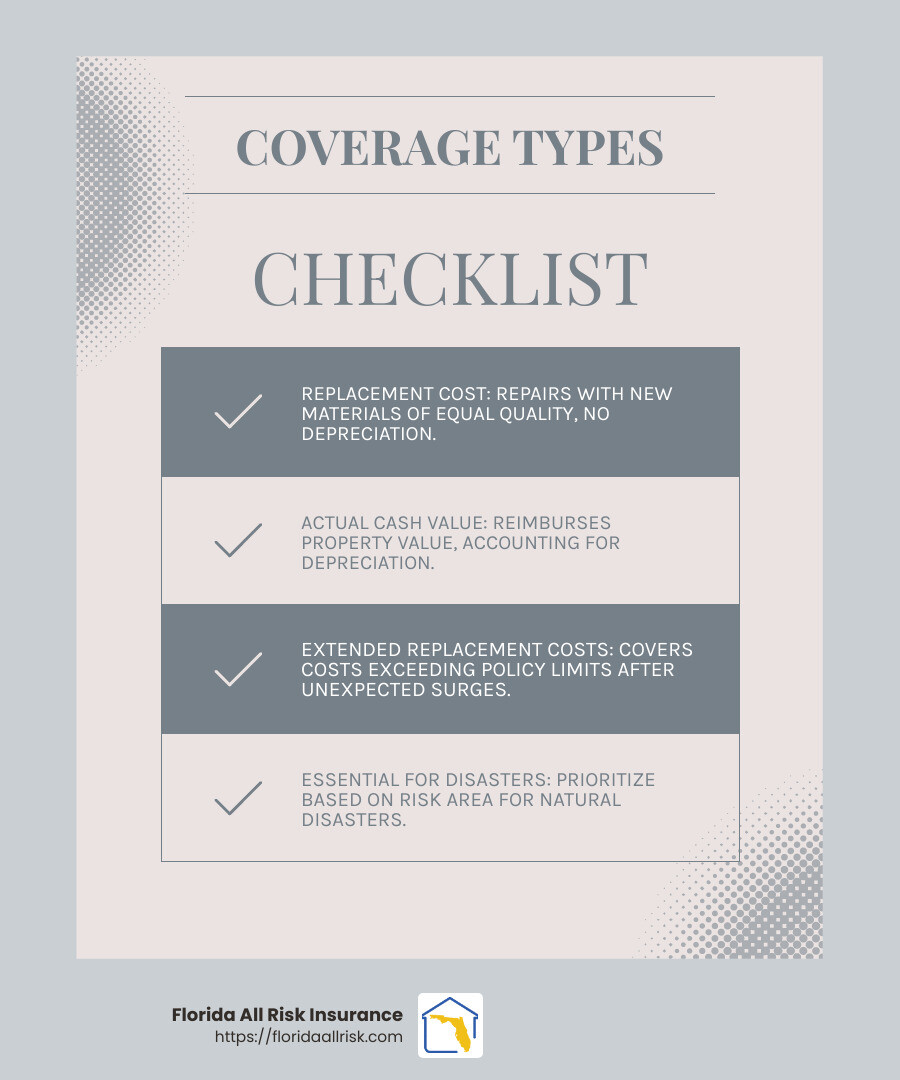
Choosing the right type of coverage depends on your business’s specific needs and risk factors. For example, a business located in a high-risk area for natural disasters might prioritize extended replacement costs to ensure complete protection.
In conclusion, navigating business property insurance can seem daunting, but understanding these coverage types is a critical step in safeguarding your business’s future.
Top Business Property Insurance Companies
Evaluating the Best
When it comes to business property insurance companies, choosing the right one is crucial. It’s not just about finding coverage; it’s about selecting a partner that offers reliability, excellent customer service, and quick claim approvals.
1. Financial Strength
First and foremost, consider the financial strength of the insurance company. This is a key indicator of their ability to pay claims, especially during widespread disasters. A financially robust insurer ensures that your claims are met promptly, even in challenging times.
2. Customer Service
Customer service is another vital factor. You want a company that is responsive and supportive. Imagine a scenario where a storm damages your property. The last thing you need is to steer a complex claims process with unhelpful representatives. Look for insurers with a reputation for friendly, efficient service.
3. Claim Approval
Quick and fair claim approval is essential. The best commercial property insurance providers streamline their claims process to reduce stress during difficult times. For example, many companies ensure initial responses within hours, not days, and coordinate with contractors to expedite repairs.
Here’s a quick checklist to evaluate business property insurance companies:
- Check their financial ratings: Look for ratings from agencies like A.M. Best or Standard & Poor’s.
- Read customer reviews: Feedback from other business owners can provide insights into their service quality.
- Ask about claim processes: Inquire how long claims typically take and what support they offer during the process.
By focusing on these aspects, you can choose a business property insurance provider that not only meets your coverage needs but also supports you through every step of the insurance process.
Factors Influencing Insurance Costs
Cost Considerations
When exploring business property insurance, understanding the factors that influence costs is key. Here’s a breakdown of what affects premium rates and how you can manage them.
1. Business Size
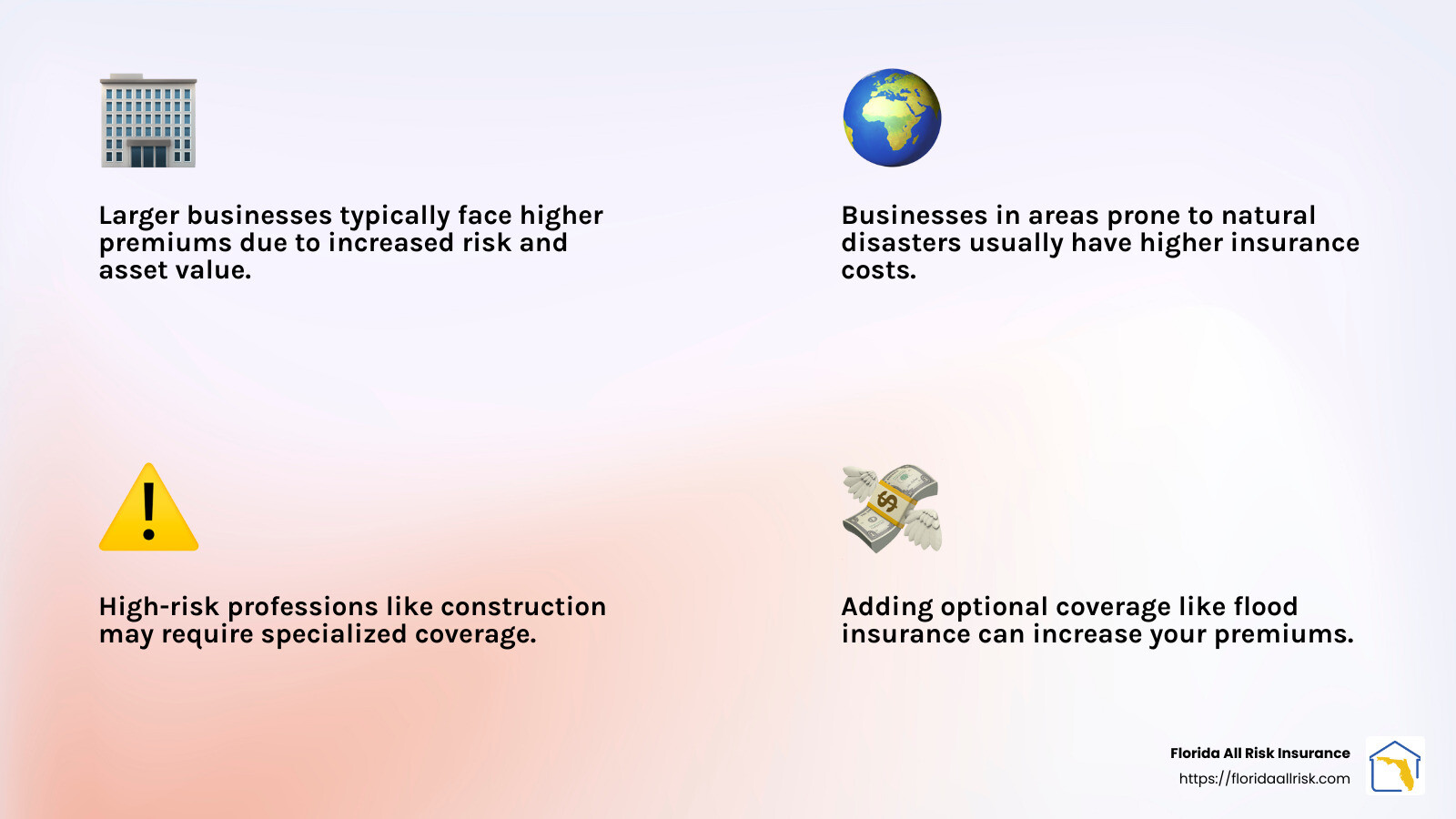
The size of your business plays a significant role. Larger businesses with more assets typically face higher premiums due to the increased risk and value of insured items. A small coffee shop, for instance, will likely pay less than a large manufacturing plant.
2. Location
Where your business is located can dramatically impact your insurance costs. Areas prone to natural disasters, like hurricanes or earthquakes, often have higher premiums. For example, businesses in coastal regions may need additional wind coverage, affecting their rates.
3. High-Risk Professions
Certain industries are considered higher risk, leading to increased insurance costs. Professions like construction or tree trimming face more hazards, thus requiring specialized and often more expensive coverage.
4. Coverage Needs
Your specific coverage requirements will also influence costs. Basic coverage might include protection against fire and theft, but adding options like flood insurance or equipment breakdown coverage will increase premiums.
5. Average Premiums
While costs vary widely, understanding average premiums can help set expectations. For instance, a small business might pay between $500 to $1,000 annually, while larger operations could see costs in the thousands.
6. Premium Rates
Finally, factors like your claim history and the safety measures you have in place can affect premium rates. Businesses with a history of frequent claims might face higher premiums, while those with robust safety protocols could enjoy discounts.
By considering these factors, you can better anticipate your insurance costs and make informed decisions about the coverage your business needs.
Frequently Asked Questions about Business Property Insurance Companies
What is Business Property Insurance?
Business property insurance protects your company’s physical assets. This includes buildings, equipment, and inventory. If a fire, theft, or storm damages your property, this insurance helps cover repair or replacement costs. It also covers loss of income if your business operations are interrupted due to property damage. This means if your store is closed for repairs after a storm, your insurance can help cover lost profits during that time.
How Much Does Property Insurance Cost for a Small Business?
The cost of property insurance for a small business varies. Several factors influence the average cost:
- Business Size and Location: Smaller businesses typically pay less. However, if your business is in a high-risk area (like near a coast), you might face higher premiums.
- Coverage Needs: Basic coverage is cheaper. But if you need extra protection, like flood insurance, expect costs to rise.
- Premium Rates: On average, small businesses might pay between $500 to $1,000 annually. But this can vary based on the specifics of your business and location.
What Are the Three Types of Property Insurance?
When it comes to property insurance, there are three main types:
-
Replacement Cost (RC): This covers the cost to repair or replace property without deducting for depreciation. It ensures you can rebuild with similar materials and quality.
-
Actual Cash Value (ACV): This pays for the cost of replacing your property minus depreciation. While premiums for ACV policies are usually lower, the payout might not cover the full cost of new replacements.
-
Extended Replacement Costs: This provides additional coverage beyond the standard replacement cost, often up to a certain percentage. It’s helpful if construction costs suddenly rise, ensuring your coverage is enough to rebuild.
Understanding these types helps you choose the best fit for your business needs and budget.
Conclusion
Choosing the right business property insurance company can make a significant difference in protecting your assets and ensuring peace of mind. At Florida All Risk Insurance, we understand that every business is unique. That’s why we offer custom coverage solutions custom to meet the specific needs of your business.
Our team is committed to providing competitive rates without compromising on coverage quality. We work with a wide range of carriers to ensure that you get the best possible deal. Whether you’re a small business owner or manage multiple locations, our personalized service ensures you have the right protection at the right price.
By choosing Florida All Risk Insurance, you’re not just getting an insurance policy; you’re getting a partner dedicated to safeguarding your business. Our expertise and local knowledge mean we can offer insights and advice that national chains simply can’t match.
Ready to protect your business with custom coverage and competitive rates? Contact us today to explore your options and get a quote. Let us help you secure your business’s future.

