

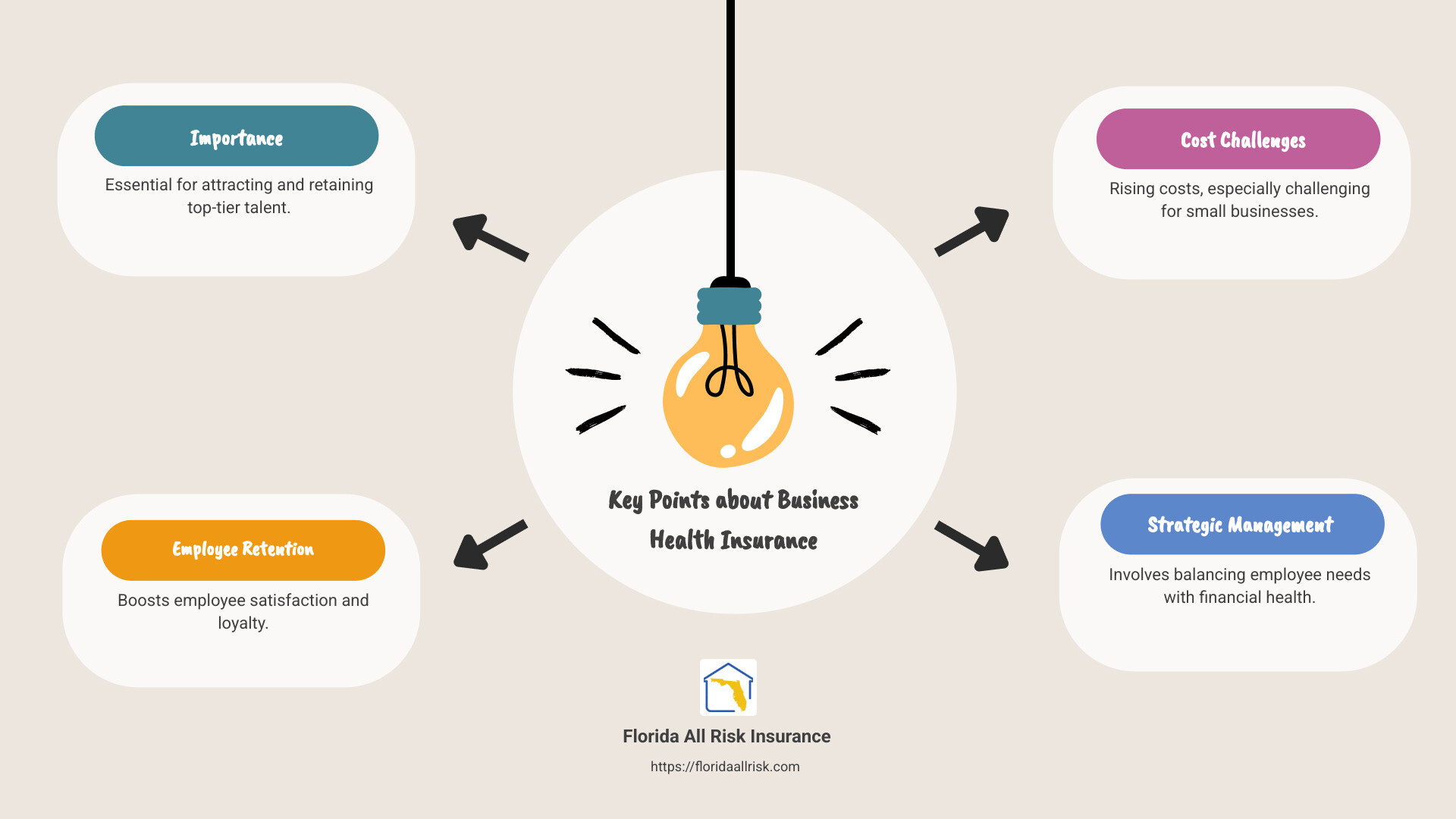
Business health insurance is a pivotal element for any company aiming to attract and retain top-tier talent. As employees increasingly value comprehensive health coverage, providing this benefit can significantly improve employee satisfaction and loyalty. However, the rising costs of offering business health insurance pose significant challenges, particularly for small businesses. It’s a balancing act between fulfilling employee needs and managing the firm’s financial health. For many small businesses, offering this essential benefit hinges on strategic cost management, tax credits, and selecting the right plan that aligns with their financial capabilities.
I’m Jason Miller, a second-generation insurance expert with over 20 years of experience in the Florida insurance market. My expertise in business health insurance comes from helping numerous businesses steer this complex landscape to find affordable and effective solutions.
Glossary for business health insurance:
– Affordable employee health insurance
– Small business employee benefits
– Insurance for small businesses
Understanding Business Health Insurance
Business health insurance is a broad term that encompasses various types of health coverage options for employees. Let’s explore the main components: group health insurance, commercial health insurance, and employer-sponsored plans.
Group Health Insurance
Group health insurance is a type of health coverage that an employer offers to its employees and sometimes their families. It’s a popular choice because it often costs less than individual plans. Why? Because the risk is spread across a larger group of people.

Employers usually pay a part of the monthly premiums, making it more affordable for employees. In fact, over two-thirds of small businesses offer group health benefits, which helps them attract and retain quality employees. When businesses share the cost of premiums, employees enjoy access to healthcare at a reduced rate, enhancing job satisfaction.
Commercial Health Insurance
Commercial health insurance refers to any health insurance that is not provided by the government. Instead, it’s sold and managed by private companies. This type of insurance covers a significant portion of the U.S. population, with group coverage being the largest segment.
Most commercial plans are either preferred provider organizations (PPOs) or health maintenance organizations (HMOs). PPOs offer flexibility in choosing healthcare providers, while HMOs require members to use a network of doctors and hospitals.
Employer-Sponsored Plans
Employer-sponsored plans are a subset of commercial insurance where the employer buys health insurance for their employees. These plans often come with better rates and terms because companies can negotiate with insurers for a large group of people.

These plans are not only cost-effective but also come with tax benefits for employers. Under the Affordable Care Act, small businesses can qualify for tax credits if they meet certain criteria, such as covering at least half of their employees’ premiums. This makes employer-sponsored plans a win-win for both parties, offering financial relief to businesses while providing employees with essential health coverage.
Understanding these core components of business health insurance is crucial for any business owner. Choosing the right type of coverage can make a significant difference in both employee satisfaction and the company’s financial health.
Next, we’ll explore the different types of business health insurance plans available, including general liability insurance, workers’ compensation, and group health plans.
Types of Business Health Insurance Plans
When it comes to business health insurance, there are several key types of plans that business owners should be familiar with. Let’s break down the essentials: general liability insurance, workers’ compensation, and group health plans.
General Liability Insurance
General liability insurance is a must-have for any business. It protects your company from financial loss if you are found legally responsible for some injury or damage. For instance, if a customer slips and falls in your store, this insurance can cover medical expenses and legal fees.
This type of insurance doesn’t just cover physical injuries. It also protects against claims of property damage and personal injury, such as defamation. With the rising tendency for lawsuits, having general liability insurance can prevent a legal suit from becoming a financial disaster.
Workers’ Compensation
Workers’ compensation is another important part of business health insurance. It provides benefits to employees who get injured or become ill due to their job. This insurance covers medical expenses and lost wages, reducing the need for litigation.
Most states require businesses to carry workers’ compensation insurance. Even in states where it’s not mandatory, it’s a wise choice if you have employees. It not only protects your workers but also limits your financial risk if an employee gets hurt on the job.
Group Health Plans
Group health plans are a type of health insurance offered by employers to their employees. These plans are popular because they spread the risk among a group of people, often resulting in lower premiums.
Employers typically pay a portion of the monthly premiums, making these plans more affordable for employees. Group health plans can include a variety of options, like preferred provider organizations (PPOs) and health maintenance organizations (HMOs).
By offering group health plans, businesses can attract and retain talented employees. In fact, many small businesses find that providing health benefits is a powerful tool for recruitment and employee satisfaction.
Understanding these types of business health insurance plans is vital for any business owner. They not only protect your business but also help you take care of your employees, enhancing overall job satisfaction and retention.
Next, we’ll dive into the costs and contributions associated with business health insurance, including premiums, out-of-pocket costs, and tax credits.
Costs and Contributions
When it comes to business health insurance, understanding the costs and contributions is crucial. Let’s break it down into three main components: premiums, out-of-pocket costs, and tax credits.
Premiums
Premiums are the monthly payments you make to keep your health insurance active. For small businesses, these can vary depending on the type of plan and the level of coverage offered. As a business owner, you’re typically expected to cover at least 50% of these premiums for your employees. This not only makes the plans more affordable for your employees but also qualifies your business for federal tax credits.
In many cases, businesses that pay more than half of their employees’ premiums can use this as a recruitment tool, attracting high-quality talent who value comprehensive health benefits.
Out-of-Pocket Costs
Out-of-pocket costs are expenses that employees must pay themselves, such as deductibles, copayments, and coinsurance. These costs come into play when employees use their health insurance for medical services.
It’s important to choose a plan that balances premiums with out-of-pocket costs. Plans with lower premiums might have higher out-of-pocket costs, and vice versa. Knowing your employees’ needs can help you select a plan that offers the right balance.
Tax Credits
The Affordable Care Act provides tax credits to small businesses that offer health insurance. If you have fewer than 25 full-time employees, pay average wages of $56,000 or less, and cover at least half of the premiums, your business might qualify for these credits. This can significantly reduce the overall cost of providing health insurance.
These tax credits not only make it more affordable to offer health benefits but also improve your business’s financial health. Taking advantage of these credits can help you maintain competitive rates and ensure that offering health insurance is sustainable for your business in the long run.
Understanding these components of business health insurance can help you make informed decisions that benefit both your business and your employees. Next, we’ll explore the benefits of offering business health insurance, including how it impacts employee satisfaction and recruitment.
Benefits of Offering Business Health Insurance
Offering business health insurance isn’t just a financial decision—it’s a strategic one. Let’s explore how it improves employee satisfaction, recruitment, and provides tax benefits.
Employee Satisfaction
Employees value health insurance as a critical part of their benefits package. In fact, 48.7% of the U.S. population relies on employer-provided group health insurance. This coverage offers peace of mind, knowing that medical needs are covered. When employees feel secure about their health care, they’re more likely to be satisfied and productive.
Imagine a business in Saint Petersburg, Florida, where employees know their health needs are taken care of. This security translates into higher morale and lower turnover rates. Employees stay longer when they feel valued and supported.
Recruitment Advantages
High-quality employees often consider health benefits when choosing where to work. Offering robust health insurance can set your business apart from competitors. For small businesses, this is a powerful tool to attract top talent.
Consider a small industrial rubber products distributor that provides quality, cost-effective benefits to its 40 employees. This approach not only retains current staff but also attracts new talent who prioritize health coverage when job hunting.
Tax Benefits
Beyond employee satisfaction and recruitment, there are significant tax benefits. Small businesses that cover at least 50% of their employees’ premiums can qualify for federal tax credits. These credits can cover up to 50% of the premiums paid, easing the financial burden on the business.
Moreover, offering health insurance can reduce your taxable income, thanks to deductions on your business taxes. This is a win-win situation—your employees get the health coverage they need, and your business enjoys financial relief.
In summary, business health insurance is more than just a benefit; it’s a strategic advantage. It boosts employee satisfaction, improves your recruitment efforts, and offers valuable tax savings. Next, we’ll address some frequently asked questions about business health insurance to help you steer this important decision.
Frequently Asked Questions about Business Health Insurance
How much does health insurance cost for a business?
The cost of business health insurance varies based on several factors, but understanding the basics can help.
-
Annual Premiums: Most small businesses spend between $200 and $500 per employee each month on health insurance. This translates to a significant annual cost, but it’s important to weigh this against the benefits of offering health coverage.
-
Single vs. Family Coverage: Single coverage typically costs less than family coverage. For example, a business might pay $500 per month for family coverage compared to $200 for single coverage. These costs depend on the level of coverage and the insurance provider.
-
Employer Contributions: Many small businesses contribute at least 50% of the premiums for their employees. This not only helps with recruitment and retention but can also qualify the business for tax credits.
Can an LLC pay for owners’ health insurance?
Yes, an LLC can pay for its owners’ health insurance, but there are specific guidelines.
-
Personal Deduction: If you’re a member of an LLC taxed as a partnership, you can deduct health insurance premiums on your personal tax return. However, the LLC must pay the premiums directly, and they must be reported as guaranteed payments.
-
S Corporation Considerations: If your LLC is taxed as an S corporation, the rules differ slightly. The corporation can pay for the health insurance, but the cost must be added to the owner’s W-2 wages. The owner can then take a personal deduction on their tax return.
Is company health insurance worth it?
Offering business health insurance can be a significant investment, but it often proves worthwhile.
-
Employer Contributions and Tax Advantages: The financial benefits include potential tax credits and deductions. By covering a portion of the premiums, businesses can reduce their taxable income and take advantage of federal tax credits.
-
Recruitment and Retention: Health insurance is a top consideration for many job seekers. Offering coverage can help attract and retain talented employees, giving your business a competitive edge.
In conclusion, while the costs of business health insurance can be substantial, the benefits—ranging from tax savings to improved employee satisfaction—often outweigh the expenses. Understanding these aspects can help your business make informed decisions about providing health insurance.

Conclusion
Choosing the right business health insurance plan can be a game-changer for your company. At Florida All Risk Insurance, we understand that each business has unique needs, and we’re here to help you steer the complexities of health coverage. Our goal is to provide custom coverage solutions that meet your specific requirements while maintaining competitive rates.
As an independent agency based in St. Petersburg, Florida, we offer personalized service and access to a wide range of carriers. This allows us to tailor insurance plans that not only fit your budget but also provide comprehensive protection for your employees. With our expertise, you can ensure that your business remains competitive in attracting and retaining top talent.
Why choose Florida All Risk Insurance?
- Custom Solutions: We work closely with you to understand your business needs and customize a health insurance plan that offers the best value.
- Competitive Pricing: By partnering with multiple carriers, we provide competitive rates that help you manage costs effectively.
- Personalized Service: Our team is dedicated to offering you the support and guidance needed to make informed insurance decisions.
Find how Florida All Risk Insurance can help your business open up the benefits of health insurance. Visit our Group Health Insurance page to learn more and get started today.
When employee satisfaction and retention are crucial, offering the right health insurance plan is more important than ever. Let us help you make the best choice for your business and your team.

