

Protecting Your Business Assets: What You Need to Know
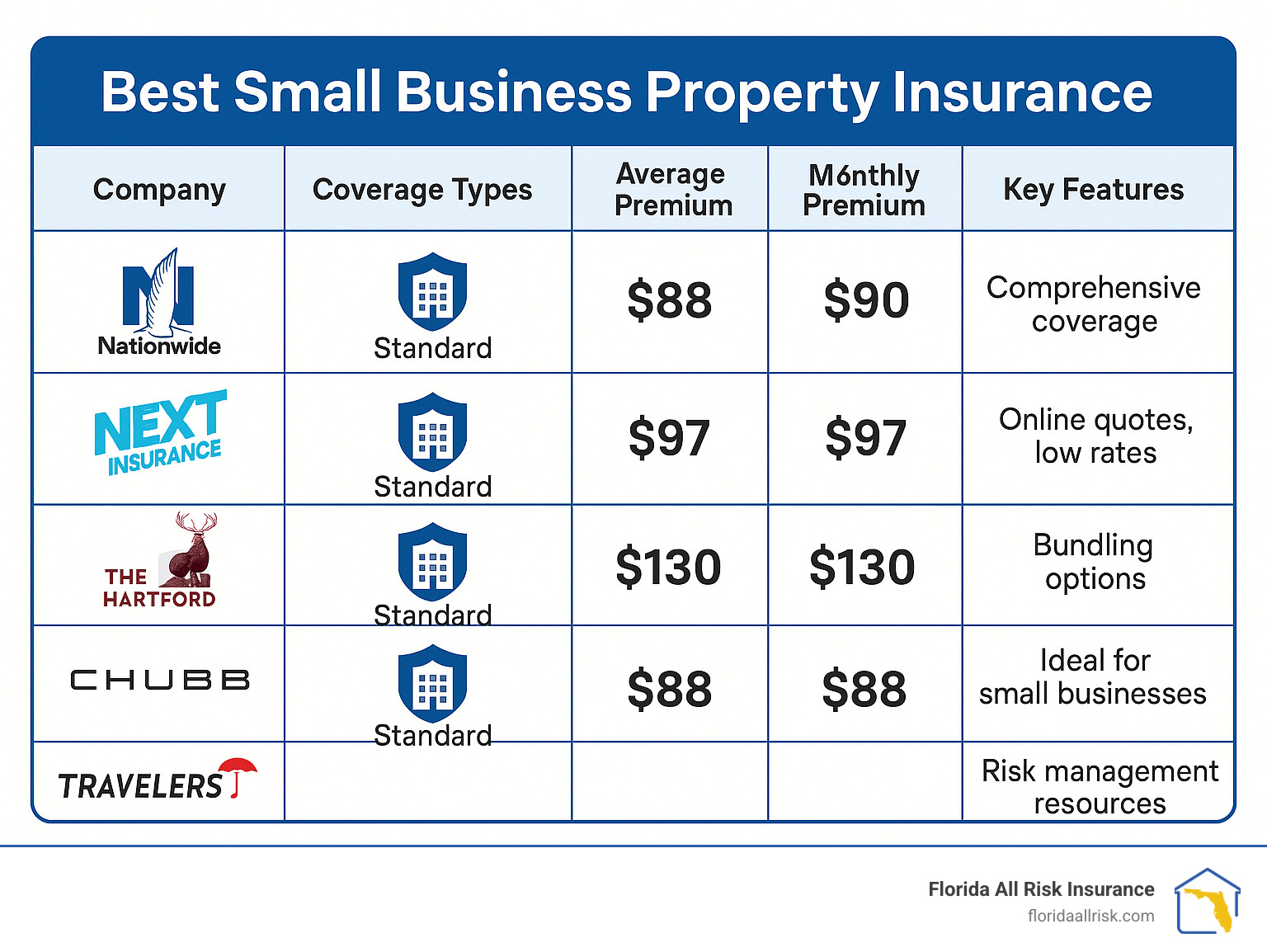
Finding the best small business property insurance starts with understanding the qualities that set top-tier carriers apart rather than focusing on specific brand names. In 2024, look for insurers that:
- Offer comprehensive coverage options that can be molded to your exact needs.
- Provide user-friendly digital tools for quoting, policy management, and claims.
- Allow easy bundling of property coverage with liability or other lines for extra savings.
- Maintain excellent financial strength ratings (A or better from AM Best).
- Supply proactive risk-management resources to help you prevent losses before they happen.
Your small business represents years of hard work and investment. Without proper protection, a single disaster could wipe out everything you’ve built. Best small business property insurance policies safeguard your physical assets—buildings, inventory, equipment, and furniture—against risks like fire, theft, vandalism, and certain natural disasters.
With 29-35 % of small businesses operating without adequate coverage, and 80 % of business owners worried their insurance won’t cover specific events, finding the right policy is crucial. The average cost ranges from $67–$190 monthly, making it an affordable investment compared to the potential financial devastation of an uninsured loss.
I’m Jason Miller, a second-generation insurance professional with over 20 years of experience helping Florida businesses find the best small business property insurance solutions that balance comprehensive coverage with competitive rates in our volatile insurance marketplace.
Best small business property insurance helpful reading:
– commercial property insurance risk
– commercial lease liability insurance
– independent business insurance agents
Small Business Property Insurance 101
Think of best small business property insurance as a safety net that catches your business when disaster strikes. Similar to how homeowners insurance protects your house, commercial property insurance safeguards your business’s physical assets—but with extra protections designed specifically for business needs.
What does the best small business property insurance cover?
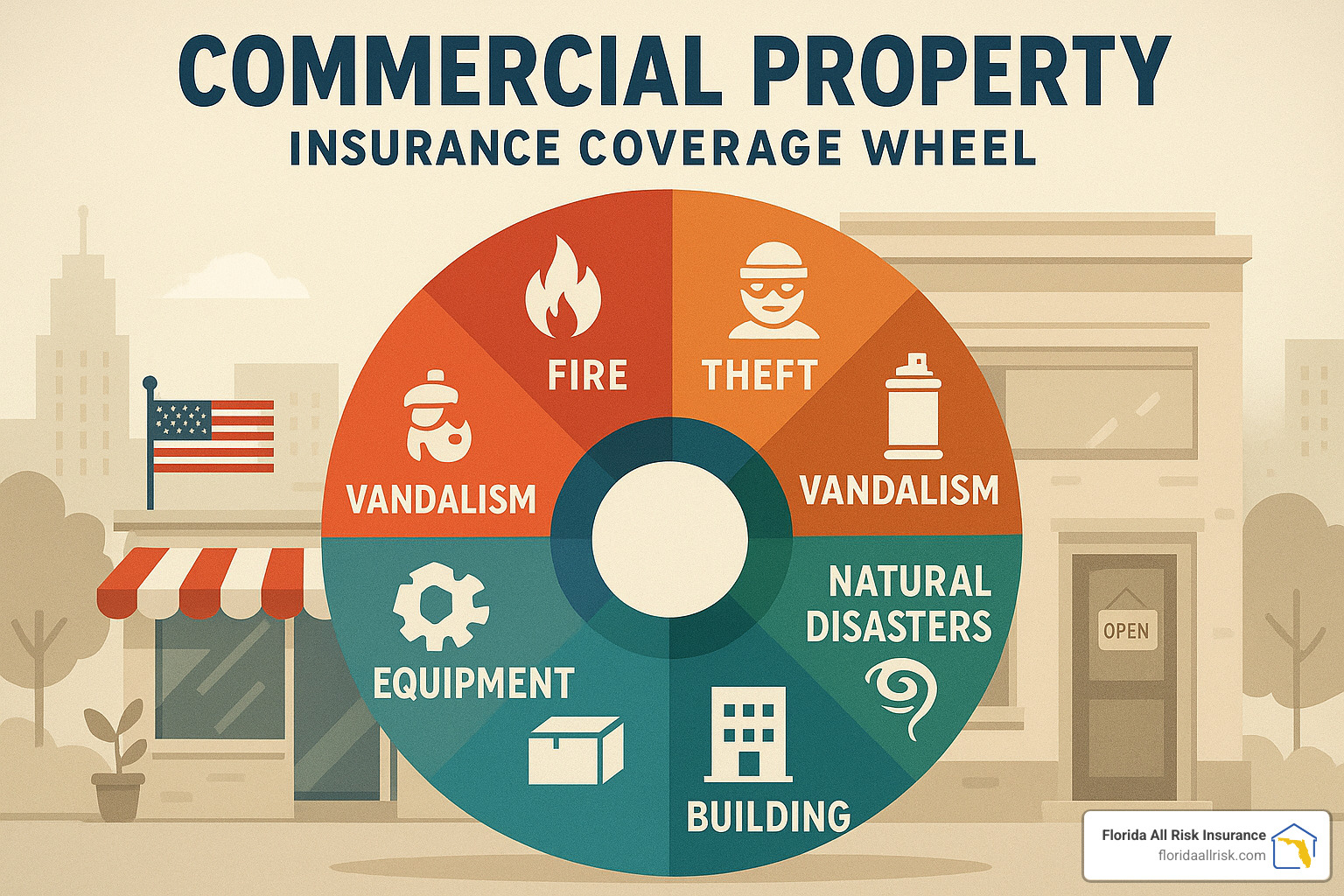
When your coffee shop’s espresso machine gets damaged in a fire or your retail store’s inventory is stolen during a break-in, best small business property insurance steps in to help you recover. This essential coverage protects against a variety of perils that could otherwise devastate your business financially.
Your policy typically shields your business from fire and smoke damage, which can destroy equipment and inventory in minutes. It also covers theft and vandalism, unfortunate realities many small businesses face. Mother Nature’s fury—wind and hail damage—falls under protection too, though flood damage usually requires separate coverage.
Other covered perils include water damage from burst pipes (that weekend your heating system failed in winter), damage from vehicles (like when that delivery truck accidentally backed into your storefront), riots or civil commotion, and even explosion damage.
The assets protected by your policy include your buildings if you own your commercial space—everything from the foundation to the roof, including permanently installed fixtures. Your business personal property receives coverage too: the computers your team uses, the furniture in your reception area, and the specialized equipment that keeps your operations running smoothly.
Your inventory represents a significant investment, and property insurance protects both raw materials and finished products waiting to be sold. Many policies also include business income coverage (or offer it as an add-on), which can be a lifesaver if a covered event forces you to temporarily close your doors. This replaces lost income while you’re getting back on your feet.
Even your outdoor property like signage, fencing, and landscaping often receives some protection, though typically with lower coverage limits.
Property insurance comes in three increasingly comprehensive forms:
Basic Form covers fundamental threats like fire and windstorms—the bare minimum protection.
Broad Form expands coverage to include water damage, structural collapse, and sprinkler leakage—a middle-ground option.
Special Form provides the most thorough protection, covering all risks except those specifically excluded—the gold standard for businesses with valuable assets.
According to the Insurance Information Institute, U.S. insured catastrophe losses have averaged nearly $80 billion annually in recent years. With climate-related disasters increasing in both frequency and severity, robust property coverage isn’t just nice to have—it’s essential for your business’s long-term resilience.
When selecting your policy, you’ll face an important choice between two valuation methods:
Actual Cash Value (ACV) pays replacement cost minus depreciation—essentially what your damaged items are worth today. This option typically comes with lower premiums but leaves you covering more costs out-of-pocket after a loss.
Replacement Cost Value (RCV) pays the full cost to replace damaged items with new ones of similar quality—a more complete form of protection, especially if your business relies on older equipment or buildings that would face substantial depreciation under ACV calculations.
While replacement cost coverage costs more upfront, the extra protection it provides when you’re facing a major loss can make all the difference in your business’s ability to bounce back quickly.
Coverage Needs, Costs & Policy Types
Figuring out your small business property insurance needs doesn’t have to be overwhelming. Let’s walk through what you should consider when protecting your business assets.
External Requirements
Most small business owners don’t realize that property insurance isn’t just a good idea—it’s often required by:
Landlords who want to ensure their building and any tenant improvements are protected if something goes wrong. That lease you signed? It probably has insurance requirements tucked inside.
Lenders who view your business assets as collateral for your loans. They’ll typically require proof of insurance before funding your business loan or mortgage.
Contracts with clients or vendors that may include specific insurance requirements to protect all parties involved.
Valuation Considerations
When shopping for the best small business property insurance, one crucial decision is choosing between actual cash value (which factors in depreciation) and replacement cost coverage (which pays for brand-new replacements).
Watch out for coinsurance clauses in your policy! These typically require you to insure at least 80% of your property’s value. Fall short of this threshold, and you might find your claim payments reduced proportionally—even for smaller claims. I’ve seen many business owners learn this lesson the hard way.
Cost Factors
Why does your neighbor pay half what you do for similar coverage? Several factors influence your premium:
Your location matters tremendously—especially here in Florida where hurricane risk drives up costs. Businesses near fire stations typically pay less, while those in high-crime areas pay more.
Your industry plays a major role too. A restaurant with open flames and cooking oils naturally faces higher premiums than a consulting firm with mainly computers and office furniture.
The building itself—its age, construction materials, fire protection systems, and security features—all impact what you’ll pay. Those sprinklers might be more valuable than you think!
Your choice of coverage limits and deductibles directly affects premiums. Higher deductibles mean lower monthly costs but more out-of-pocket expense when claims happen.
Previous claims history follows your business. A track record of frequent claims will typically result in higher premiums.
How much should you budget for the best small business property insurance?
Let’s talk dollars and cents. The typical small business spends about $67 monthly (around $800 annually) on property insurance alone. Depending on your business size and risk factors, you might pay anywhere from $25 to $190 monthly. Very small, low-risk operations might pay as little as $14-$17 monthly.
Many of my clients save significantly by bundling coverage. Consider these options:
A Business Owner’s Policy (BOP) combines property and general liability coverage, usually at a better price than buying them separately—averaging $57 monthly ($684 annually). It’s like the combo meal of business insurance!
A Commercial Package Policy (CPP) offers more flexibility than a BOP, allowing you to bundle property with other coverages like auto, inland marine, or crime insurance. This is ideal for businesses with more complex needs.
Comparing Standalone vs. BOP Coverage
| Feature | Standalone Property | Business Owner’s Policy |
|---|---|---|
| Cost | $67/month average | $57/month average |
| Coverage | Property only | Property + General Liability |
| Business Size | Any size | Typically small to medium |
| Customization | Moderate | Limited |
| Eligibility | All businesses | Varies by carrier |
| Savings | None | Up to 10-15% vs. separate policies |
Don’t forget to ask about discounts! Most insurers reward smart business practices like installing security systems, using fire-resistant building materials, bundling policies, paying annually instead of monthly, and maintaining a claim-free record.
At Florida All Risk Insurance, we help small business owners across St. Petersburg and throughout Florida find affordable property protection by comparing options from multiple carriers. We know Florida’s unique challenges and can help you steer them while keeping costs reasonable.
Looking for more specific information? Check out our guides on Business Property Insurance Near Me and Commercial Property Insurance for deeper insights.
Best Small Business Property Insurance: 2024 Comparison
Finding the best small business property insurance isn’t just about getting the lowest price – it’s about finding a partner who’ll have your back when things go sideways. As someone who’s helped countless Florida businesses steer insurance decisions, I’ve seen how the right provider can make all the difference when disaster strikes.
How we selected the best small business property insurance providers
When we evaluate insurance companies for our clients, we don’t just skim the surface. We dig deep into what really matters:
We start with financial strength – because what good is an insurance promise if the company can’t pay claims? That’s why we only recommend carriers with AM Best ratings of A (Excellent) or better. These companies have the financial muscle to handle even widespread disasters without breaking a sweat.
We also check the NAIC complaint index – basically a report card for how often customers file complaints. The providers we recommend consistently score below average, meaning fewer headaches for you.
Coverage options matter tremendously. Some businesses need bare-bones protection, while others require specialized endorsements for unique risks. The best small business property insurance providers offer flexibility to match your specific situation.
Digital experience is non-negotiable. From getting a quote to filing a claim at 2 AM after a pipe bursts, how easily can you manage your policy online? Some providers excel here, while others… well, let’s just say they’re still catching up.
Claims handling is where insurance companies truly prove their worth. We analyze J.D. Power satisfaction ratings and real-world claim processing times. According to their research, insurers with streamlined digital claims processes and proactive communication consistently earn the highest customer satisfaction ratings – which aligns perfectly with what we’ve seen helping clients through hurricane claims.
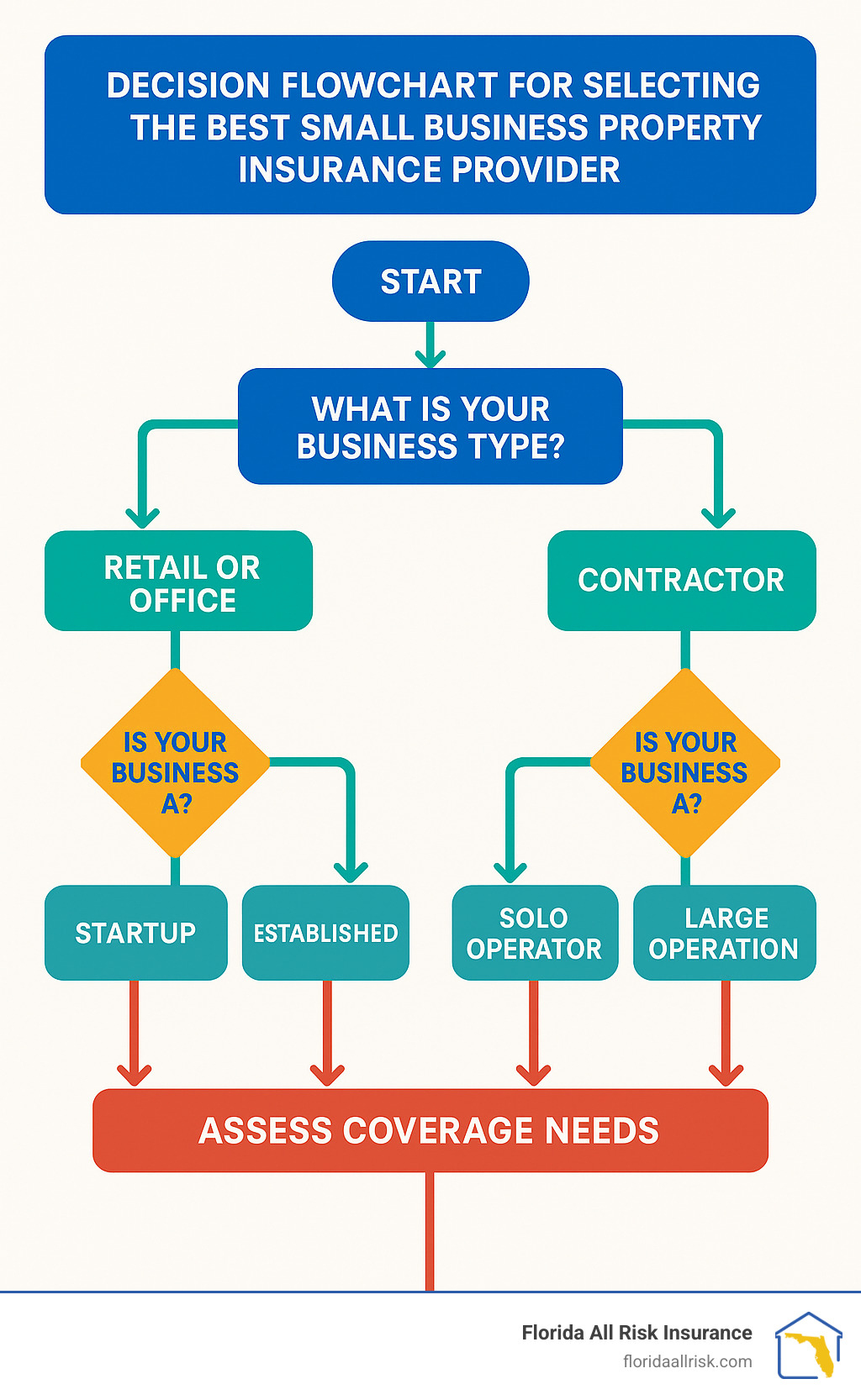
Based on our comprehensive evaluation, here are the key features to look for in top property insurance providers:
Comprehensive Coverage Options – Look for providers offering complete protection packages with solid financial ratings (A+ from AM Best). The best carriers provide inflation guard endorsements that automatically adjust your coverage limits as replacement costs rise – a lifesaver in today’s economy. These are ideal for businesses that want robust protection without sacrificing personalized service.
Digital Experience & Affordability – Modern insurance providers with refreshingly simple online platforms stand out. The best digital insurers offer AI-powered quote processes that deliver custom recommendations in minutes, allowing you to generate certificates instantly. With competitive rates and bundling discounts up to 10%, these tech-forward options are perfect for tech-savvy owners watching their budget.
Bundling Options – Some carriers excel at bundling multiple coverages together, earning recognition as digital small business insurance leaders. The best bundled policies earn impressive customer satisfaction ratings while offering specialized options for numerous business types. These are particularly great for small businesses looking to package multiple coverages together.
Specialized Small Business Focus – Certain insurers stand out for businesses under $2M in revenue with simplified online BOP shopping and premium claim service. Look for those offering replacement cost coverage for business personal property without deduction for depreciation – meaning you get new equipment to replace your damaged items, not a check for what your old stuff was worth. These are perfect for businesses with valuable equipment or specialized needs.
Risk Management Resources – The best providers go beyond just insurance to help you prevent losses in the first place. Extensive risk control services and industry-specific coverage options backed by strong financial ratings make a difference. Specialized coverage for equipment breakdown and business income losses is ideal for businesses looking to minimize property risks.
For Florida businesses specifically, we pay special attention to a provider’s experience handling hurricane and water damage claims, their wind/hail deductible options, how they coordinate with flood insurance (since standard policies exclude flood damage), and their financial capacity to handle widespread catastrophe claims. After all, when a hurricane hits, you don’t want your insurer to be the next disaster you face.
At Florida All Risk Insurance, we leverage our relationships with top-rated carriers to find the perfect match for your business’s unique needs and budget. Our independent status means we work for you, not the insurance companies, allowing us to provide truly unbiased recommendations for the best small business property insurance protection.
Frequently Asked Questions about best small business property insurance
Is business property insurance legally required?
Here’s the truth about legal requirements – the government doesn’t mandate best small business property insurance the way they do with some other coverages (like workers’ comp). But don’t let that fool you into thinking it’s optional!
In reality, you’ll likely need it anyway because of other requirements in your business life. Your landlord probably won’t hand over the keys without seeing proof of property coverage. If you’ve got a commercial mortgage, your lender will absolutely require it to protect their investment. Many client contracts and franchise agreements also make insurance a non-negotiable part of doing business.
Even without these external pressures, can you really afford to leave your business assets unprotected? Think of property insurance as the financial safety net that keeps one bad day from becoming your last day in business.
How do I file a claim and what documents do I need?
When disaster strikes your business property, taking the right steps can make all the difference in how smoothly your claim goes:
First, grab your phone and document everything before you touch anything. Those photos and videos of the damage will be your best evidence. Then take reasonable steps to prevent further damage – maybe that’s a tarp over a damaged roof or boarding up broken windows. Keep every receipt from these emergency repairs as they’re typically reimbursable.
Contact your insurance company right away – most policies have a 24-72 hour notification window. Miss that window, and you might jeopardize your claim.
When preparing for the claims process, gather your documentation: a detailed inventory of what’s damaged, any purchase receipts you can find, repair estimates from reputable contractors, business financial records (essential for business interruption claims), and police reports for theft or vandalism.
Be prepared to walk the property with your claims adjuster, pointing out all damage. And keep a detailed log of every conversation with your insurance company – dates, names, and what was discussed. This simple habit can save tremendous headaches if there are any misunderstandings later.
Most standard claims receive decisions within about 48 hours, though complex situations naturally take longer. The good news? Most best small business property insurance providers now offer digital claim filing through apps or online portals, making the process much more convenient than the paperwork nightmares of the past.
What are common mistakes when buying coverage?
I’ve seen too many business owners make costly insurance mistakes that could have been easily avoided. Don’t fall into these common traps:
Many businesses focus on market value rather than replacement cost, leaving themselves seriously underprotected when disaster strikes. That five-year-old equipment might be worth half what you paid, but replacing it will cost today’s prices – maybe even more.
Watch out for coinsurance clauses – these typically require you to insure at least 80% of your property’s replacement value. Fall below that threshold, and you’ll receive only partial payments on claims, even for small losses.
Best small business property insurance policies have standard exclusions that surprise many owners. Flood damage? Not covered by standard policies. Earthquakes? Also excluded. High-value items often have limited coverage without special endorsements. Understanding these gaps before a loss occurs is crucial.
Business interruption coverage deserves special attention. Many owners focus only on physical damage without considering how long they’d need financial support while rebuilding. Those months of lost income and continuing expenses can be more devastating than the property damage itself.
I always caution against choosing insurance based solely on price. The cheapest policy often leaves dangerous coverage gaps that only become apparent when you’re filing a claim – exactly when you can least afford surprises.
Florida businesses face unique challenges with hurricane and flood exposures. Standard policies may not adequately address these regional risks without specific endorsements or separate policies.
At Florida All Risk Insurance, we recommend reviewing your coverage annually at minimum, and also after any significant business changes like expansions, equipment upgrades, major renovations, or when property values fluctuate significantly. This regular checkup ensures your protection evolves as your business grows.

Need help finding affordable yet comprehensive coverage? Check out our guide to Cheap Commercial Property Insurance for tips on balancing cost and protection.
Conclusion
Investing in the best small business property insurance isn’t just a smart business move—it’s essential protection for everything you’ve worked so hard to build. Think of it as a safety net that not only shields your physical assets but also gives you the confidence to focus on growing your business without constantly worrying about “what if” scenarios.
When you consider that monthly premiums typically range from $67-$190, property insurance becomes one of the most cost-effective investments you can make, especially compared to the devastating financial impact an uninsured loss could have on your business’s future.
Throughout your insurance journey, keep these crucial points in mind:
Always opt for replacement cost coverage instead of actual cash value when possible. The slight premium increase is well worth avoiding those painful depreciation deductions when you’re trying to rebuild after a loss.
Look into a Business Owner’s Policy (BOP) if you qualify. Bundling your property and liability coverage often saves 10-15% compared to separate policies, while simplifying your insurance management.
Don’t underestimate the power of risk management. Installing quality security systems and fire protection not only keeps your business safer but can substantially reduce your insurance premiums year after year.
Your business is constantly evolving, so your insurance should too. Review your coverage annually with your agent to ensure your protection grows alongside your business. Those new equipment purchases, inventory expansions, and building improvements should all be reflected in your coverage limits.
Here in Florida, our businesses face unique challenges that businesses in many other states don’t have to worry about—from our hurricane seasons to our flood risks to our sometimes volatile property markets. As your St. Petersburg neighbors, Florida All Risk Insurance understands these local challenges intimately and can help you steer them with personalized guidance.
Don’t become another statistic in the 29-35% of small businesses operating without proper insurance protection. Taking action today to secure comprehensive property coverage could make all the difference between bouncing back from a disaster or facing devastating financial consequences.
Ready to explore your options for the best small business property insurance custom specifically to your needs? Visit our commercial property coverage page or give our St. Petersburg office a call. We’re here to help you find the perfect balance of protection and affordability through our relationships with multiple insurance carriers.

