

Why Choosing the Best Flood Insurance Companies Matters
The Best flood insurance companies in 2025 provide affordable rates, comprehensive coverage options, and excellent customer service to safeguard your home and belongings. For a quick overview, here are our top picks:
| Rank | Company | Best for |
|---|---|---|
| 1 | Private Insurer A | Overall coverage, ease of use |
| 2 | Private Insurer B | Cheapest rates |
| 3 | Private Insurer C | High-value homes |
| 4 | Private Insurer D | Best flood insurance in Florida |
| 5 | Private Insurer E | Competitive pricing, rapid claims processing |
Floods are the most common and costly natural disaster across the U.S, and homeowners insurance usually won’t cover the damage. With flood events rising nearly 29% in 2023 alone, you simply can’t afford to leave your property unprotected.
I’m Jason Miller, a second-generation insurance professional with over 20 years of experience in Florida, specializing in comprehensive coverage solutions including the critical area of Best flood insurance companies. Let’s find the ideal flood coverage to protect your home and valued possessions.

Must-know Best flood insurance companies terms:
– Flood insurance companies Florida
– fema flood zone map
– do all homes in florida require flood insurance
Understanding Flood Insurance
When it comes to keeping your home safe from water damage, regular homeowners insurance might leave you high and dry (pun absolutely intended). Many homeowners don’t realize that standard policies typically exclude flood damage. This gap in coverage can mean painful financial surprises if flooding occurs—and trust me, that’s one surprise nobody wants.
Flood insurance is specially designed coverage that helps protect your home and belongings from damages caused directly by flooding. But hold on—what exactly does “flooding” even mean in insurance-speak?
According to the National Flood Insurance Program (NFIP), a flood is defined as a “general and temporary condition of partial or complete inundation of two or more acres of normally dry land, or two or more properties.” In simpler terms—it’s when water covers your property (and maybe your neighbor’s, too) from overflowing bodies of water, heavy rainfall, runoff, or even mudflow.
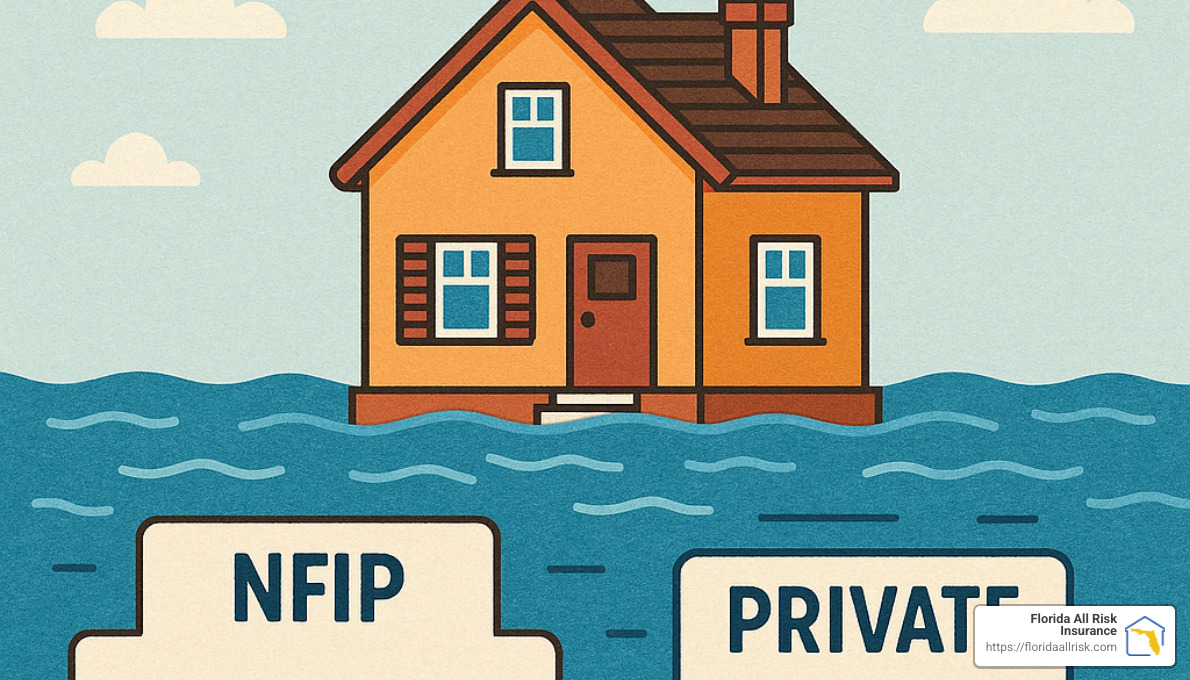
NFIP vs. Private Flood Insurance: Understanding Your Options
When shopping around for flood coverage, you’ll typically find two main options: the National Flood Insurance Program (NFIP) and private flood insurance.
The NFIP is a government-run program managed by FEMA, established back in 1968. It offers federally-backed flood coverage to homeowners in communities that participate in the program. In fact, NFIP policies generated over $3.2 billion in premiums in fiscal year 2022 alone, making it a widely-used option nationwide.
On the flip side, private flood insurance policies are offered by independent companies (think of your favorite Best flood insurance companies) and have been growing rapidly. Just in 2022, private insurers collected nearly $769 million in premiums, meaning more and more homeowners are seeing the benefits.
Each option has its pros and cons. NFIP coverage limits top out at $250,000 for structures and $100,000 for contents, which—let’s be honest—might not fully protect larger or higher-value homes. Private insurers, however, often offer much higher limits (some up to $4 million for structures and $500,000 for contents), making them ideal for higher-value homes or homeowners looking for comprehensive protection.
Another important factor is the waiting period. NFIP typically requires you to wait 30 days before coverage kicks in, while many private insurers offer shorter waiting periods (around 10-15 days) or even immediate coverage in some cases.
One big difference homeowners appreciate is in the handling of additional living expenses—something the NFIP doesn’t cover at all. Private insurance policies usually include coverage for these expenses if flooding temporarily forces you out of your home, giving you peace of mind and fewer sleepless nights in hotel rooms worrying about extra costs.
Similarly, private insurance typically offers more comprehensive coverage for basement contents, whereas the NFIP provides only limited protection in these areas.
Private insurers are also often more flexible with rates—they base pricing on detailed risk assessments rather than NFIP’s standardized rates. As a result, getting flood coverage from private providers can often be 20% to 50% cheaper compared to NFIP coverage.
And what about the claims process? Private insurers generally handle claims quicker since they’re managed directly by the company rather than through government bureaucracy. This can mean faster payouts and less stress when you’re already dealing with the headache of flood recovery.
At Florida All Risk Insurance, we’ve seen how surprised our clients are by the affordability and benefits of private flood coverage versus NFIP policies. Every situation is unique, of course—but our independent agents will gladly walk you through your choices to help you select the right solution for your needs and budget.
Want to dive deeper into flood insurance specifics for Florida homeowners? Check out our page—More info about Flood Insurance Florida—and explore your options today! For additional information about flood insurance in general, you can also visit the FEMA National Flood Insurance Program website for educational resources.
What Makes Quality Flood Insurance Stand Out in 2025
As flooding becomes more frequent—even in areas that once felt safe from rising waters—choosing the right flood insurance has never mattered more. The best flood insurance companies in 2025 understand that every homeowner’s needs are unique, and they offer coverage that fits your life and your budget.
Let’s explore the key factors that separate superior flood insurance providers from the rest.

Essential Features of Superior Flood Insurance
When it comes to quality flood insurance, flexibility and reliability are crucial. The best companies offer customized coverage limits to match your home’s value and your family’s needs. For example, Neptune Flood provides coverage up to $4 million for your home’s structure and up to $500,000 for your belongings. That’s significantly higher than the standard limits provided by NFIP, which caps at $250,000 for your house and $100,000 for personal possessions.
But it’s about more than just coverage amounts. Policy flexibility matters too. Top-tier insurers allow you to tailor your policy to include essentials like additional living expenses if flooding forces you out of your home temporarily. While NFIP doesn’t typically cover costs like hotels or meals during displacement, private policies often do. They also provide coverage for basement contents and even pool cleanup—benefits frequently excluded by standard policies.
Reliable flood insurance should also mean fast claims processing. When your home sustains flood damage, every second counts. Great companies in 2025 use technology to speed up claims. Many offer mobile apps, letting you file claims, upload photos, and track progress right from your smartphone. No endless forms or long waits—just straightforward, quick help when you need it most.
Of course, customer experience is also key. Companies known for excellent customer satisfaction are always easier to work with. Neptune Flood, for example, receives top reviews for easy-to-understand processes and quick responses. As one happy customer, Mark R., shared: “Simple and straightforward process. Lots of good information on the difference between getting coverage through a private insurer or FEMA. 5 stars—would recommend.”
And finally, when it comes to insurance, financial strength matters—a lot. Providers with strong financial ratings (an “A” or better from rating agencies like A.M. Best) ensure they’ll still be around to pay your claims, even after large-scale flooding events.
Haibo (Stephen) Yao, assistant professor of insurance and risk management at Central Arkansas University, advises homeowners to check carefully. He says, “[People should] check whether the extra premium for private flood insurance is reasonable, whether the coverage is actual cash value-based or replacement cost-based, or agreed value. They also need to check whether private flood insurance is available for their special area and if discounts can lower their premiums.”
Comparing Important Flood Insurance Features
When evaluating flood insurance, it’s wise to understand a few important differences between options:
One big factor is how damaged items are reimbursed: replacement cost vs. actual cash value. NFIP policies usually provide actual cash value (ACV) coverage, meaning they factor in depreciation when paying claims. This can leave you short when it’s time to replace damaged items. On the other hand, private insurers often provide replacement cost coverage, paying the full price to replace your belongings without subtracting for depreciation. As Yao points out, this difference can save homeowners significantly in the event of a loss.
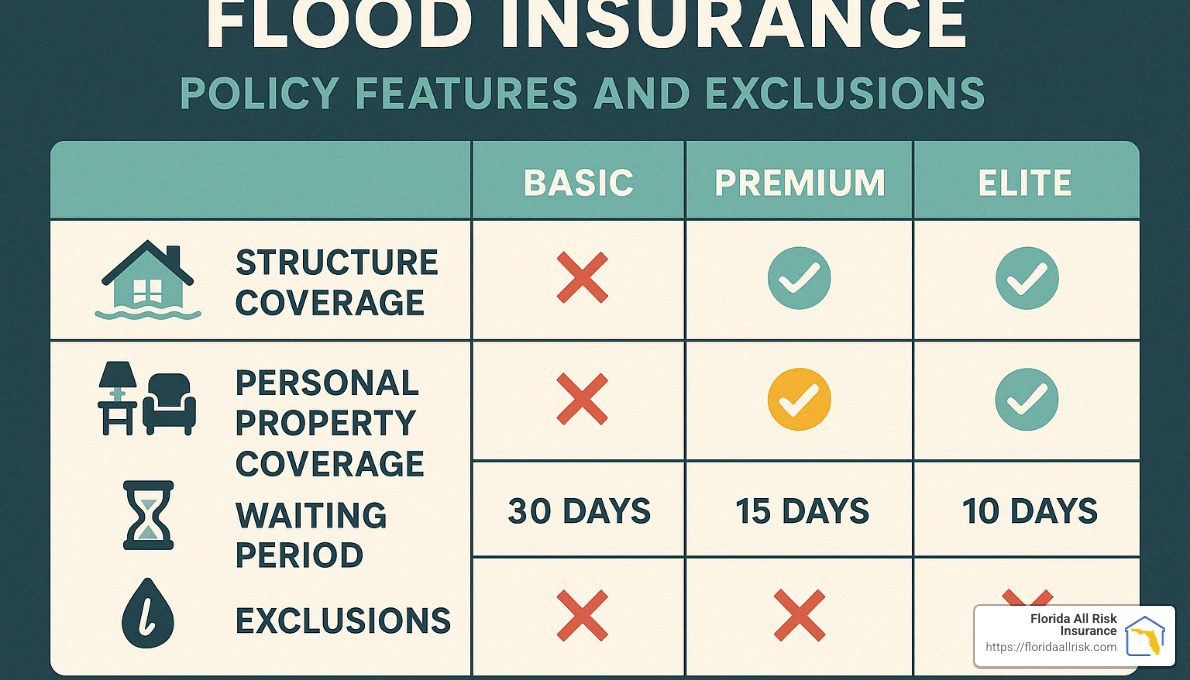
Another key difference is waiting period variations. Standard NFIP policies come with a 30-day waiting period, meaning you aren’t covered if flooding happens within one month of purchasing your policy. Private flood insurers typically offer shorter waiting times—usually 10 to 15 days—and some even provide immediate coverage in certain situations.
Finally, always be aware of common coverage exclusions. All flood policies exclude certain items, but these vary by provider. Typical exclusions include valuables like currency, precious metals, and important documents; landscaping, decks, and patios; vehicles (covered under your auto policy); and swimming pools (though some private policies now offer pool cleanup coverage).
At Florida All Risk Insurance, we believe informed homeowners make the safest homes. Because we’re an independent agency, we offer policies from many best flood insurance companies, so you can find the perfect fit. Our goal is simple: give you great coverage, clearly explained, at a competitive price.
Here’s a quick comparison to help you visualize the differences in flood coverage options:
| Feature | Basic Coverage | Premium Coverage | Elite Coverage |
|---|---|---|---|
| Structure Coverage | Up to $250,000 | Up to $1 million | Up to $4 million |
| Contents Coverage | Up to $100,000 | Up to $250,000 | Up to $500,000 |
| Replacement Cost for Contents | No | Yes | Yes |
| Additional Living Expenses | No | Limited | Comprehensive |
| Basement Contents | Limited | Improved | Comprehensive |
| Waiting Period | 30 days | 15 days | 10 days or less |
| Pool Cleanup | No | Limited | Yes |
| Premium Savings vs. NFIP | N/A | Up to 25% | Up to 40% |
In short, quality flood insurance in 2025 offers coverage that’s personalized, flexible, and reliable—exactly what you need to feel secure, even when waters rise.
Key Factors to Consider When Choosing Flood Insurance
Choosing the right flood insurance isn’t exactly a walk on the beach—but it doesn’t have to be complicated either. At Florida All Risk Insurance, we believe that understanding a few key factors can make all the difference, helping you select coverage that fits your home, your wallet, and your peace of mind.
Here’s what you need to keep in mind as you shop for flood protection in 2025.
Assessing Your Flood Risk
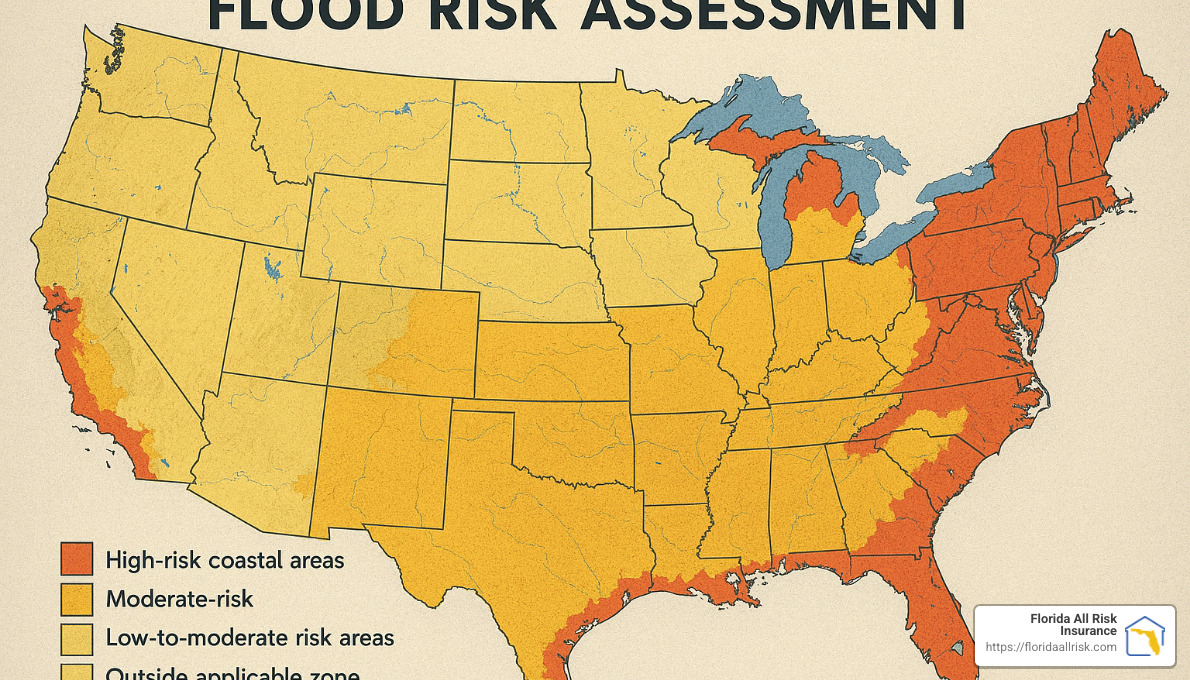
First things first: let’s talk about your flood risk. Many homeowners assume flooding only happens near the coast or by rivers—but that’s just the tip of the iceberg. Surprisingly, more than 25% of flood claims actually come from areas classified as moderate-to-low risk.
Start by checking out your area’s FEMA flood zone maps**. FEMA maps label high-risk areas as Zones A or V**, which typically require flood insurance if you have a federally backed mortgage. But here’s the kicker—flood risks aren’t set in stone. FEMA updates these maps regularly, and your property’s designation can change over time, so it’s a good idea to stay informed.
Of course, maps don’t tell the full story. Look into your neighborhood’s flood history, even if you’re not designated high-risk. Has there been flooding nearby before? If there’s a history, that’s a red flag worth considering.
Also, pay attention to local topography—properties at the bottom of hills, near poor drainage areas, or in rapidly developing communities can face higher risk, even if they’re officially outside a high-risk zone.
Lastly, let’s talk about the elephant in the room: climate change. Flooding events are becoming more common and severe due to changing weather patterns. It pays to think ahead about potential risks, not just rely on historical data.
Understanding Coverage Limits and Exclusions
Knowing what your policy covers—and just as importantly, what it doesn’t cover—is crucial. Let’s break down the basics.
Flood damage gets expensive fast. Just one inch of water can cause up to $25,000 in damage. That means your coverage limits should reflect the actual cost to rebuild your home and replace your belongings. That NFIP policies have strict caps—$250,000 for your home’s structure and $100,000 for contents—which might not be enough for larger or more valuable homes. Private policies often provide higher limits, making them attractive options in many cases.
Consider your possessions carefully. Are your belongings worth more than NFIP limits? If so, private flood insurance may offer better protection. High-value items, electronics, and items stored in basements or crawl spaces might be partially or completely excluded from coverage, so review your policy closely.
Another important factor is Additional Living Expenses (ALE). Imagine flood damage forces you out of your home temporarily—does your policy help cover hotel stays or rental costs? NFIP policies don’t include ALE coverage at all, but many private insurers do.
Typical exclusions in most flood insurance policies include things like currency, valuable papers, precious metals, vehicles (you’ll need comprehensive auto insurance for cars), landscaping, decks, patios, pools (though some private options do cover pool cleanup), and business interruption losses.
Here’s a handy reference to sum up what’s typically covered and what’s not:
| Coverage Type | Typically Covered | Typically Excluded | Varies by Policy |
|---|---|---|---|
| Main Structure | ✓ | ||
| Foundation | ✓ | ||
| Electrical & Plumbing | ✓ | ||
| Appliances | ✓ | ||
| Personal Belongings | ✓ | ||
| Basement Finishes | ✓ | ||
| Basement Contents | ✓ | ||
| Additional Living Expenses | ✓ (NFIP) | ✓ (Private) | |
| Decks & Patios | ✓ | ||
| Landscaping | ✓ | ||
| Business Property | ✓ | ||
| Vehicles | ✓ | ||
| Swimming Pools | ✓ (NFIP) | ✓ (Private) |
Evaluating Your Flood Risk and Insurance Needs
Determining exactly how much flood insurance you require isn’t one-size-fits-all—it involves taking a close look at your unique circumstances.
Start by figuring out your home’s replacement value. If disaster strikes, you’ll want a policy that fully covers rebuilding your home from the ground up and replacing your belongings at today’s prices.
Your specific flood zone also plays a big role. Properties in FEMA’s higher-risk Zones A and V usually require more comprehensive coverage and carry higher premiums. However, even if you’re in a moderate-to-low-risk area, it doesn’t mean you’re off the hook—floods don’t exactly check zone maps before showing up!
Another factor is your home’s elevation. If your property is liftd above the Base Flood Elevation (BFE), you might qualify for premium discounts with both NFIP and private policies.
Consider your personal risk tolerance as well. Are you comfortable with basic coverage, or would you rather sleep easier with higher limits that ensure you’re fully protected, no matter what?
Finally, there’s your budget. Of course, you want to protect your home thoroughly—but you’ll also want to find affordable premiums that make sense for your wallet.
At Florida All Risk Insurance, we don’t just look at FEMA maps. We dive deeper, factoring in local drainage systems, neighborhood development, and even historical flood events that might not show up in official flood zone designations. We also partner with modern private insurers like Neptune Flood, who use advanced technologies such as LiDAR and artificial intelligence to quickly and accurately assess your property’s individual flood risk. (Bonus: these advanced assessments often eliminate the need for costly elevation certificates!)
FEMA’s flood maps aren’t static—they can and do change. If you feel your property has been incorrectly mapped, you can request FEMA to review your designation through what’s called a Letter of Map Amendment (LOMA). This could potentially lower your risk designation and reduce your premiums.
We know there’s a lot to think about, but remember, you’re not alone. At Florida All Risk Insurance, we’re here to help you every step of the way. Let’s work together to find the Best flood insurance companies that meet your exact needs, keeping your family and your home safe, dry, and worry-free.
Frequently Asked Questions about Flood Insurance
Why Should I Consider Private Flood Insurance Over NFIP?
Choosing between private flood insurance and an NFIP policy can feel overwhelming, but here’s why many homeowners are turning to private providers:
Higher coverage limits are one of the biggest advantages. While NFIP policies typically max out at $250,000 for your home’s structure and $100,000 for personal belongings, private insurers often provide coverage limits up to $4 million for your home and $500,000 for your stuff. If you have a higher-value home or want extra peace of mind, private flood insurance can be a smart choice.
Another appealing benefit is additional living expenses coverage. If floodwaters force you to stay in a hotel or rent a place while repairs are underway, NFIP won’t pay for that—but many private policies will. After all, dealing with a flood is stressful enough without worrying about hotel bills!
There’s also the convenience of shorter waiting periods. NFIP has a standard 30-day waiting period before your policy takes effect, while private companies typically shorten this wait to around 10-15 days. Some even offer immediate coverage under certain circumstances.
And here’s a pleasant surprise: private flood policies often come with lower premiums. Thanks to more advanced technology for risk assessment, companies like Aon Edge report they can offer homeowners savings averaging around 40% compared to NFIP costs. With these savings, you might even have enough leftover for that long-awaited beach vacation (just make sure it’s not hurricane season)!
Finally, private flood insurance often provides replacement cost coverage for your belongings. That means when your furniture, electronics, or clothing are damaged by flooding, you’ll receive enough reimbursement to buy brand-new replacements, rather than just the depreciated value NFIP typically pays.
Of course, everyone’s situation is different. If you’re in an extremely high-risk area, NFIP might still be the best bet—especially since some mortgage lenders have strict requirements. But for many, the flexibility and savings of private flood insurance make it worth exploring.
How Can I Accurately Determine My Flood Risk?
Figuring out your actual flood risk takes a little detective work—but don’t worry, it’s easier than it sounds!
Start by checking official flood maps, like FEMA’s flood zone maps. You can visit their Flood Map Service Center (MSC) or use our easy-to-steer FEMA flood zone map tool. Properties in zones labeled with A or V are considered high-risk—meaning flood insurance is strongly recommended or even required by your mortgage lender.
But maps aren’t everything. It’s also smart to research your area’s flooding history. Check county records, talk to neighbors who’ve lived nearby for years (bonus points if they have good stories!), or search local news archives. Even areas that seem safe can have hidden flooding histories.
Next, take a look at your local landscape. If your home sits at the bottom of a hill or near a newly-developed area where water drainage has changed, it’s wise to consider flood coverage—even if you’re not in an official high-risk zone.
Don’t forget climate change. Weather patterns have shifted in recent years, meaning areas that used to be flood-free may now face higher risks. Staying ahead of the curve helps you avoid unpleasant surprises.
Finally, consider chatting with a flood insurance specialist—like our friendly team here at Florida All Risk Insurance. We use advanced tools to provide personalized flood risk assessments custom to your exact location, taking all these factors into account. That way, you’ll feel confident knowing you’re fully protected.
What Factors Affect Flood Insurance Costs?
Wondering how much you’ll pay for flood insurance? Several factors can cause costs to rise or fall—but don’t worry, understanding them can help you find the best deal.
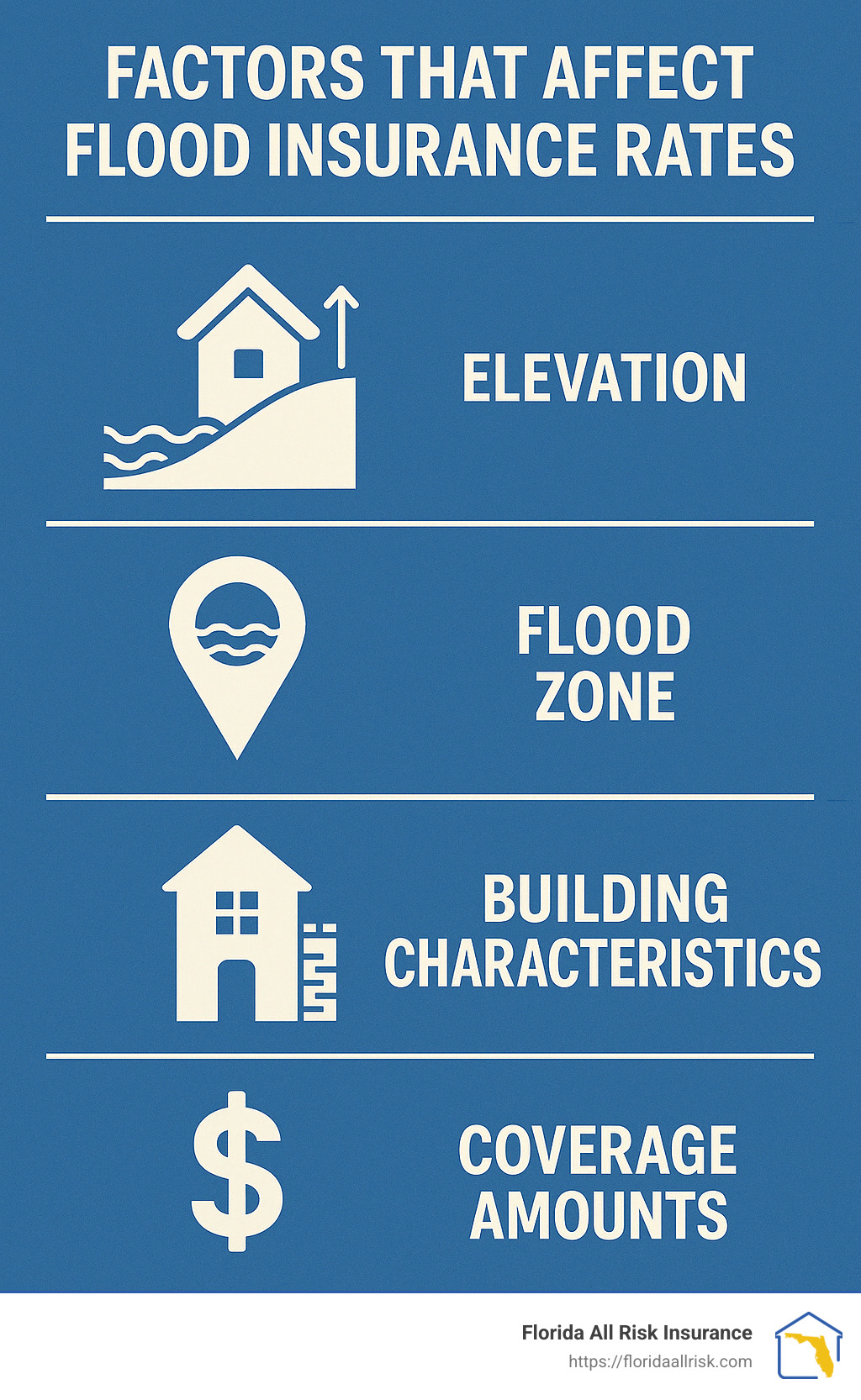
First up is your property’s flood zone. Homes in high-risk areas, labeled as A or V zones on FEMA’s maps, typically come with higher premiums than moderate-to-low risk zones (B, C, or X). If you’re unsure about your zone, our FEMA flood zone map makes checking easy.
Another big factor is your home’s elevation. Houses built above the Base Flood Elevation (BFE)—the level FEMA predicts flooding could reach—typically earn big discounts. You can even boost your home’s elevation (like raising your HVAC unit or installing flood vents) to reduce premiums further.
The building characteristics of your home also matter. Things like your home’s age, foundation type, number of floors, and location of utilities can impact your rate. Generally, newer homes or those built to modern flood-resistant standards will enjoy lower costs.
Naturally, your coverage amount and deductible choice affect pricing. Higher coverage limits mean higher premiums, but you’ll have more protection in a disaster. Selecting a higher deductible (the amount you pay out-of-pocket if you file a claim) normally lowers your premium—but be sure it’s an amount you’re comfortable covering.
Also, if your property has prior flood claims, insurers might charge more to cover potential future risks. This is especially true in private flood insurance, where past claims can significantly affect premiums.
Finally, policy type matters. Private flood insurance policies are often priced competitively compared to NFIP, especially for homes in moderate or low-risk areas. Providers like Palomar, for example, offer average premiums around $390 per year—that’s a noticeable savings compared to NFIP’s typical $700 average.
FEMA’s new pricing method, Risk Rating 2.0, now considers individual property characteristics rather than just flood zones. For some homeowners, this means lower premiums; for others, there may be increases. Our team at Florida All Risk Insurance is always ready to help break down these factors and find the best flood insurance companies and policies that match your budget and coverage needs.
Conclusion
Choosing the right flood insurance isn’t just a matter of ticking off a box on your mortgage paperwork—it’s about giving yourself peace of mind and protecting your biggest investment. After all, as FEMA reminds us, “Floods can happen anywhere—just one inch of floodwater can cause up to $25,000 in damage.”
With weather patterns becoming more unpredictable, having reliable flood insurance coverage has never been more important. Thankfully, the flood insurance market has come a long way in recent years. Private insurers now offer compelling alternatives to traditional NFIP policies, often providing better value through higher coverage limits, additional living expenses coverage, shorter waiting periods, and even lower premiums.
But remember, not all flood insurance policies are created equal. When comparing the Best flood insurance companies in 2025, you’ll want to consider several important factors beyond just the lowest price. Look closely at coverage limits (especially if your home exceeds NFIP’s standard limits), policy exclusions, waiting periods, and the insurer’s financial stability and reputation for customer service.
At Florida All Risk Insurance, we’ve made it our mission to help Florida homeowners steer these complexities. Based in sunny St. Petersburg, we’re an independent agency, which means we don’t play favorites. Instead, we provide you with clear, honest guidance and personalized service. Our goal is simple: find you the ideal flood insurance coverage that matches your unique needs and budget without breaking a sweat—yours or ours.
We take the guesswork out of flood risk assessment by evaluating your specific property’s history, location, elevation, and unique risk factors. Our agents use advanced tools and years of local experience to help you understand exactly what coverage you need. And if, heaven forbid, flooding occurs, we’re here to guide you through the claims process, too—because nobody should have to steer insurance paperwork alone during an already stressful situation.
Don’t wait until storm clouds are rolling in to think about flood insurance. Most policies have waiting periods—typically around 30 days for NFIP and 10-15 days for private plans—before coverage kicks in. Purchasing coverage at the last minute won’t protect your home from an imminent threat. Be proactive. Protect your home and your family’s financial well-being today.
Whether you live on a picturesque Florida coastline or in a quiet inland neighborhood, flooding can happen anywhere (yes, even there!). With Florida All Risk Insurance at your side, you can rest easy knowing you’ve chosen among the Best flood insurance companies offering solid coverage, financial stability, and exceptional customer service.
Want to learn more about your flood insurance options or get personalized advice? Explore our flood insurance coverage options here.
When it comes to something as important as flood insurance, don’t settle. Choose comprehensive protection, quality customer care, and peace of mind. You’ll thank yourself later—and your home will too.

