

Why Understanding Your Auto Insurance Coverage Options Matters
Auto insurance coverage options can feel overwhelming when you’re staring at a policy packed with insurance jargon. But here’s the thing – you don’t need a degree in insurance to protect yourself and your family on Florida’s roads.
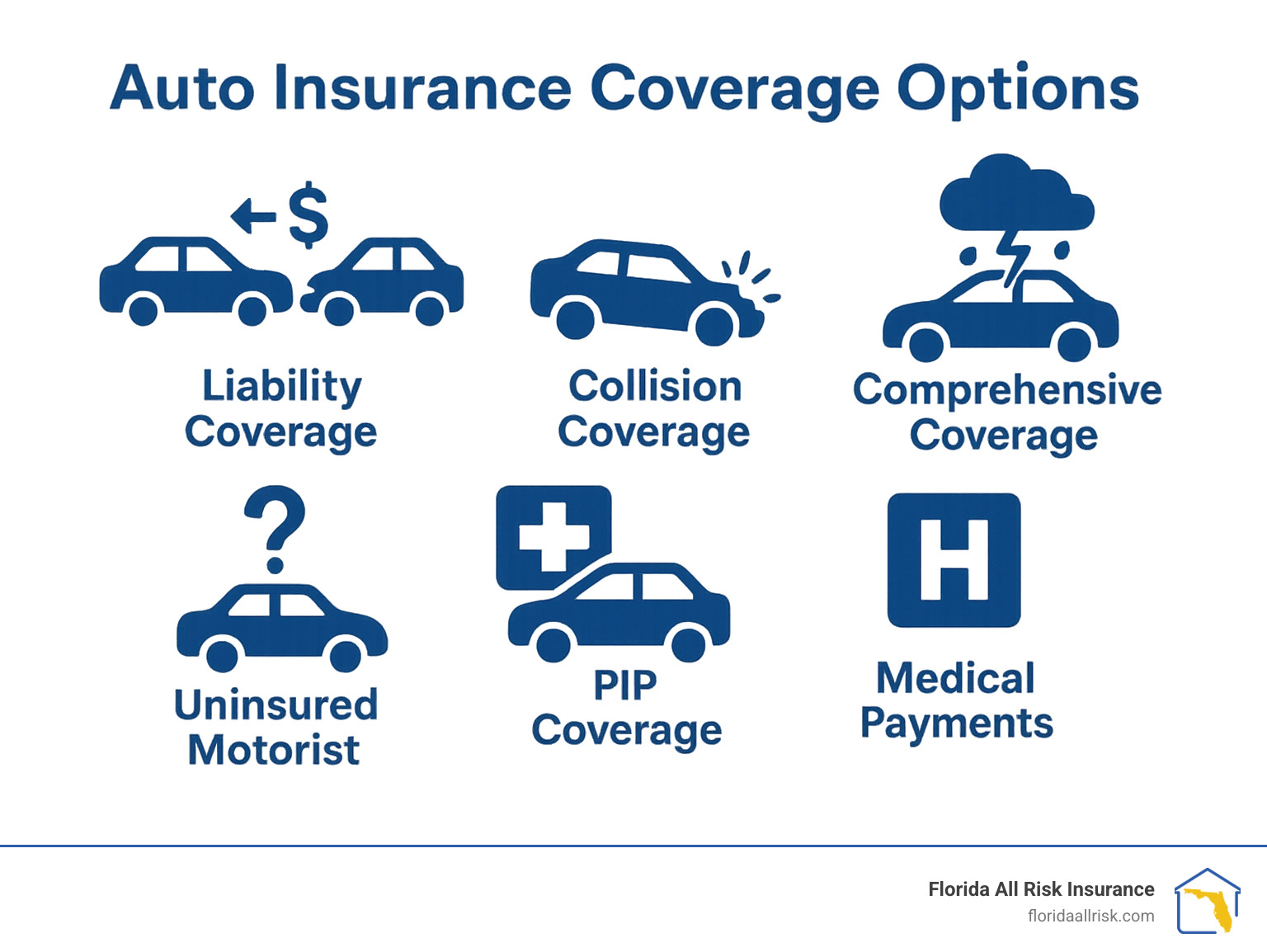
The six core auto insurance coverage types you need to know:
• Liability Coverage – Pays for damage you cause to others
• Collision Coverage – Fixes your car after crashes
• Comprehensive Coverage – Protects against theft, weather, and animals
• Uninsured/Underinsured Motorist – Covers you when others can’t
• Personal Injury Protection (PIP) – Required in Florida for medical bills
• Medical Payments – Additional medical coverage option
Most basic auto policies consist of these six types of coverage, according to industry data. The national average for full coverage is $1,708 per year – but smart choices about your coverage can save you hundreds while keeping you protected.
Whether you’re navigating I-275 during rush hour or dealing with Florida’s unpredictable weather, the right coverage gives you peace of mind. Full coverage isn’t actually a single policy type – it’s typically a combination of liability, collision, and comprehensive insurance working together.
I’m Jason Miller, and I’ve spent over 20 years helping Florida families understand auto insurance coverage options without the confusing industry speak. My experience comes from building Florida All Risk Insurance into a trusted resource for thousands of clients who needed straight answers about protecting their vehicles and assets.
Easy Auto insurance coverage options glossary:
– Liability car insurance Florida
– Uninsured motorist coverage Florida
– Best car insurance discounts
Why this guide matters
We’ve seen too many Florida drivers find their coverage gaps after an accident. Learning about auto insurance coverage options before you need them protects your assets and gives you confidence on the road. This jargon-free guide helps you make informed decisions about protecting what matters most – your family’s financial security.
Auto Insurance Coverage Options 101
Think of auto insurance coverage options like a safety net made of different layers – each one catches you when specific things go wrong on the road. Understanding what is covered by a basic auto insurance policy helps you build protection that actually works when you need it most.
Let’s clear up the biggest confusion right away: “full coverage” isn’t actually a real insurance term. It’s just marketing speak that typically means you have liability, collision, and comprehensive coverage working together. But even so-called “full coverage” has gaps and limits, which is why knowing each piece of your policy matters so much.
Liability—Your Legal Safety Net
Liability coverage acts like your financial bodyguard when you accidentally hurt someone or damage their property. It splits into two parts that work as a team: bodily injury liability covers other people’s medical bills, lost paychecks, and pain and suffering, while property damage liability pays to fix their car, fence, or whatever else you might hit.
Florida law requires at least $10,000 in property damage liability, but that won’t even cover half the cost of totaling someone’s new pickup truck. Smart drivers carry much higher limits because a serious accident can wipe out everything you’ve worked for. Your liability coverage also pays for lawyers to defend you if someone decides to sue, which can cost tens of thousands even if you win the case.
What makes liability special is that it follows you around – you’re covered when driving your friend’s car (with permission), and it protects your spouse and kids listed on your policy too. The coverage kicks in whether you’re behind the wheel or your teenage daughter is learning to parallel park.
We’ve seen claims balloon past $100,000 when someone gets seriously hurt, making higher liability car insurance Florida limits one of the smartest investments you can make.
Comprehensive vs. Collision: Know the Difference
These two coverages both protect your car, but they’re like specialists who handle completely different emergencies. Comprehensive coverage deals with what we call “acts of nature and acts of jerks” – things like theft, vandalism, hailstorms, floods, fires, and those unfortunate meetings with deer on dark country roads.
Collision coverage is your crash specialist. It pays to fix your car when you hit another vehicle, roll over, smack into a guardrail, or even when you hit that massive pothole that felt like a small crater.
Here’s something that confuses people: if a deer runs into your parked car OR you hit a deer while driving, both scenarios fall under comprehensive coverage. The key is whether your car was “colliding” with the road or another vehicle.
| Scenario | Comprehensive | Collision |
|---|---|---|
| Deer runs into your car | ✓ | |
| You hit a deer | ✓ | |
| Hailstorm dents your roof | ✓ | |
| You rear-end another car | ✓ | |
| Tree falls on parked car | ✓ | |
| You hit a tree while driving | ✓ |
Both coverages only pay up to your car’s actual cash value minus your deductible. So if your car’s worth $3,000 and you chose a $1,000 deductible, the most you’d get from a total loss is $2,000.
“Full Coverage” Auto Insurance Coverage Options Explained
When people talk about “full coverage,” they usually mean the big three: liability, comprehensive, and collision all working together. But auto insurance coverage options offer much more protection than this basic trio.
Real comprehensive protection often includes uninsured motorist coverage, medical payments or PIP, and helpful add-ons like rental car reimbursement and roadside assistance. Think of it as building a complete safety net rather than just meeting the minimum requirements.
If you’re financing or leasing your car, your lender will require comprehensive and collision coverage until you pay off the loan. They’re protecting their investment, but you benefit too. Once you own the car free and clear, these coverages become optional – but dropping them means you’re gambling with your own money if something happens.
Uninsured & Underinsured Motorist Protection
Here’s a reality check: not everyone on Florida roads carries adequate insurance, despite it being legally required. Some drivers have no insurance at all, while others carry bare-minimum coverage that won’t begin to pay for serious injuries.
Uninsured motorist coverage steps in when someone without insurance causes an accident. Underinsured motorist coverage takes over when the at-fault driver’s limits aren’t nearly enough to cover your medical bills and other damages.
This protection follows you everywhere – you’re covered as a driver, passenger, or even as a pedestrian who gets struck by an uninsured driver. It pays for medical expenses, lost wages, and pain and suffering, essentially filling the financial hole when the other person can’t or won’t pay what they owe you.
Florida offers something called “stacked” coverage that can multiply your protection. Stacked coverage combines limits across all the vehicles on your policy, potentially doubling or tripling your safety net. Uninsured motorist coverage Florida rules make this stacking option especially valuable for families with multiple cars.
Medical Payments & Personal Injury Protection (PIP)
Florida requires Personal Injury Protection (PIP) coverage – you can’t legally drive without it. PIP acts like your personal emergency fund, paying 80% of your medical bills and 60% of lost wages up to your policy limits, regardless of who caused the accident. It also covers essential services like childcare when you’re too injured to handle normal daily activities.
Medical Payments coverage works differently but can complement your PIP. MedPay pays 100% of medical bills up to your chosen limits, though it doesn’t cover lost wages or services like PIP does. Some smart drivers carry both for extra medical protection, especially when they have high-deductible health insurance plans.
PIP benefits kick in immediately after an accident and include medical treatment costs, 60% of lost wages up to your policy limits, payment for essential services you can’t perform while injured, and even death benefits for your family. It’s no-fault coverage, meaning it pays regardless of who caused the accident – a crucial safety net in our busy Florida traffic.
Deductibles, Limits & Cost Factors
Your auto insurance coverage options work like a financial balancing act. Every choice you make about deductibles and limits affects both your monthly premium and what comes out of your pocket during a claim. Getting this balance right can save you hundreds of dollars while keeping you properly protected.
Auto Insurance Rates Florida vary dramatically based on these decisions, so understanding how each piece works helps you make smart choices for your situation.
How Deductibles Work
Think of your deductible as your “skin in the game.” It’s the amount you pay before your insurance company steps in to cover the rest. If a fender-bender costs $2,000 to fix and you have a $500 deductible, you write a check for $500 while insurance handles the remaining $1,500.
Here’s the trade-off that trips up many drivers: higher deductibles mean lower monthly premiums, but you need to actually afford that deductible when trouble strikes. Saving $200 a year on premiums sounds great until you’re staring at a $2,000 repair bill and don’t have the cash.
Most Florida drivers benefit from having separate deductibles for collision and comprehensive coverage. You might choose a $250 comprehensive deductible for weather damage (hello, hurricane season) and a $500 collision deductible for crash repairs. This strategy makes sense because comprehensive claims in Florida are often smaller but more frequent than collision damage.
Before choosing your deductible, do the “emergency fund check.” If you can’t comfortably cover your deductible without borrowing money or missing other bills, consider a lower amount even if it costs more monthly.
Setting the Right Limits
Florida’s minimum requirements are like wearing flip-flops to climb a mountain – technically footwear, but nowhere near adequate for the job. The state’s $10,000 property damage requirement won’t even cover a basic pickup truck, let alone the luxury SUVs cruising around St. Petersburg.
Smart liability limits start around $100,000 per person and $300,000 per accident for bodily injury, plus $50,000 for property damage. These numbers aren’t random – they reflect the real cost of serious accidents and lawsuits that can devastate your financial future.
Your assets determine how much protection you need. Own a home? Have retirement savings? Earn a decent income? Higher liability limits protect against lawsuits that could wipe out everything you’ve worked for. An umbrella policy can add millions in additional liability coverage for surprisingly little cost, often less than $300 annually.
For comprehensive and collision coverage, payouts max out at your car’s actual cash value. As your vehicle ages and loses value, these coverages become less worthwhile compared to their cost.
What Drives Your Premium
Insurance companies are basically professional risk calculators, and they’ve identified several factors that predict how likely you are to file a claim. Understanding these helps explain why your premium might be higher or lower than your neighbor’s.
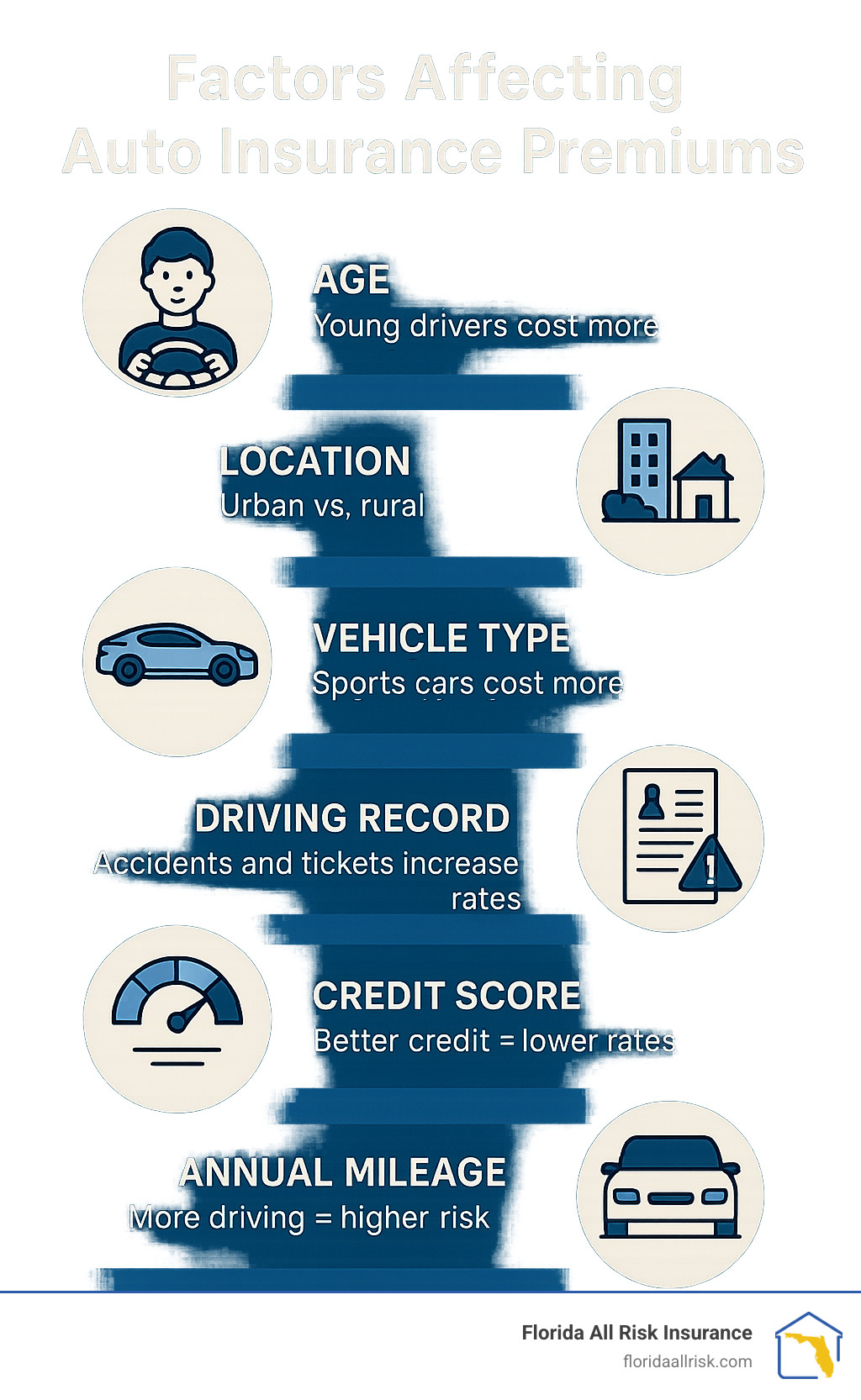
Age and experience matter enormously. Drivers under 25 face the steepest rates because statistics show they’re involved in more accidents. The average 20-year-old pays about $3,569 annually for coverage that costs a 35-year-old just $1,708. The good news? Rates typically drop significantly at age 25 and continue falling as you gain experience.
Where you live affects your rates more than you might expect. Urban areas like downtown St. Petersburg see higher premiums due to increased accident rates, theft, and vandalism compared to rural Florida communities. Even moving a few zip codes can change your premium by hundreds of dollars.
Your vehicle choice sends a clear signal to insurers about your risk level. That sports car might be fun to drive, but it costs significantly more to insure than a family sedan. Safety features and anti-theft devices can help reduce premiums, while luxury vehicles and high-performance cars push rates higher.
Your driving record follows you for 3-5 years. A single accident can increase your premium by 20-40%, while a DUI conviction can double your rates. The impact gradually fades over time, but clean driving pays immediate dividends.
Credit scores play a surprising role in Florida insurance pricing. Insurers have found statistical correlations between credit responsibility and claim frequency, so better credit often translates to lower premiums. It’s worth checking your credit report for errors that might be costing you money.
Annual mileage directly impacts your accident risk – more time on the road means more opportunities for things to go wrong. Some insurers now offer telematics programs that track not just how much you drive, but how well you drive, potentially offering discounts for safe behaviors.
Latest research on premiums shows these factors working together to create your unique rate. The key is understanding which factors you can control and which ones you simply need to work around.
Florida Rules, Specialty Situations & Money-Saving Tips
Living in Florida means dealing with unique insurance challenges – from hurricane season to rideshare driving to tourist-heavy roads. Understanding these special situations helps you make smarter choices about your auto insurance coverage options.
Florida’s insurance laws are quirky compared to other states. We require $10,000 in PIP coverage and $10,000 in property damage liability, but here’s the strange part – bodily injury liability isn’t required at all. This means some Florida drivers carry minimal protection, which makes uninsured and underinsured motorist coverage even more critical for your family’s safety.
Hurricane season adds another layer of complexity to your coverage decisions. Comprehensive coverage becomes your best friend for protecting against wind and hail damage. Just remember that while comprehensive handles weather damage, it doesn’t cover flooding – that requires separate flood insurance through the National Flood Insurance Program.
If you’re driving around Auto Insurance St Petersburg FL areas, you’re dealing with coastal weather risks, heavy urban traffic, and roads packed with tourists who might not know where they’re going. These factors influence both what coverage you need and how much you’ll pay for it.
Special Auto Insurance Coverage Options for Rideshare & Custom Vehicles
Auto insurance coverage options get more complicated when you’re not driving a standard family car for personal use only.
Rideshare drivers face a tricky coverage gap that many don’t realize exists. Your personal auto policy doesn’t cover you while you’re driving commercially – even if you’re just logged into the Uber app waiting for rides. A rideshare endorsement bridges this gap, extending your personal coverage while you’re working. Without it, you could be left paying for accident damages out of your own pocket.
Custom vehicle owners need to think beyond standard coverage too. If you’ve invested thousands in aftermarket wheels, a premium sound system, or performance modifications, regular comprehensive and collision coverage won’t help much. These policies only pay your car’s actual cash value – not what you spent on upgrades. Custom Parts and Equipment coverage protects those investments, while classic car policies offer agreed-value coverage instead of depreciated values.
Gap insurance matters if you owe more on your car loan than the vehicle’s current worth. This happens more often than you’d think, especially with new cars that depreciate quickly or long-term loans with small down payments. Gap coverage pays the difference between what you owe and what insurance covers after a total loss.
Other helpful add-ons include roadside assistance for towing and emergency services, and rental reimbursement to cover a rental car while yours is being repaired.
When to Keep Full Coverage vs. Drop to Liability Only
Deciding whether to drop comprehensive and collision coverage isn’t just about your car’s age – it’s about balancing costs with risks and your financial situation.
Here’s a practical rule we use: if your annual premium for comprehensive and collision exceeds 10% of your car’s current value, it might be time to consider liability-only coverage. For example, if your car is worth $4,000 and you’re paying $500 per year for full coverage, you’re essentially buying a new car every eight years just in premiums.
But don’t make this decision based on math alone. Keep full coverage longer if you commute in heavy traffic where accidents are more likely, live in areas prone to severe weather or high theft rates, or simply can’t afford to replace your vehicle if something happens.
Your loan or lease company will require comprehensive and collision coverage until the vehicle is paid off – that’s non-negotiable. Once you own the car outright, the choice becomes yours.
Consider your emergency fund too. If losing your car would create a financial crisis, comprehensive and collision coverage might be worth keeping even on an older vehicle. The peace of mind alone can be valuable.
Money-Saving Hacks Without Skimping on Protection
Smart shopping and strategic choices can cut your insurance costs significantly without leaving you vulnerable on Florida’s roads.
Bundling policies remains one of the easiest ways to save money. Combining your auto insurance with homeowners or renters coverage typically saves 5-25% on both policies. At Florida All Risk Insurance, we help clients find the best combination discounts across multiple carriers.
Paying annually instead of monthly eliminates processing fees that can add $50-100 to your yearly costs. It requires more cash upfront, but the savings add up over time.
Defensive driving courses do double duty – they can earn you 5-10% discounts while potentially removing points from your driving record. Many courses are available online now, making them more convenient than ever.
Usage-based insurance programs use telematics devices or smartphone apps to monitor your driving habits. Safe drivers can earn substantial discounts – sometimes up to 30% – though these programs aren’t right for everyone. If you’re a careful driver with predictable routes, they’re worth considering.
Raising deductibles strategically can lower your premiums without much additional risk. Increasing from $250 to $500 deductibles typically saves 10-15% on comprehensive and collision coverage. Just make sure you can afford the higher out-of-pocket cost if you need to file a claim.
Shopping annually ensures you’re getting competitive rates as your situation changes and insurance markets shift. Loyalty doesn’t always pay in insurance – companies often offer their best rates to new customers.
The Best Car Insurance Discounts include good student discounts for young drivers, multi-vehicle discounts for families with multiple cars, safety feature discounts for vehicles with advanced safety systems, and even discounts for certain professions or group memberships.
Affordable Car Insurance Florida doesn’t mean choosing the cheapest policy you can find – it means getting the best value for comprehensive protection that actually covers you when you need it most.
Frequently Asked Questions about Auto Insurance Coverage Options
You’ve probably got questions about auto insurance coverage options that keep you up at night. Don’t worry – we hear these same concerns from Florida drivers every day. Let’s clear up the confusion with straight answers.
What is NOT covered by a standard auto policy?
Here’s where many drivers get surprised – auto insurance doesn’t cover everything that happens to your car. Understanding these gaps helps you avoid nasty surprises when filing claims.
Wear and tear issues top the list of exclusions. Your engine breaking down after 150,000 miles? That’s on you, not your insurance company. Same goes for brake pads wearing out, tires going bald, or your transmission giving up the ghost from normal use.
Commercial activities create another major gap. If you’re delivering pizzas, driving for a moving company, or using your car for any business purpose, your personal policy likely won’t cover accidents during work hours. Even something as simple as getting paid to drive a friend to the airport could void your coverage.
Racing and speed contests are automatic exclusions. This includes organized track days, drag racing, or any timed driving event. Insurance companies consider these activities too risky for standard policies.
Intentional damage never gets covered. If you deliberately drive into your ex’s fence (we don’t recommend this), you’re paying for repairs yourself. The same applies if someone on your policy intentionally damages the vehicle.
Custom equipment often gets overlooked. That $5,000 sound system or those fancy wheels might not be fully covered under standard comprehensive coverage. Most policies have limits on aftermarket parts and equipment.
How much auto insurance coverage do I really need?
This question deserves more than a one-size-fits-all answer. The right coverage depends on your unique situation, and we help our clients think through these decisions every day.
Start with an asset review. If you own a home worth $300,000, have $50,000 in savings, and earn $75,000 annually, you’ve got $425,000 in assets that lawsuits could target. Your liability coverage should exceed this amount – consider $500,000 or even $1 million in coverage.
Income protection matters too. Florida’s required $10,000 in PIP coverage won’t go far if you’re seriously injured and miss months of work. Higher PIP limits or additional medical payments coverage can bridge gaps in your health insurance.
Lender requirements aren’t negotiable. If you’re financing or leasing your vehicle, the lender sets minimum comprehensive and collision coverage levels. They might also limit your deductible choices to protect their investment.
Think about your daily risk exposure. Do you commute 60 miles daily on busy highways? You need more coverage than someone who drives occasionally to the grocery store. Consider your family’s transportation needs if your car gets totaled – can you afford immediate replacement?
Can I change deductibles or coverages mid-policy?
Absolutely – and it’s easier than most people think. Insurance policies aren’t set in stone until renewal. You can modify your auto insurance coverage options anytime through policy endorsements.
Coverage adjustments get prorated based on your remaining policy period. If you increase your liability limits halfway through your six-month policy, you’ll pay half the annual difference. Decrease coverage, and you’ll get money back.
Deductible changes work the same way. Raising your deductible from $500 to $1,000 will reduce your premium immediately, with the savings applied to your remaining policy term. Just make sure you can afford the higher out-of-pocket cost before making changes.
Lender approval becomes necessary if you have a car loan or lease. Your lender must approve any reduction in comprehensive or collision coverage, and they typically won’t allow deductibles above $1,000. Some lenders require written approval before making any changes.
Timing considerations can save you money. Some changes take effect immediately, while others can be scheduled for your renewal date. We help clients time adjustments to maximize savings and avoid coverage gaps.
The key is staying in touch with your insurance agent as your situation changes. Marriage, new jobs, moving, or paying off your car all create opportunities to optimize your coverage and costs.
Conclusion
You’ve made it through the maze of auto insurance coverage options – and hopefully it feels a lot less overwhelming now. The truth is, protecting yourself on Florida’s roads doesn’t require a PhD in insurance. You just need to understand how the six core coverages work together to keep your finances safe.

Think of your policy as a custom-built safety net. Liability coverage protects others and your assets when you cause an accident. Comprehensive and collision keep your vehicle protected from everything from hurricanes to fender-benders. Uninsured motorist coverage fills the gaps when other drivers can’t or won’t pay. And PIP coverage – mandatory in Florida – handles your medical bills regardless of who’s at fault.
The “full coverage” myth trips up a lot of people. There’s no magic policy that covers everything – it’s really about combining the right coverages for your situation. A new car with a loan needs different protection than a paid-off older vehicle. Someone with significant assets needs higher liability limits than someone just starting out.
Personalizing your policy means looking honestly at your finances and risks. Can you afford a $1,000 deductible to save money on premiums? Do your liability limits actually protect your home and savings? Are you driving for Uber without rideshare coverage? These details matter when claims happen.
Florida’s unique insurance landscape makes some choices easier and others more complex. You must carry PIP, but bodily injury liability is optional (though we strongly recommend it). Hurricane season makes comprehensive coverage more valuable here than in other states. Tourist traffic and uninsured drivers make higher limits and uninsured motorist coverage smart investments.
After more than 20 years helping St. Petersburg families steer these decisions, I’ve learned that the best policy is one you understand and can afford. At Florida All Risk Insurance, we’ve built our reputation on explaining options clearly and finding coverage that actually fits your life – not just what’s cheapest or most expensive.
Your insurance should give you peace of mind, whether you’re commuting to work or evacuating for a storm. Take time to review your current coverage against what you’ve learned here. Check your liability limits against your assets. Make sure your deductibles match your emergency fund. Verify that you have uninsured motorist protection.
Ready to put this knowledge to work? More info about our auto coverage – we’re here to help you build the right protection without the confusing insurance jargon. Because the best auto insurance coverage options are the ones that actually make sense for your situation.

