

Antique Auto Insurance Florida: Top 3 Essential Options
Why Protecting Your Classic Car Requires Specialized Coverage in Florida
Antique auto insurance florida provides specialized protection that standard auto policies can’t match for your vintage vehicle. Unlike regular car insurance that covers depreciating assets, classic car insurance recognizes that your prized ride may actually increase in value over time. This distinction is crucial for securing your investment.
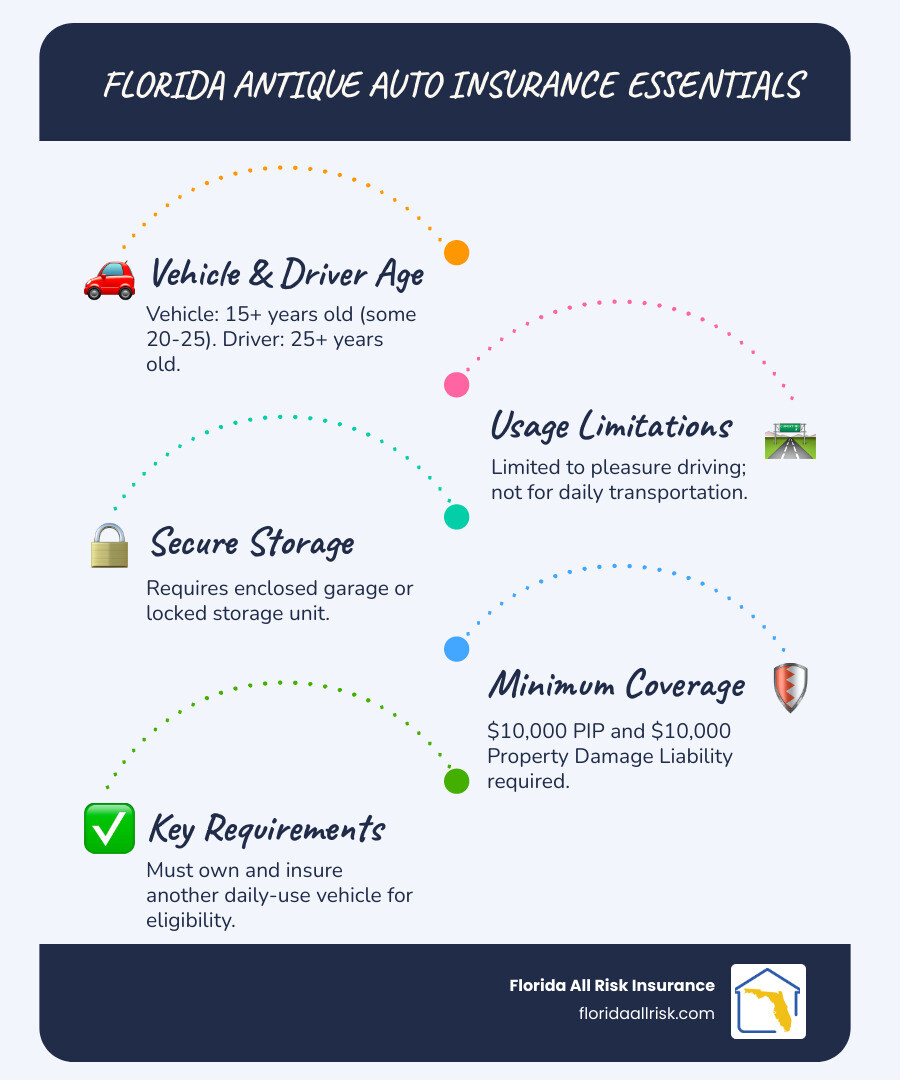
Key eligibility for this type of coverage in Florida often includes:
- The vehicle being 15-25+ years old
- The driver being at least 25 years old
- Owning and insuring another daily-use vehicle
- Meeting minimum state coverage of $10,000 PIP and $10,000 property damage
- Using the vehicle for pleasure only, not daily transportation
Florida’s unique climate presents special challenges. From hurricane threats to high humidity that can damage vintage interiors, your collector vehicle faces risks a modern car never will. Standard auto insurance treats your 1967 Mustang like any other depreciating asset, but a specialized policy understands its true worth.
I’m Jason Miller, a second-generation insurance professional with over 20 years of experience helping Florida residents protect their valuable assets. My expertise in Florida’s insurance marketplace ensures you get coverage that truly protects your automotive investment, including specialized antique auto insurance florida policies for collectors throughout the state.
What Qualifies as a Classic or Antique Car in Florida?
When you look at your vintage vehicle, you see a piece of automotive history. But defining a classic car for insurance isn’t just about age; it’s about value, condition, and historical significance. While a standard car depreciates, your classic car often appreciates, making its protection a unique financial consideration.
Defining the Terms: Antique vs. Classic vs. Vintage
The terms “antique,” “classic,” and “vintage” are often used interchangeably, but insurers have specific definitions. Vehicle age is the typical starting point. In Florida, a car may be considered a classic at 20-25 years old, though state law recognizes vehicles as antiques at 15 years for some purposes. This variation among insurers means more options for coverage. Beyond age, historical significance, rarity, and collector appeal play a huge role. A car featured in a film or one of only a few hundred made can often qualify for specialized coverage, regardless of its exact age. Your vehicle’s story matters.
For more details about the various coverage options available, you can explore our insurance products page to see how we can protect your investment.
Eligibility for Specialized Coverage
Getting approved for antique auto insurance florida involves more than just owning an old car. These requirements exist because classic cars are driven less and maintained with greater care.
- Vehicle Condition: Your car doesn’t need to be a concours-level showpiece. Insurers want to see a commitment to preserving your investment, whether it’s a restored original or a work in progress. Many companies even offer “vehicle under construction” coverage.
- Driver Age and Record: A driver age requirement of 25 or older and a clean driving record are standard. Insurers expect classic car owners to be mature, responsible drivers. Major violations like a DUI or reckless driving can make you ineligible.
- Daily Driver Requirement: You must own and insure at least one other vehicle for everyday transportation. This proves to the insurer that your classic is a pleasure vehicle, not your primary means of getting to work or running errands.
Types of Vehicles Covered
The classic car world is diverse, and specialized insurance policies reflect that. If your vehicle has historical interest, rarity, or collector appeal, it can likely be covered.
- Muscle Cars: High-performance machines from the golden age of American auto power, like a 1960s GTO or a 1970s Charger.
- Hot Rods and Custom Builds: Unique vehicles that showcase creative craftsmanship, from traditional 1932 Fords to modern restomods.
- Classic Trucks: Vintage pickups and early SUVs that have exploded in popularity for their style and utility.
- Vintage Luxury and Exotic Cars: Vehicles representing the pinnacle of craftsmanship or rarity, which may qualify regardless of age due to their exclusivity.
- Military Vehicles: Restored jeeps, trucks, and other transport vehicles with dedicated collector communities and historical value.
- Replicas and Kit Cars: High-quality builds that accurately recreate classic designs can often qualify when craftsmanship is well-documented.
The common thread is the passion and care owners invest in them. Insurance companies recognize this dedication and design their policies accordingly.
Core Components of Antique Auto Insurance Florida Policies
A standard auto policy is built for daily commuters and depreciating vehicles. An antique auto policy is crafted for collectors, recognizing the unique value and usage of your car. Understanding the core components of this specialized insurance is the first step toward comprehensive protection.

That’s why antique auto insurance florida policies work so differently from regular car insurance.
Agreed Value vs. Actual Cash Value: Protecting Your Investment
This is where classic car insurance truly shines. The difference between agreed value and actual cash value can mean thousands of dollars and is the single most important feature of a collector policy.
With a true agreed value policy, you and the insurer agree on your car’s worth upfront, supported by photos, documentation, or a professional appraisal. If your 1969 Camaro is valued at $45,000, that’s the amount you’ll receive (minus your deductible) in the event of a total loss. There’s no last-minute haggling or depreciation. Many policies even include an inflation guard, which automatically increases your coverage by a set percentage each year to keep pace with your car’s appreciating value.
In contrast, consider the alternatives:
- Actual Cash Value (ACV): This is the standard for regular cars and is disastrous for a classic. An insurer using ACV subtracts depreciation from the replacement cost. They might consult a standard valuation guide and determine your $45,000 Camaro has an ACV of only $25,000, leaving you with a massive financial loss.
- Stated Value: This option sounds good but is often misleading. A stated value policy allows the insurer to pay the lesser of your “stated” value or the ACV. So even if you state the value is $45,000, if the insurer calculates the ACV at $25,000, that’s all you will be paid.
Florida’s Minimum Coverage Requirements and Beyond
Even a classic car must meet Florida’s basic insurance requirements. This includes $10,000 in Personal Injury Protection (PIP) to cover your own medical bills and $10,000 in Property Damage Liability to cover damage you cause to others’ property. However, for a collector, the minimum is rarely enough.
We strongly recommend adding Bodily Injury Liability. While not required in Florida for most drivers, it is essential for protecting your personal assets. If you are found at fault in an accident that causes serious injury to someone else, their medical bills can quickly exceed hundreds of thousands of dollars. Without this coverage, your home, savings, and other investments are at risk. Uninsured/Underinsured Motorist Coverage is also a smart addition. If another driver with little or no insurance hits your valuable classic, this coverage steps in to pay for your repairs and medical expenses, protecting you from the financial consequences of someone else’s irresponsibility.
For more details on basic coverage options, check out our Basic Auto Insurance Florida page.
Coverage for Restorations and Modified Vehicles
Specialized antique auto insurance florida policies understand that a car’s value changes during restoration. Vehicle under construction coverage protects your project car and the expensive parts you’ve collected, even if it’s not road-ready. As your restoration progresses, you can increase your policy’s agreed value to reflect its growing worth.
Many policies also include generous spare parts coverage (often $500-$2,000 automatically) and prioritize using Original Equipment Manufacturer (OEM) parts for repairs to maintain authenticity and value. For custom vehicles and hot rods, it’s vital to document all modifications with receipts and photos. This ensures your agreed value accurately reflects the thousands of dollars in custom work that makes your ride unique.
Usage, Storage, and Navigating Florida’s Unique Risks
How you use and store your classic car directly impacts your insurance policy and rates. In Florida, protecting your vehicle also means preparing for the state’s unique environmental challenges that go far beyond those in other states.
Understanding Usage and Mileage Limitations for antique auto insurance florida
The foundation of antique auto insurance florida is the understanding that your classic is a cherished hobby, not a daily vehicle. This core principle shapes your policy and keeps premiums affordable.
Limited pleasure use is a key restriction. This means your vintage car cannot be your daily commuter or be used for running errands. Approved uses typically include car shows, club events, parades, and occasional pleasure drives on a sunny weekend. Driving it to a local cruise-in or to your mechanic for service is perfectly fine; using it to drive to the office every day is not.
Mileage policies vary by insurer. Some have strict annual limits (e.g., 1,000, 2,500, or 5,000 miles), while others offer more flexibility, including policies with no fixed mileage restrictions as long as the car is not used for daily transport. Be realistic about your driving habits and choose a plan that fits. Lower mileage translates to lower risk and, therefore, lower premiums.
Secure Storage Requirements and Potential Discounts
Where you park your classic car matters. Proper storage significantly reduces risks like theft, vandalism, and weather damage, making it a key requirement for antique auto insurance florida.
Enclosed garage storage in a private, locked garage or a dedicated storage unit is the gold standard. It protects your investment from Florida’s challenging climate, shielding it from intense sun, high humidity, and storm debris. While some insurers may accept a carport, a fully enclosed and secure structure is strongly preferred and often required. Being transparent with your agent about your storage situation is crucial for ensuring your coverage is valid.
Insurers often reward extra care. Security systems and fire prevention measures in your garage can lead to discounts. Some insurers even offer a lift discount for collectors who store their vehicles on hydraulic lifts, acknowledging the superior protection from minor floods and pests.
Protecting Your Classic Car from Florida’s Climate
Living in the Sunshine State means facing unique environmental threats. Your classic car insurance must account for these local risks.
Hurricane preparedness is a fact of life in Florida. Your car faces risks from flood damage, storm surge, and high winds. Robust comprehensive coverage is non-negotiable to protect against these weather-related perils. Beyond major storms, Florida’s persistent high humidity and salt air can accelerate rust and corrosion and damage vintage interiors, reinforcing the need for proper, ideally climate-controlled, storage.
Some forward-thinking insurers offer specialized benefits like disaster relocation assistance, which helps cover the cost of moving your car to a safer location before a named storm. This proactive coverage demonstrates how specialized insurance adapts to local conditions, providing value beyond just a claim payout.
Finding the Best Rates and Reputable Providers
Securing the right policy at a competitive price involves more than just a quote. Your driving history, club affiliations, and knowledge of common insurance pitfalls all play a role in finding the best value for your antique auto insurance florida.
How Your Driving Record Affects Your antique auto insurance florida Rates
Your driving record tells insurers if you’re a responsible driver. For antique auto insurance florida, a clean driving record with no major violations for all drivers in the household is your golden ticket. It signals that you’re a low-risk driver who takes safety seriously, both in your daily vehicle and your classic. A good record is often a prerequisite for the best rates.
Conversely, serious infractions like reckless driving, DUI/DWI convictions, or excessive speeding violations can disqualify you entirely from specialized classic car coverage, especially if they occurred in the last three to five years. Even a string of minor violations can raise your premium or make you ineligible with some top-tier carriers. Maintaining a spotless record not only ensures eligibility but also helps you qualify for valuable safe driver discounts. To learn more, check out our Safe Driver Insurance Discounts page.
Unlocking Discounts for Your Classic Car Policy
Being a responsible classic car owner pays off. The world of antique auto insurance florida is filled with opportunities to reduce your premiums without sacrificing coverage. Always ask your agent about available discounts, which can include:
- Multi-Car or Bundled Policies: Insuring multiple classic cars or bundling your auto policy with your home insurance can offer significant savings.
- Car Club Membership: Belonging to organizations like the Antique Automobile Club of America (AACA) demonstrates your commitment to the hobby. Insurers see members as more knowledgeable and careful owners, rewarding them with a discount.
- Anti-Theft Devices: Professionally installed alarms, fuel cut-off switches, and tracking systems reduce your risk profile and your premium.
- Secure Garage Storage: While often a requirement, having a secure, locked garage can also provide a discount.
- Driver Safety Courses: Completing an approved defensive driving course shows your proactive approach to safety.
- Low Annual Mileage: Opting for a lower mileage plan if you don’t drive often keeps rates low.
- Paying Premium in Full: Paying annually instead of in monthly installments often comes with a small discount.
- Lift Discount: Some providers offer up to a 10% discount if you store your car on a lift, as it provides superior protection from flood damage.
Common Pitfalls to Avoid When Insuring Your Prized Ride
Avoid these common and costly mistakes when insuring your classic car:
- Underinsuring with a Standard Policy: This is the biggest error. A standard policy uses depreciated “book value” (ACV), which could leave you with a fraction of your car’s true worth after a total loss. This mistake can cost you tens of thousands of dollars. Always insist on an agreed value policy.
- Misunderstanding Usage Restrictions: Using your classic for daily commuting, even for a short period, can invalidate your policy and lead to a claim being denied. Stick to pleasure use, shows, and club events.
- Failing to Document Value: Keep a detailed binder with restoration records, appraisals, and photos. Without proof, an insurer may dispute the agreed value, especially for custom work, leaving you undercompensated for your labor and investment.
- Choosing Stated Value over Agreed Value: “Stated value” is not the same as “agreed value.” It’s a marketing term for a policy that can result in a much lower payout. Confirm with your agent that your policy is a true agreed value contract.
- Not Updating Your Policy After Upgrades: As you restore or upgrade your car, its value increases. Inform your agent after every significant improvement to adjust your coverage accordingly. Failure to do so means your new, expensive parts aren’t properly insured.
You’re not just insuring a vehicle—you’re protecting a piece of history. Proper insurance safeguards both your financial investment and a tangible piece of automotive legacy.
Frequently Asked Questions about Classic Car Insurance in Florida
Navigating the nuances of classic car insurance can bring up many questions. Here are answers to some of the most common inquiries from Florida collectors.
Is classic car insurance cheaper than regular auto insurance in Florida?
Yes, in most cases, antique auto insurance florida is significantly cheaper than a standard policy for the same car. Insurers recognize that classic cars are driven less frequently, stored more securely, and meticulously maintained by passionate owners. This reduced risk profile—characterized by limited mileage and careful usage—means fewer opportunities for accidents and claims, which translates directly into lower premiums for the owner. The savings can be 40% or more compared to a daily driver policy that assumes constant road exposure.
Do I need to have another car insured to qualify?
Yes, this is a standard and non-negotiable requirement across the industry. Classic car insurance providers require you to own and insure at least one other vehicle for your daily transportation needs. Each licensed driver in the household typically needs to have a daily driver. This proves to the insurance company that your classic is a true pleasure vehicle and not your primary mode of transportation. It reinforces the limited-use nature of the policy that makes it so affordable and is a key part of the underwriting process.
How does the restoration process affect my insurance coverage?
Specialized antique auto insurance florida policies are designed to accommodate restorations. You can get “vehicle under construction” coverage that protects your car and its parts throughout the project. A key benefit is that the agreed value of your policy can be increased in stages as your restoration progresses and adds value to the vehicle. It is crucial to keep your insurance agent informed of your progress, documenting work with photos and receipts. This ensures your coverage always reflects your car’s growing worth, protecting your investment at every step.
What happens if I exceed my annual mileage limit?
If you think you might exceed your mileage limit, contact your agent immediately. Honesty is the best policy. Many insurers offer the flexibility to purchase additional miles or upgrade to a higher mileage tier mid-term. Some may even have a one-time forgiveness for a minor overage. However, intentionally misrepresenting your mileage could be considered insurance fraud, which could lead to a claim being denied or your policy being canceled entirely.
Are my custom modifications and aftermarket parts covered?
Yes, provided they are properly documented and included in the vehicle’s agreed value. This is a major advantage of classic car insurance. It’s essential to keep all receipts and photos of custom work—from engine swaps and suspension upgrades to custom paint and interior upholstery. When you make significant upgrades, you should inform your agent. They will work with you to adjust the agreed value of your policy upwards, ensuring that every dollar you’ve invested in making your car unique is fully protected.
Your Partner in Protecting Automotive History
Choosing the right antique auto insurance florida is about safeguarding your investment, your passion, and a piece of automotive legacy. From understanding the critical difference of Agreed Value coverage to preparing for Florida’s specific climate risks, a specialized policy is the only way to ensure true peace of mind. Standard insurance treats your classic like a depreciating asset, but we know your vintage ride is an irreplaceable treasure.
Working with an independent agent who understands the local market and the unique needs of collectors makes all the difference. At Florida All Risk Insurance, we share your passion for classic cars. As an independent agency in St. Petersburg, we partner with a wide range of top carriers to find you custom coverage at competitive rates.
Ready to protect your investment with confidence? Contact Us today for a personalized consultation and quote.
Find the ideal policy for your vintage vehicle by exploring our Florida Classic Car Insurance options and get back to enjoying the open road.
Florida All Risk Insurance
Address: 700 94th Ave N STE 400, Saint Petersburg, FL 33702
Phone: (727) 577-7721
Email: [email protected]

