

Affordable employee health insurance is not only essential for taking care of your workforce but can also be a significant cost-saver for your business. If you’re looking for quick insights, here’s what you need to know:
- Employees benefit from reduced healthcare costs, increasing job satisfaction.
- Offering health insurance can attract top talent and help retain existing staff.
- Various strategies, like Group Health Plans and Health Reimbursement Arrangements (HRAs), can reduce costs while maintaining quality coverage.
Navigating the landscape of affordable health insurance is vital for both employees and employers to enjoy the full spectrum of benefits without breaking the bank. Understanding the dynamics and leveraging strategic solutions can make offering health insurance a viable and rewarding option for businesses of all sizes.
My name is Jason Miller, and I’ve drawn from over 20 years of expertise in providing affordable employee health insurance. As a second-generation insurance professional, I’ve helped countless businesses in Florida steer complex insurance landscapes to find solutions that fit their needs. Let’s explore how you can cut costs without sacrificing quality coverage.
Affordable employee health insurance terms you need:
– Small business employee benefits
– Group health insurance plans for self employed
– What is a self funded group health insurance plan
Understanding Affordable Employee Health Insurance
When it comes to affordable employee health insurance, there are three key factors to consider: affordability criteria, minimum value standards, and household income. Understanding these elements can help both employers and employees make informed decisions about health coverage.
Affordability Criteria
For a health plan to be considered affordable in 2024, the cost of the premium for self-only coverage must be less than 8.39% of the employee’s household income. This percentage increases slightly to 9.02% in 2025. Affordability is determined by the cost of the lowest-tier plan offered by the employer, not the plan with the most comprehensive coverage.
Minimum Value Standards
A health plan must also meet the minimum value standard to be deemed adequate. This means the plan should cover at least 60% of the total cost of medical services. It should also provide substantial coverage for both physician and inpatient hospital services. Plans that fail to meet this standard may not offer the level of protection employees need, leading to higher out-of-pocket costs.
Household Income
The calculation of affordability is based on household income, which includes all income from household members who are required to file a tax return. This comprehensive view ensures that the health plan’s affordability is assessed in the context of the entire household’s financial situation.
If a plan is not affordable for the entire household, employees and their families may qualify for savings through a Marketplace plan. However, if the plan is affordable for the employee but not for other household members, only those members may be eligible for financial assistance.

Understanding these components is crucial for both employers and employees. By meeting affordability and minimum value standards, businesses can offer valuable benefits that improve employee satisfaction and retention. At the same time, employees can ensure they’re receiving a plan that fits their financial and healthcare needs.
Top Strategies for Reducing Health Insurance Costs
Finding ways to lower health insurance costs while maintaining quality coverage is a priority for many businesses. Here are some effective strategies to achieve this:
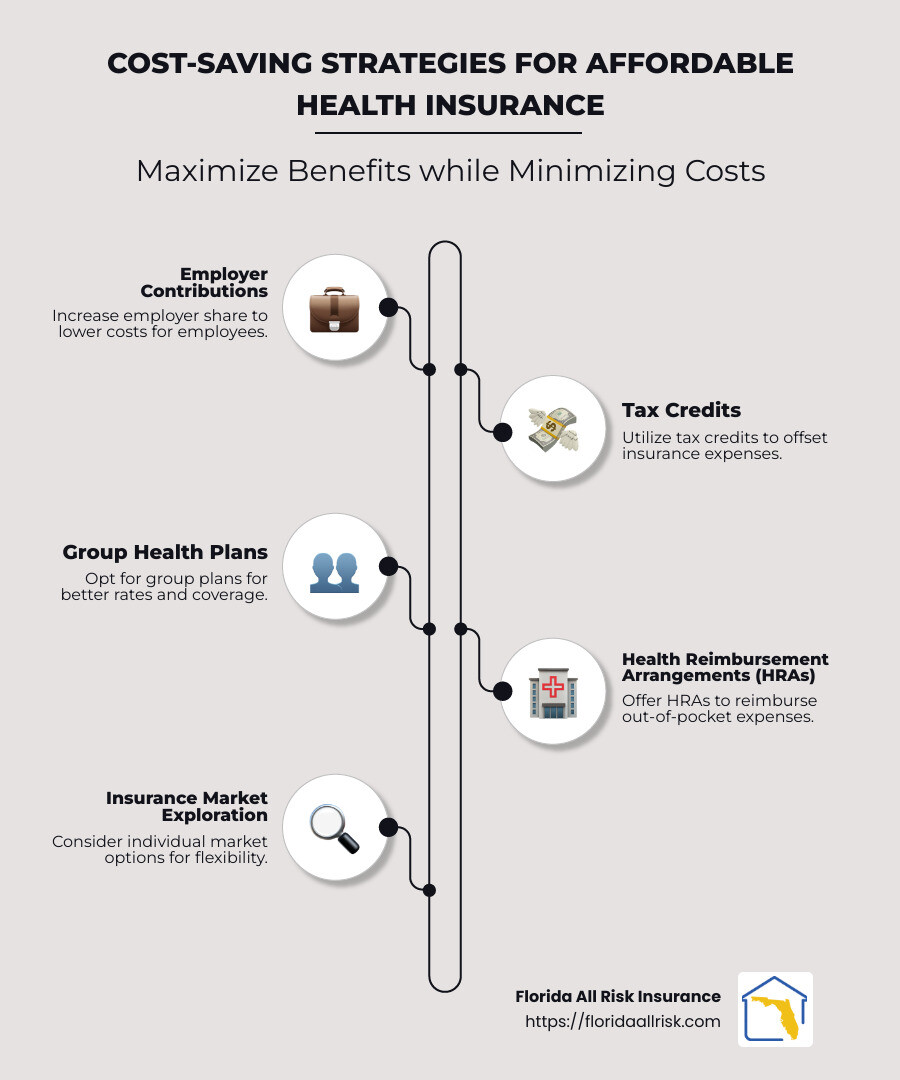
Employer Contributions
One of the most direct ways to reduce health insurance costs is through employer contributions. By covering a portion of the premiums, employers can make health plans more affordable for their employees. This not only helps in attracting and retaining talent but also can lead to tax benefits for the business.
Employers are encouraged to pay at least 50% of the employees’ health insurance premiums to qualify for federal tax credits. This approach can significantly reduce the out-of-pocket expenses for employees, making the plans more attractive and affordable.
Tax Credits
Small businesses can take advantage of tax credits to lower the cost of providing health insurance. The Small Business Health Care Tax Credit is available to businesses that offer health insurance and have fewer than 25 full-time equivalent employees. To qualify, the average employee salary must be about $56,000 or less, and the employer must cover at least 50% of the premium costs for employees.
These credits can cover up to 50% of the premium costs for small businesses, providing significant savings and making it more feasible to offer comprehensive health benefits.
Health Reimbursement Arrangements (HRAs)
Health Reimbursement Arrangements (HRAs) offer a flexible way for employers to manage health insurance expenses. With HRAs, employers reimburse employees for medical expenses and premiums, up to a certain amount. This approach allows employees to choose their own health plans, tailoring coverage to their specific needs while controlling costs for the employer.
HRAs are particularly beneficial because the reimbursements are not considered taxable income for employees, and employers can deduct these expenses from their taxes. This strategy not only reduces costs but also increases employee satisfaction by providing more personalized health coverage options.
By leveraging these strategies, businesses can offer affordable employee health insurance without compromising on coverage quality. These methods align financial incentives with health benefits, ultimately fostering a healthier and more satisfied workforce.
Exploring Health Insurance Options for Small Businesses
Small businesses have several paths to provide affordable employee health insurance. Let’s break down the main options: group health plans, the individual market, and ICHRAs.
Group Health Plans
Group health insurance is a popular choice for many small businesses. With a group plan, the employer purchases a policy that covers all eligible employees and their families. The major advantage? Lower premiums. Because the risk is spread across all members, insurers can offer more competitive rates compared to individual plans.
Moreover, group plans often include additional benefits like dental and vision coverage, making them attractive to employees. Offering such comprehensive benefits can help small businesses attract and retain top talent.
Individual Market
The individual market allows employees to choose their own health insurance plans. This option is flexible, letting employees pick a plan that best suits their personal needs. For businesses, this could mean less administrative burden since employees handle their own insurance shopping.
However, it’s important to note that individual plans might be more expensive than group plans due to less risk pooling. But, employees may qualify for government subsidies if the plans meet the Affordable Care Act’s affordability criteria.
ICHRA (Individual Coverage Health Reimbursement Arrangement)
The ICHRA is an innovative way for employers to provide health benefits. With an ICHRA, employers reimburse employees for their individual health insurance premiums and other medical expenses. This gives employees the flexibility to choose their own plans while still benefiting from employer support.
One of the key advantages of ICHRA is that reimbursements are not counted as taxable income for employees. This approach also allows businesses to control costs by setting fixed reimbursement limits.

In conclusion, small businesses can explore various health insurance options to find the best fit for their needs and budgets. Whether it’s through group plans, the individual market, or ICHRAs, each option has its unique benefits that can help provide comprehensive and affordable coverage for employees.
Transitioning into the next section, let’s address some common questions about affordable employee health insurance.
Frequently Asked Questions about Affordable Employee Health Insurance
How can I find the best price for health insurance?
Finding the best price for affordable employee health insurance involves comparing plans and evaluating coverage options. Start by looking at different types of plans like PPOs, HMOs, and POS plans. Each has its own advantages, such as broader provider choices or lower out-of-pocket costs.
Use tools like the Affordability Tool to see if your employer-sponsored plan is affordable. This tool helps determine if the plan’s premium is less than a certain percentage of your household income. Don’t forget to check if the plan meets minimum value standards, covering at least 60% of total medical costs.
What is the lowest income to qualify for Obamacare?
To qualify for Obamacare, your household income must be between 100% and 400% of the federal poverty level (FPL). This range can vary based on your household size. For example, in 2024, a family of four could qualify with an income of up to $111,000. If your income is below this range, you might be eligible for Medicaid.
These limits can change annually. Always check the latest guidelines to see if you qualify for subsidies or other assistance.
Why is employee health insurance cheaper?
Employee health insurance is often cheaper because of employer contributions and tax benefits. Employers usually pay a significant portion of the premiums, reducing the cost for employees. Additionally, premium payments are often deducted from paychecks before taxes, lowering taxable income.
Group health insurance spreads risk across many people, allowing insurers to offer lower rates compared to individual plans. This risk-sharing leads to savings, which are passed on to employees.
By understanding these factors, you can make informed decisions about your health insurance options and find the best fit for your needs.
Next, let’s dive into the conclusion of our guide on affordable employee health insurance.
Conclusion
At Florida All Risk Insurance, we understand the importance of providing affordable employee health insurance that meets the needs of both employers and employees. Our commitment to personalized service ensures that each client receives custom solutions that align with their specific requirements and budget.
We offer competitive rates by leveraging our access to a wide range of carriers. This allows us to provide options that suit the diverse needs of businesses across Florida. Whether you’re a small business owner looking to offer group health plans or an individual seeking comprehensive coverage, our team is here to guide you through the process.
Choosing the right health insurance plan can be daunting, but with Florida All Risk Insurance, you’re not alone. Our experts are dedicated to helping you steer the complexities of health insurance, ensuring you find a plan that delivers value without compromising on coverage.
Explore our group health insurance options today and find how we can help you cut costs, not coverage. Let us be your partner in securing the health and well-being of your employees while maintaining financial efficiency for your business.

